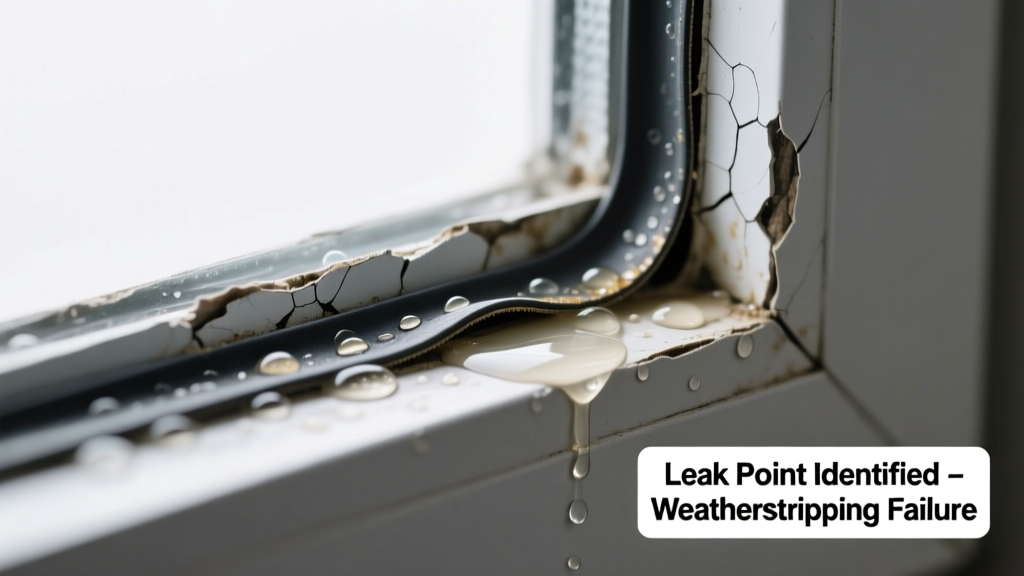
You wake up to a damp sill, a dark water stain creeping up the drywall, or a faint musty smell near a window after rain—classic signs your window weatherstripping has worn out and is leaking water. Don’t panic: this is one of the most common, fixable causes of window-related water intrusion, and catching it early prevents rot, mold, and costly repairs.
Quick Checklist
- Is water pooling on the interior windowsill or dripping onto the floor during or right after rain?
- Does the window feel loose or rattle when closed?
- Can you see visible cracks, gaps, or crumbling rubber/vinyl along the sash or frame edges?
- Do you feel cold drafts around the window even when it’s fully closed?
- Is the leak happening only during wind-driven rain—not light showers?
- Has the window been in place longer than 10 years without weatherstripping replacement?
Possible Causes
Cracked or Brittle Foam or Vinyl Weatherstripping
Inspect the compression seals along the meeting rail, jamb, and head of the sash. Look for cracking, missing sections, or gaps where light shines through. If the material feels stiff or crumbles when pressed, it’s failed. Severity: Low—DIY replaceable in under an hour. Replace window weatherstripping.
Compression Strip Not Seating Properly Due to Misaligned Sash
Closed window should press firmly into the weatherstrip. If the sash is warped, hinges are loose, or the lock doesn’t engage fully, compression fails—even with intact strip. Confirm by closing the window and checking for uniform gap width with a credit card; if it slides in easily at one corner but not another, alignment is off. Severity: Medium—may require shimming or hinge adjustment. Adjust window sash alignment.
Missing or Damaged Exterior Brickmold or Sill Flashing
This isn’t weatherstripping—but it’s often mistaken for it. If water enters above the frame and runs behind the trim, the issue may be failed flashing or rotted brickmold. Check for gaps between siding and window frame, or paint peeling at the top exterior edge. Severity: High—requires exterior access and flashing expertise. Repair window flashing.
What to Do First
Grab a dry towel and wipe down all wet surfaces—including the wall cavity behind the baseboard if moisture is present. Then, place a shallow pan or bucket beneath active drips to catch runoff. Next, use a flashlight to trace the water path upward from the leak: follow stains, discoloration, or dampness toward the frame’s top, sides, or bottom. Document with photos before cleaning—this helps confirm entry points later.
- Run a hair dryer on low heat along suspect seams for 30 seconds—then spray lightly with water. If moisture appears inside within 2 minutes, that’s your breach.
- Check your home’s drainage grade outside: standing water within 6 inches of the foundation increases hydrostatic pressure on window perimeters.
- Temporarily seal gaps with removable painter’s tape (not duct tape) to isolate which seam is leaking—remove within 48 hours to avoid adhesive residue.
What NOT to Do
Never caulk over old weatherstripping—it traps moisture behind the seal and accelerates wood rot. Avoid silicone-based sprays or lubricants on vinyl or foam strips; they degrade polymer bonds and attract dust that grinds away material faster. And don’t ignore small leaks: the U.S. EPA estimates that 14% of household water usage is from leaks—and unchecked window infiltration can raise indoor humidity to mold-risk levels (>60%) within days.
"Over 78% of water intrusion cases we diagnose in homes built before 2010 trace back to degraded weatherstripping or improper installation—not faulty windows themselves." — National Fenestration Rating Council Field Survey, 2022
Why does water leak only during heavy wind-driven rain?
Wind pressure forces rain sideways and upward into tiny gaps that stay dry during vertical rainfall. Worn weatherstripping loses its compression seal under lateral force—especially at the top horizontal meeting rail or side jambs. This is why leaks often appear *only* during storms, not drizzle.
Can I replace weatherstripping without removing the sash?
Yes—for most double-hung and casement windows. Peel-and-stick foam tape, V-strip, or bulb seals install directly over existing channels or nail flanges. Just clean the surface with isopropyl alcohol first. For older windows with recessed kerf slots, you’ll need a kerf-cut replacement strip and a small putty knife—but still no sash removal required.
How long should weatherstripping last?
High-quality vinyl or silicone bulb seals last 8–12 years in moderate climates; foam tape lasts 3–5 years. Direct sun exposure, frequent opening/closing, and coastal salt air cut lifespan by up to 40%. According to the Insurance Institute for Business & Home Safety's 2023 report, homes in humid southern regions average 5.2 years before weatherstrip failure shows visible leakage.
Is this leak covered by my home warranty?
Rarely. Most home warranties exclude wear-and-tear items like weatherstripping, caulking, and gaskets. However, if water damage spreads to framing or drywall, your homeowner’s insurance *may* cover remediation—if you can prove prompt action was taken. Keep dated photos and repair receipts.
Could this be condensation instead of a leak?
Yes—but condensation forms *on* glass or metal surfaces, not behind trim or inside walls. Wipe the window dry, run the HVAC fan for 15 minutes, then watch: if moisture reappears as beads on glass, it’s condensation. If dampness returns on the sill, baseboard, or drywall, it’s infiltration. Use a hygrometer: indoor RH >55% + cold glass = condensation; RH <45% + localized dampness = leak.
| Material | Avg. Lifespan | Leak Risk When Worn | DIY Replacement Difficulty |
|---|---|---|---|
| Foam tape | 3–5 years | High (compresses unevenly) | Easy |
| Vinyl bulb seal | 8–10 years | Moderate (fails gradually) | Moderate |
| Silicone kerf seal | 12+ years | Low (holds shape well) | Moderate-to-Hard |
| EPDM rubber | 10–15 years | Very Low (resists UV/ozone) | Hard (requires kerf tool) |
If your window is drafty, damp, or showing early staining, act now—before wood rot compromises structural integrity or mold spores spread. Most weatherstripping fixes cost under $25 and take less than 90 minutes. Start with the step-by-step replacement guide, and cross-check your findings against our window leak diagnosis chart for confidence before buying materials.