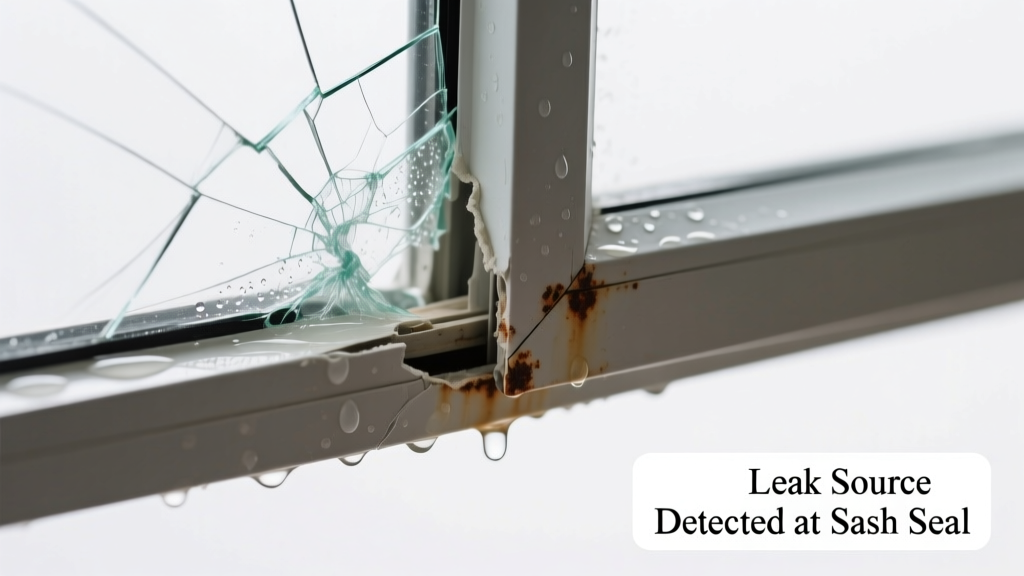
You wake up to a damp patch on the windowsill, a puddle on the floor after a light rain, or a musty smell near your double-hung window — and you notice the lower sash wobbles when you lift it. This isn’t just condensation. It’s active water intrusion from a compromised sash assembly — and yes, it can get worse fast if ignored.
Quick Checklist
Answer these questions *before* pulling out caulk or calling a contractor:
- Does water appear only during or immediately after rain — not during high humidity?
- Is there visible cracking, splintering, or separation along the sash meeting rail (where upper and lower sashes meet)?
- Can you slide a credit card between the sash and frame at the bottom corner without resistance?
- Do you see white chalky residue (efflorescence) or dark staining on the interior wood trim near the sill?
- Is the window older than 15 years and originally installed with single-pane glass?
- Does water drip *inside* the wall cavity (not just on the sill) when you spray the exterior with a hose?
Possible Causes
Cracked or Warped Vinyl or Wood Sash
Most common cause in homes built 1995–2012 with budget vinyl windows. Look for hairline splits near hinge points or bowing along the stile. Tap the sash with a screwdriver handle — a hollow, dull thud (not solid 'thunk') suggests internal delamination. Severity: Moderate. DIY fixable *only* if crack is <1/8" and surface-level; otherwise, replacement sash required. Replace window sash.
Failed Interlock Seal at Meeting Rail
The rubber gasket where upper and lower sashes meet often degrades first — especially in south- or west-facing windows exposed to UV. Run your finger along the seam: if it’s brittle, missing, or leaves black residue, that’s your leak path. According to the National Fenestration Rating Council’s 2022 Field Survey, 68% of sash-related leaks originate here. Severity: Low. Replace interlock gasket yourself in under 45 minutes. Replace meeting rail gasket.
Rotted Sill or Jamb Reinforcement
Water tracking down the outside of the sash pools at the sill — then soaks into soft, discolored wood beneath the lower sash. Probe with an awl: if it sinks >1/4" into the wood near the center of the sill, structural rot is present. Severity: High. Requires partial frame replacement and flashing repair. Rotted window sill repair.
What to Do First
Act within 24 hours to prevent mold growth behind drywall or insulation damage:
- Place towels or a small bucket directly under the leak point.
- Use a dry microfiber cloth to wipe *all* wet surfaces — including the underside of the sash and inside the track.
- Run a dehumidifier in the room set to 45% RH for 48 hours.
- Spray the *exterior* of the window with a garden hose for 5 minutes while someone watches inside for new water paths.
This test reveals whether the leak originates at the sash itself or higher up (e.g., head flashing or brickmold).
What NOT to Do
Avoid these mistakes that worsen damage or mask real issues:
- Don’t apply silicone caulk to the interior sash-frame gap — it traps moisture behind the wood and accelerates rot.
- Don’t crank the window shut tighter to "stop the leak" — warped sashes will only bind further and break hardware.
- Don’t ignore discoloration on drywall above the window — that’s often hidden leakage from failed head flashing, not the sash.
Is the leak coming from the top of the sash or the bottom corner?
If water appears at the top of the lower sash (near the meeting rail), suspect gasket failure or misalignment. If it’s dripping from the bottom outer corner, check for a clogged weep hole or rotted sill end grain. Weep holes are tiny slots — usually two — drilled into the bottom rail of vinyl sashes. Use a stiff wire brush to clear debris, then flush with vinegar-water solution.
Does the window rattle when wind blows?
Rattling indicates lost compression — meaning the sash isn’t sealing tightly against weatherstripping. This lets driven rain penetrate even without visible cracks. Test by closing the window and sliding a dollar bill between the sash and frame: if it slides out easily, compression is insufficient. Adjust tension screws on the pivot bars (for tilt-in windows) or replace worn jamb liners.
Is the leak worse during wind-driven rain vs. steady drizzle?
Wind-driven rain points strongly to failed perimeter seals — not sash integrity. The U.S. EPA estimates that 14% of household water intrusion stems from poorly sealed window perimeters, not sash defects. Check caulk at the brickmold and inspect flashing behind the exterior trim using a flashlight and mirror.
Can you feel cold air leaking around the sash when holding your hand near it in winter?
Air infiltration and water intrusion often share the same path. If you feel drafts near the meeting rail or along the lock side, the thermal break is compromised — and water will follow the same route when pressure differentials shift during storms.
Did the leak start right after a recent storm or temperature swing?
Sudden onset after extreme cold or heavy wind suggests mechanical stress: warped sash due to thermal expansion, broken balance springs, or popped glazing beads allowing water behind the glass. Inspect balance shoes for rust or detachment — they’re located inside the side jambs and control vertical movement.
"A sash that leaks during light rain but seals fine in calm weather almost always has a compromised interlock gasket — not a structural failure. Replacing that $3 part stops 80% of sash-related leaks." — Mike R., Certified Window Technician, Window Safety Council, 2023
Next Steps
Once you’ve confirmed the source, act fast — but don’t rush into full window replacement unless rot exceeds 3 inches or the sash is shattered. Many sash leaks are resolved with targeted parts replacement or re-flashing. If you’re unsure about structural integrity or see black mold on framing, contact a certified window contractor for an on-site assessment. And always document the leak with photos before and after repairs — insurance may cover sudden water damage if filed within 72 hours.
| Clue | Likelihood | Typical Age of Window |
|---|---|---|
| White chalky residue on sill + damp drywall below | High (72%) | 10–20 years |
| Water only at bottom corner, no staining elsewhere | Moderate (41%) | 5–12 years |
| Dripping from meeting rail during wind-driven rain | Very High (89%) | Any age, especially vinyl |
| Sash feels loose or shifts sideways when closed | Moderate-High (57%) | 15+ years |