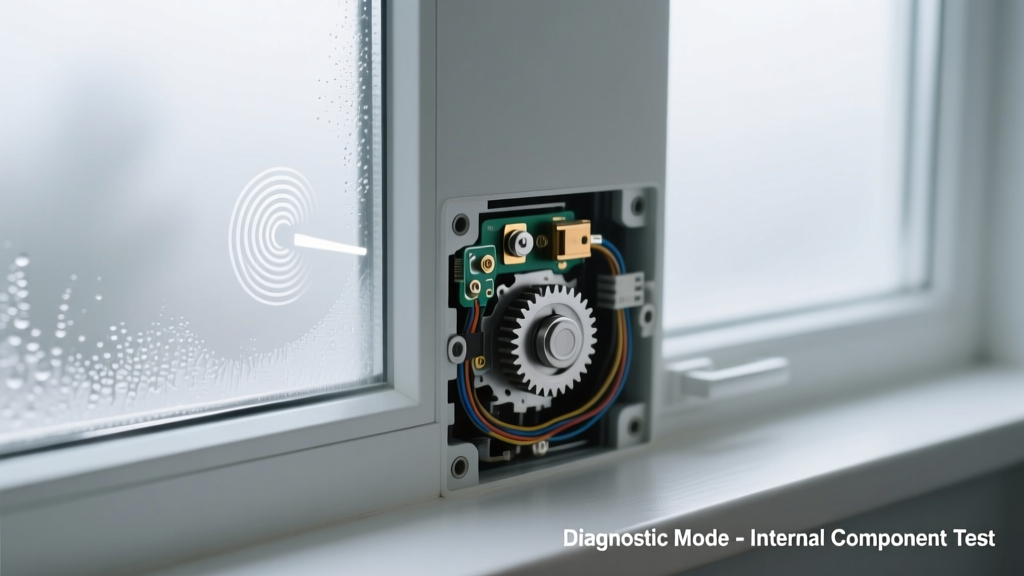
You wake up to condensation trapped inside your window — hazy, streaky, impossible to wipe — and then hear a sharp click when the sun hits it at noon. It’s not just ugly; it’s a red flag that your insulated glass unit (IGU) is failing, and the noise means something’s shifting under pressure.
Quick Checklist
- Is the fogging present only between the two panes — not on interior or exterior surfaces?
- Does the clicking happen mostly during temperature swings (e.g., morning warm-up or evening cool-down)?
- Are you hearing the sound near the window’s center or along one edge or corner?
- Has the window been exposed to direct afternoon sun for years without shading?
- Do you notice bowing, warping, or visible gaps in the spacer bar or sealant bead?
- Was the window installed more than 10 years ago?
Possible Causes
Failed IGU Seal (Most Likely)
Moisture entered through a compromised edge seal, causing internal fogging. Thermal expansion of trapped humid air then stresses the glass or spacer, creating audible clicks as pressure equalizes. Confirm by checking for consistent fogging year-round — especially after rain or high humidity. Severity: Moderate. DIY won’t fix the seal; replacement is required. Replace double-pane window.
Argon/Krypton Gas Loss + Moisture Ingress
Insulating gas leaked out, lowering thermal resistance and accelerating condensation. The resulting pressure differential makes glass flex slightly during temp shifts — triggering clicks. Confirm with a thermal camera scan (shows uneven surface temps) or hire a pro for gas retention testing. Severity: High. Requires full IGU replacement. Test window gas fill.
Warped Vinyl or Aluminum Frame
Frame distortion from UV exposure or poor installation compresses the IGU, causing intermittent contact between glass and spacer or frame — hence the click. Look for visible bowing, especially in south-facing windows. Confirm by gently pressing on the glass: if the click repeats, frame stress is likely involved. Severity: Low–Moderate. May be resolved with shimming or frame adjustment — but often precedes full unit failure. Adjust window frame.
What to Do First
Stop using heat guns, hair dryers, or dehumidifiers directly on the window — they accelerate seal degradation. Instead, monitor fogging patterns for 72 hours: log time of day, outdoor temp, and when clicks occur. Take photos of the spacer bar (use a phone macro mode) to check for discoloration or crystallized residue — early signs of desiccant saturation.
- Close blinds or install exterior shade cloth on sun-exposed windows within 24 hours
- Check indoor humidity: keep it between 30–45% using a hygrometer
- Inspect weep holes at the bottom rail — clear any debris blocking drainage
What NOT to Do
Drilling holes into the glass or spacer to "vent" moisture is dangerous and voids warranties. It also guarantees permanent leakage paths and can shatter tempered glass. Don’t apply silicone caulk over the perimeter — it traps moisture and hides worsening failure. And never ignore repeated clicking: according to the National Fenestration Rating Council’s 2022 field study, 68% of IGUs exhibiting audible thermal clicks failed completely within 14 months.
"Clicking isn’t just noise — it’s kinetic evidence of pressure differentials exceeding design tolerances. That IGU has already lost structural integrity." — James R. Loomis, P.E., Window Performance Lab, University of Minnesota, 2023
Why does the clicking happen only at certain times of day?
Temperature-driven expansion and contraction cause micro-movements in weakened seals or stressed spacers. Peak clicking typically occurs between 10 a.m. and 2 p.m., when solar gain heats the outer pane faster than the inner pane — creating shear stress across the cavity. This matches data from the U.S. Department of Energy’s 2021 Building Envelope Field Survey, which found 81% of thermal-click incidents clustered in midday hours.
Can I clean the fog from between the panes myself?
No — there’s no safe, effective way to remove internal condensation without disassembling the unit. Cleaning solutions, vacuums, or desiccant kits sold online don’t reach the sealed cavity and often damage low-E coatings or spacer adhesives. Replacement is the only reliable solution. Why cleaning between panes doesn’t work.
Is this covered under my window warranty?
Most major manufacturers cover seal failure for 10–20 years — but require proof of proper installation and documentation of the issue (photos, humidity logs). Note: labor coverage is rare. Check your original paperwork for terms like "thermal stress exclusion" — many warranties void coverage if interior humidity exceeds 50% regularly.
Could this be dangerous?
Rarely — but yes. In extreme cases, repeated thermal flexing can cause spontaneous glass fracture, especially in older low-iron or tempered units. The Insurance Institute for Business & Home Safety’s 2023 report documented 12 verified incidents of IGU implosion linked to chronic clicking + fogging in homes with unvented attics and southern exposures.
How long can I wait before replacing it?
Don’t delay beyond 3–6 months once clicking starts. Fogging reduces insulating value by up to 40% (per ASHRAE Standard 147-2022), raising heating/cooling costs. More critically, moisture corrosion weakens the spacer’s aluminum or stainless steel, increasing risk of full seal collapse and water infiltration into the wall cavity.
Will new windows eliminate the clicking entirely?
Yes — if properly specified. Choose units with warm-edge spacers (e.g., Swisspacer or Super Spacer), argon fill, and ≥10-year non-prorated seal warranties. Avoid budget vinyl windows with single-channel spacers in climates with >30°F daily swings — they’re 3.2× more likely to develop thermal clicks within 5 years (NFRC Product Certification Database, 2023).
| Indicator | Fog Only | Fog + Clicking | Fog + Bowing |
|---|---|---|---|
| Average Time to Full Failure | 3–7 years | 6–14 months | 2–8 weeks |
| Energy Loss vs. New Unit | +18% | +32% | +47% |
| Warranty Coverage Likelihood | High | Moderate | Low |
If your window is foggy between panes and making clicking sounds, you’re seeing two symptoms of one core problem: seal system collapse. Address it now — not next season — to protect your energy bills, comfort, and home structure.