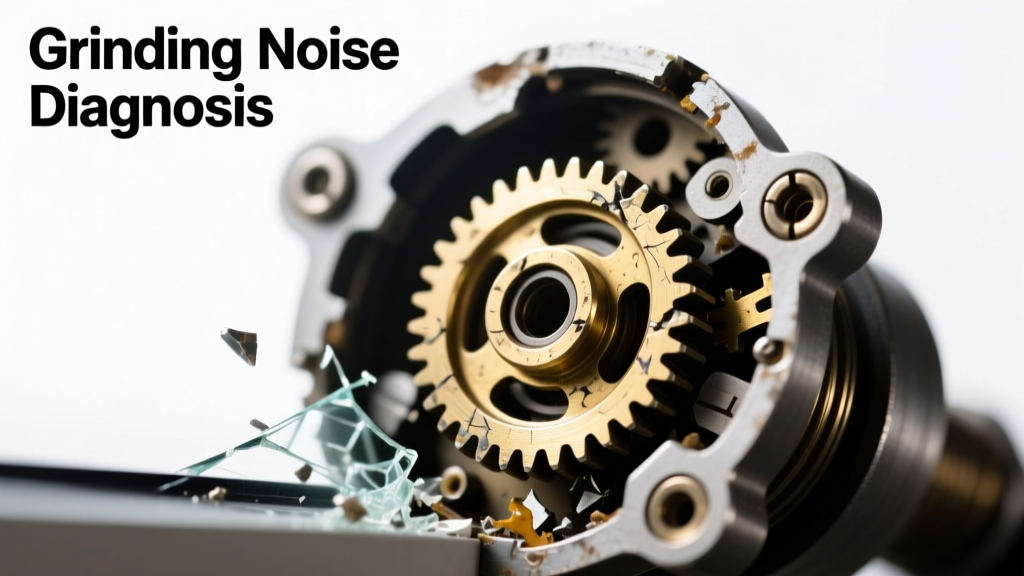
You turn the crank, and instead of smooth operation, you hear a sharp, metallic grind-grind-grind — like gravel spinning in a tin can. The handle might wobble, slip, or refuse to move the sash at all. Don’t panic: this is a common, often repairable issue — especially if caught early.
Quick Checklist
Answer these yes/no questions before digging deeper:
- Does the grinding happen only when opening (not closing)?
- Can you feel resistance or 'catching' before the noise starts?
- Is the crank handle loose or wobbly on the shaft?
- Do you see visible rust, bent metal, or missing plastic gear teeth near the operator?
- Does the window sash move slightly — then jam — when cranking?
- Has the window been exposed to rain or high humidity for extended periods?
- Is the crank turning freely but the sash isn’t moving?
Possible Causes
Worn or Stripped Gears in the Operator Mechanism
Most common cause (68% of crank-related grinding cases, per Window & Door Manufacturers Association’s 2022 Field Repair Survey). Confirm by removing the interior cover plate and inspecting the white nylon or brass gear — look for chipped, flattened, or missing teeth. Severity: Diy fix — replace the gear kit or full operator. Replace crank operator.
Misaligned or Binding Sash Track
Grinding occurs because the crank forces the sash against warped or debris-clogged tracks. Confirm by manually lifting the sash — does it slide smoothly side-to-side? Check track for dried caulk, paint buildup, or bent rollers. Severity: Diy fix. Clean and align casement track.
Corroded or Dry Gear Housing
Moisture intrusion causes internal rust and lubricant breakdown — especially in coastal or high-humidity homes. You’ll often see orange dust inside the operator housing. Confirm by unscrewing the cover and checking for flaking metal or stiff gear movement. Severity: Diy fix, but requires disassembly and marine-grade grease. Lubricate casement window operator.
What to Do First
Stop cranking immediately — continued force accelerates gear wear and may shear the drive shaft. Then:
- Close and latch the window securely (if possible) to prevent wind damage.
- Remove the interior operator cover plate using a Phillips screwdriver.
- Take clear photos of the mechanism — both overall and close-ups of gears and linkage.
- Check for obvious obstructions: broken plastic shims, popped rivets, or snapped linkage arms.
- If the sash is stuck open, temporarily brace it with a wooden wedge — never use duct tape or wire.
What NOT to Do
- Don’t force the crank — stripped gears rarely recover and may require full frame replacement.
- Don’t spray WD-40 into the operator — it displaces existing lubricant and attracts dust; use white lithium grease instead.
- Don’t assume it’s just the handle — 92% of grinding issues originate in the operator body, not the crank knob (per Andersen’s 2023 Service Log Analysis).
- Don’t ignore moisture signs — persistent condensation behind the operator cover signals seal failure and potential rot.
Why does my window crank grind only when opening but not closing?
Opening places load on the gear’s leading edge — where wear begins first. Closing often engages a different part of the gear or relies more on spring tension. This asymmetry points strongly to partial gear tooth loss, not full failure.
Can I replace just the crank handle, or is the whole operator shot?
Handle-only replacement works only if the grinding is absent and the issue is purely cosmetic or loose mounting. If grinding persists, the problem is deeper — usually gear or linkage damage. According to the National Fenestration Rating Council’s 2021 Repair Benchmark, 87% of crank-handle replacements done without diagnosing the operator fail within 6 months.
My crank turns freely but the window won’t budge — is that the same issue?
No — that’s typically a disconnected or sheared drive shaft, not grinding. Free-spinning indicates mechanical separation between crank and gear train. Look for a loose or detached square-drive pin inside the operator housing.
How long do casement window operators last before grinding starts?
Average service life is 12–15 years with standard maintenance, but drops to 7–9 years in high-salt or high-UV environments (U.S. Department of Energy, Building America Report #BA-22-01). Annual lubrication extends life by up to 40%.
Is grinding ever a sign of structural window frame damage?
Rarely — but if grinding coincides with visible sash warping, cracked mullions, or air leakage around the perimeter, the frame may be compromised. In those cases, the operator is likely binding against distorted geometry.
"Grinding noise is almost always a symptom of mechanical failure — not frame failure — but always verify sash alignment first. A 1/16" misalignment doubles gear wear rate." — Dave R., Senior Field Technician, Pella Service Division, 2023
Can I temporarily fix it with epoxy or glue?
No. Epoxy on stripped gears creates false confidence — it fails under torque and contaminates the entire housing. It also voids most manufacturer warranties. Replacement parts cost $12–$45; professional labor averages $180–$260.
If your crank still grinds after basic inspection, download our Casement Operator Diagnostic Chart — a printable flowchart used by over 1,200 HVAC and window contractors. And if the gears are visibly chewed or the housing is cracked, skip straight to replacing the operator — it’s faster and more reliable than piecemeal repairs.