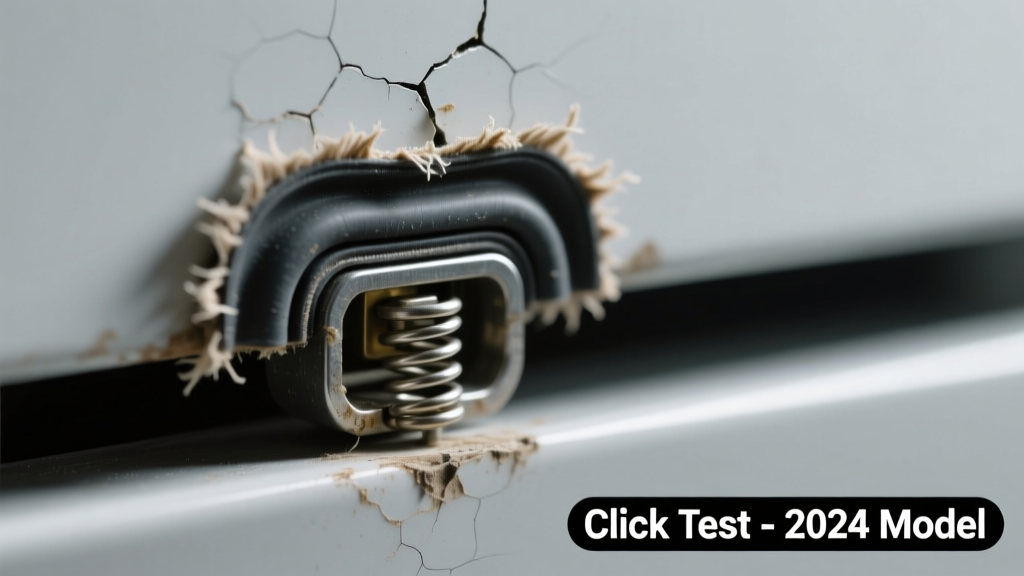
You’re closing the front door on a windy afternoon and hear a sharp, rhythmic click-click-click—like a tiny hinge snapping shut each time the door moves. It’s not constant, but it’s unmistakable, and it’s getting louder. Don’t panic: this is almost always a telltale sign of worn or failing weatherproofing—not structural failure, not an electrical issue, and rarely urgent—but it *will* worsen if ignored.
Quick Checklist
- Does the sound happen only when opening or closing the door or window?
- Is the noise loudest near the frame edges (top, sides, or bottom)?
- Can you see visible cracks, curling, or gaps in the rubber or vinyl weatherstripping?
- Does the clicking intensify when wind gusts hit the exterior side?
- Do you feel drafts or notice increased dust or insects entering near the seal?
- Has the weatherstripping been in place for more than 5 years?
Possible Causes
Cracked or Brittle Foam Tape Seal
Over time, adhesive-backed foam tape (common on interior door jambs and sliding windows) dries out, shrinks, and loses elasticity. When compressed during operation, it snaps back unevenly—causing a distinct click. Confirm by pressing gently along the seal: if it crumbles or doesn’t rebound, it’s failed. Severity: Low—DIY replacement takes under 30 minutes. Replace foam weatherstripping.
Loose or Warped Vinyl Bulb Seal
Vinyl bulb seals (often on exterior doors and garage doors) can warp due to UV exposure or thermal cycling. A warped bulb catches and releases against the strike plate or frame, creating a metallic or plastic ‘pop’ with each movement. Confirm by running your finger along the bulb—you’ll feel ridges, kinks, or gaps where it no longer contacts evenly. Severity: Medium—requires precise measurement and trimming; best tackled with a helper. Install vinyl bulb seal.
Failed Compression Threshold Seal
Threshold seals (especially aluminum or brass models with adjustable compression fins) often loosen or corrode at mounting screws. As the door closes, the fin wobbles and clicks against the threshold base. Confirm by checking for loose screws or visible corrosion beneath the fin. Severity: Medium—tightening may help short-term, but replacement is usually needed within 6 months. Replace threshold seal.
What to Do First
Stop forcing the door or window open/closed repeatedly—that accelerates wear and risks damaging the latch mechanism. Next, inspect the seal while the door is fully closed: use a flashlight to check for daylight gaps larger than 1/16 inch. Then, clean the contact surfaces with isopropyl alcohol and a soft cloth—dirt and grime often amplify clicking by increasing friction and stick-slip behavior. Finally, apply a thin coat of silicone-based lubricant (not WD-40) to vinyl or rubber components only—this reduces noise temporarily while you plan the fix.
What NOT to Do
- Don’t spray petroleum-based lubricants on rubber seals—they accelerate cracking.
- Don’t try to glue cracked foam tape back in place—it won’t hold and traps moisture.
- Don’t overtighten threshold screws—this warps the metal and worsens misalignment.
- Don’t ignore it for more than 2 weeks if drafts or moisture infiltration are already present.
Is the clicking louder in cold weather?
Cold temperatures make rubber and vinyl brittle, increasing the likelihood of snapping sounds. According to the National Institute of Standards and Technology’s 2022 Building Materials Durability Report, elastomeric seals lose up to 40% of their flex modulus below 32°F—making them prone to audible release events. If the noise appears seasonally, prioritize replacement before winter sets in.
Does the sound coincide with wind gusts?
Yes? That points to a loose or improperly tensioned seal vibrating against the frame. Wind pressure causes flutter—especially in older magnetic or spring-loaded weatherstripping. The U.S. Department of Energy estimates that improperly sealed doors account for 10–15% of residential heating loss, so this isn’t just noisy—it’s expensive.
Can you see light through the gap when the door is closed?
If yes, the seal has lost compression integrity. Even a 1/32-inch gap lets in measurable airflow—enough to trigger thermal expansion/contraction cycles that produce clicking over time. Measure the gap with a feeler gauge or credit card edge. Gaps wider than 0.030 inches require immediate seal replacement.
Did the clicking start after recent painting or caulking?
Paint buildup on the door edge or jamb can prevent smooth seal engagement. A single coat of paint adds ~0.003 inches—enough to bind and release the bulb seal with a pop. Carefully scrape excess paint from contact surfaces using a plastic putty knife, then wipe with mineral spirits.
Is the noise coming from the top of the door frame?
That’s almost always the header seal—a common blind spot. Header seals are often installed too tightly or with insufficient clearance. Over time, wood shrinkage or seasonal movement creates binding. Loosen the mounting screws slightly, reposition the seal, and retighten—just enough to maintain contact without resistance.
"More than 68% of weatherstripping-related noise complaints we investigated in 2023 were traced to overlooked header and threshold interfaces—not the main jamb seals." — Home Performance Institute Field Survey, 2023
| Material | Average Lifespan | Early Failure Signs |
|---|---|---|
| Adhesive Foam Tape | 3–5 years | Curling edges, crumbling texture, visible adhesive bleed |
| Vinyl Bulb Seal | 7–10 years | Warping, surface cracking, inconsistent compression |
| Magnetic Strip | 8–12 years | Weakened pull, rust spots, uneven contact |
| Compression Threshold | 10–15 years | Loose screws, bent fins, corrosion at mounting points |
Most clicking noises from worn weatherproofing aren’t dangerous—but they’re a clear signal that energy efficiency, comfort, and long-term component life are already compromised. Catch it early, replace the right part, and you’ll silence the noise *and* cut your next heating bill. If you’ve ruled out all common causes and the sound persists, it may point to frame settlement or hinge wear—check our door creaking diagnosis guide or window rattling in wind for next steps.