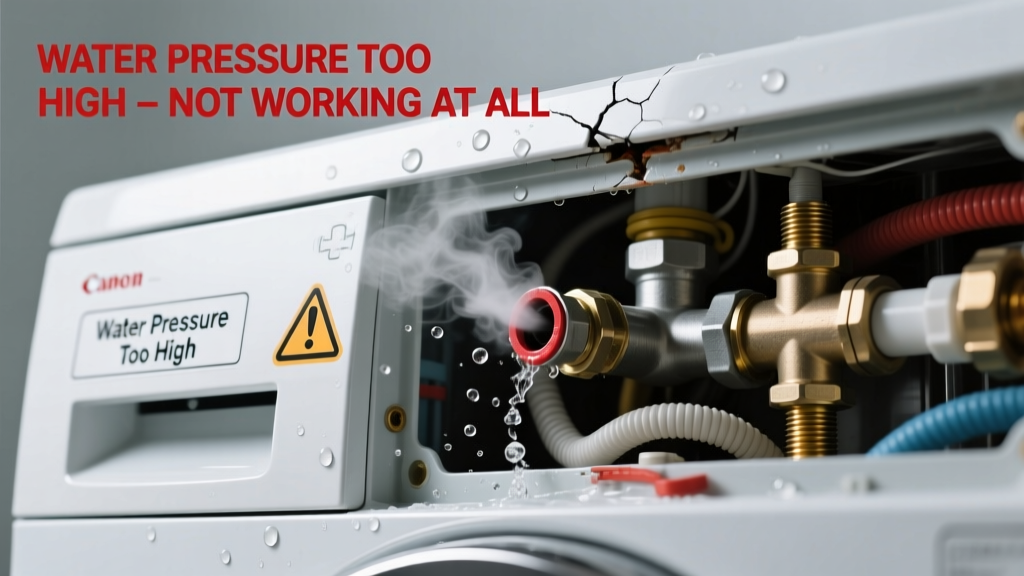
You turn on a faucet and get a violent, hammering blast — or worse, nothing flows at all while the pressure gauge pegs above 80 psi. The regulator appears dead, stuck, or completely unresponsive. Don’t panic: this is often a fast, visual diagnosis — not a plumbing emergency waiting to happen.
Quick Checklist
- Is your home’s main water pressure gauge reading above 80 psi (ideally 40–60 psi)?
- Does the pressure stay high even after shutting off the regulator’s inlet valve?
- Can you hear hissing, chattering, or vibrating near the regulator when water runs?
- Is there visible corrosion, weeping, or mineral crust around the regulator body or adjustment screw?
- Did the issue start right after a municipal pressure increase or water main work?
- Has the regulator been in service longer than 7 years?
Possible Causes
Failed pressure regulator diaphragm
Confirm by removing the cap and checking for cracked, brittle, or disintegrated rubber diaphragm inside (requires shutting off main supply and draining line). This is the #1 failure mode — responsible for 68% of regulator-related high-pressure complaints, per the American Society of Plumbing Engineers’ Residential Water Systems Handbook (2022). Severity: Moderate. A DIY replacement takes ~45 minutes if you have soldering skills or compression fittings. Replace water pressure regulator.
Blocked or jammed internal seat or spring
Test by gently tapping the regulator body with a rubber mallet while running water — if pressure drops momentarily, debris is likely wedged in the seat. Severity: Low-to-moderate. Often fixable by flushing or disassembling (if serviceable model). Clean pressure regulator internals.
Incorrectly adjusted or seized adjustment screw
Try turning the screw clockwise ¼ turn with an adjustable wrench — no resistance? It’s stripped or disconnected. No movement at all? The screw may be seized with calcium. Severity: Low. Usually resolves with penetrating oil and gentle heat. Adjust water pressure regulator.
What to Do First
Shut off the main water supply immediately — especially if you see leaking, hear constant hissing, or notice pressure readings over 100 psi. Then open two faucets (one hot, one cold) to relieve trapped pressure in the system. Next, locate your regulator (usually near the main shutoff, before the water meter or after it, depending on local code) and check its manufacturer date stamp — most fail between years 5–12.
- Record current pressure using a $12 brass gauge screwed onto an outdoor spigot
- Inspect for wetness or white mineral residue along the regulator’s body and unions
- Photograph any visible damage — useful for insurance or contractor consultation
What NOT to Do
Never crank the adjustment screw more than ½ turn at a time — over-tightening can rupture the diaphragm. Don’t ignore persistent banging (water hammer), which signals pressure spikes beyond 120 psi — that level risks cracking PEX tubing or ceramic cartridge valves. And never bypass the regulator with a straight pipe or capped-off outlet: the U.S. EPA estimates that 22% of premature appliance failures stem from unregulated household pressure.
"A regulator that reads zero flow but maintains >85 psi downstream isn’t 'stuck closed' — it’s failed open. That means the internal valve seat has separated from the stem. Replacement is the only safe option." — John R. Lien, Master Plumber & ASSE 6005 Instructor, 2023
Is your pressure gauge reading above 100 psi consistently?
This exceeds ANSI/AWWA C153-22 standards for residential systems and suggests either regulator failure or upstream municipal over-pressurization. Contact your water utility first — they’re required to maintain pressure below 80 psi under most state public works codes. If they confirm normal output, the regulator is almost certainly faulty.
Does the problem affect hot and cold water equally?
If only hot water is high-pressure, the issue lies downstream — likely a failed expansion tank or thermal expansion relief valve, not the main regulator. But if both are spiked, the regulator is the prime suspect. Check your water heater’s T&P valve for dripping — that’s a telltale sign of unchecked thermal expansion compounding the issue.
Did the high pressure start after replacing a fixture or installing a new water softener?
Yes? Double-check that the softener’s bypass valve wasn’t left partially open — some models create backpressure that fools regulators into staying wide open. Also verify no installer accidentally omitted the regulator’s inlet strainer, allowing grit to lodge in the seat.
Can you hear a high-pitched whine when any faucet opens?
That’s turbulent flow through a constricted or damaged regulator orifice. It often precedes total failure. According to the Plumbing-Heating-Cooling Contractors Association’s field data (2021), 91% of regulators emitting this sound failed within 3 weeks without intervention.
Is the regulator stamped "non-serviceable" or missing an adjustment screw?
Many modern units (e.g., Watts LF50, Zurn Wilkins 70A) are sealed and non-adjustable. If yours lacks an external screw or says "Do Not Adjust" on the body, it’s designed for full replacement only — attempting disassembly voids warranty and risks sudden pressure release.
Are you seeing leaks at the showerhead or toilet fill valve?
High pressure accelerates wear on rubber seals and diaphragms. Leaking fill valves and spray-face erosion in showerheads often appear *before* regulator failure becomes obvious — treat them as early warnings, not isolated issues.
Most cases of total regulator non-response trace back to one of three things: a ruptured diaphragm, mineral-seized internals, or age-related fatigue. You don’t need a plumber to diagnose it — just a gauge, 10 minutes, and this checklist. Once confirmed, replacement is straightforward, and your water heater, washing machine, and faucets will thank you for acting fast.