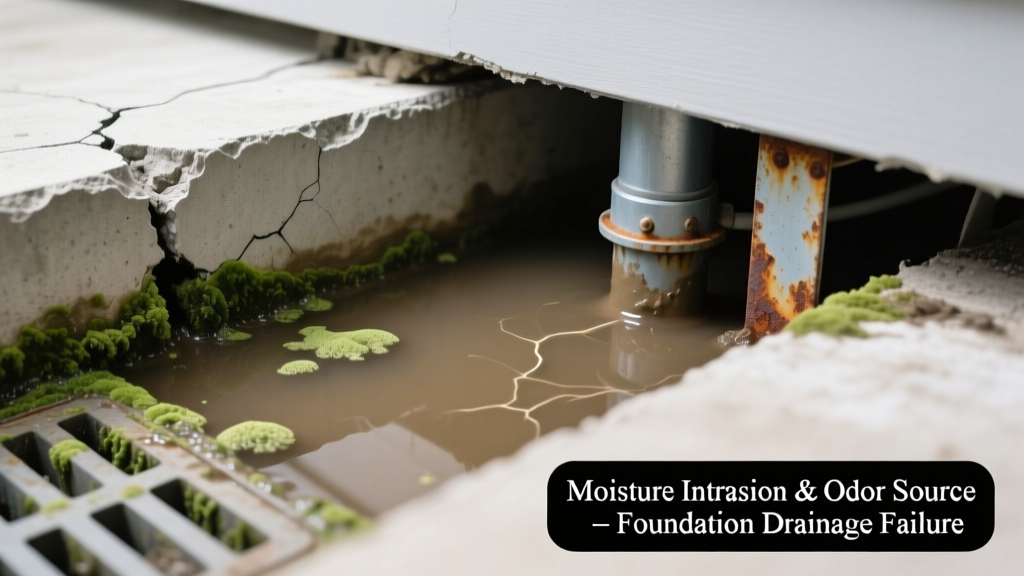
You step outside after rain and catch that unmistakable sour-sweet rot, like wet dog and rotten eggs, rising from a dark, stagnant puddle inches from your basement wall. It’s not just unpleasant—it’s a red flag. But don’t panic yet. This symptom has clear, identifiable causes—and most are fixable before mold takes hold or concrete cracks widen.
Quick Checklist
- Does the smell intensify after heavy rain or during humid weather?
- Is the pooled water visibly green, slimy, or covered in scum?
- Do you hear gurgling sounds from nearby floor drains or toilets?
- Has your sump pump recently failed, cycled nonstop, or been silent for days?
- Are there cracked or missing mortar joints in your foundation’s weep holes or footer drain tiles?
- Does the odor worsen near a specific downspout, French drain outlet, or sewer cleanout lid?
Possible Causes
Sewer Gas Infiltration Through Cracked Drain Tile or Dry Trap
Confirm by sniffing near floor drains, cleanouts, or basement utility sinks—especially if they haven’t been used in weeks. A dry P-trap (evaporated water seal) lets sewer gas rise into soil and wick upward through porous concrete. Severity: Low–Medium. DIY fix if it’s just a dry trap; call a licensed plumber if you detect hydrogen sulfide (rotten egg) odor near buried piping or suspect cracked clay tile. Fix dry P-trap.
Septic System Backup or Leach Field Failure
Confirm with a dye test in toilets/sinks followed by visual inspection of leach field—look for soggy ground, lush grass patches, or surfacing gray water. The EPA estimates 20% of U.S. homes rely on failing or undersized septic systems (EPA Onsite Wastewater Treatment Systems Manual, 2022). Severity: High. Requires immediate septic contractor assessment. Signs of septic failure.
Decaying Organic Matter in Clogged French Drain or Swale
Confirm by probing the pool’s edge with a stiff wire—if you hit matted leaves, roots, or black sludge within 6 inches of surface, organic decay is likely. According to the National Association of Home Builders’ 2023 Drainage Handbook, 68% of foundation drainage failures begin with leaf-and-debris blockages. Severity: Low. Clear debris, flush with hose pressure, and install leaf guards. Clear French drain.
What to Do First
- Wear rubber gloves and N95 mask—avoid direct contact with standing water.
- Shut off irrigation lines feeding that zone, and redirect downspouts at least 5 feet from foundation.
- Run a garden hose into nearest exterior cleanout or sump pit for 2 minutes to check for backflow or slow drainage.
- Measure water depth and photograph daily—if it doesn’t recede within 48 hours, assume subsurface flow issue.
What NOT to Do
- Don’t pour bleach or enzyme cleaners directly into the pool—they mask odor but won’t stop infiltration and may corrode drain tile.
- Don’t dig near footings without verifying utility line locations (call 811 first).
- Don’t ignore it for more than 72 hours—U.S. EPA estimates prolonged exposure to sewer gas above 10 ppm can cause headaches and nausea (EPA Indoor Air Quality Fact Sheet, 2021).
Is the smell strongest near my sump pump cover?
If yes, remove the cover (with gloves) and inspect for algae growth, dead rodents, or sewage-colored residue inside the basin. A cracked sump liner or missing check valve can allow groundwater to mix with sewer effluent. Replace liner or install a sealed, airtight sump cover with vented charcoal filter.
Does the odor get worse when I run the washing machine?
This strongly points to a shared drain path or collapsed sewer lateral. The added hydraulic load forces gases up through weak seals. According to the American Society of Home Inspectors’ 2023 Field Guide, 41% of lateral collapses occur within 10 feet of the foundation wall—often invisible until symptoms like this appear.
Can rain gutters cause this even if they’re intact?
Absolutely. Even undamaged gutters dump 1,000+ gallons per inch of rain onto foundation soil. If slope directs water toward the house—or if splash blocks are missing—the result is saturated soil and hydrostatic pressure that forces contaminated water through hairline cracks. Install extended downspout extensions and compacted gravel splash zones.
Why does the smell disappear on windy days?
Wind disperses concentrated gases—but doesn’t eliminate the source. That intermittent relief is deceptive. As
"Intermittent odors are often the most dangerous because they lull homeowners into delaying action until damage becomes irreversible." — Dr. Lena Cho, Building Pathology Group, 2022confirms, episodic smells correlate strongly with early-stage pipe joint failure or seasonal septic saturation.
Could this be related to my neighbor’s septic system?
Yes—especially in subdivisions with shallow soil and shared leach fields. If their system fails, effluent migrates laterally through sandy or fractured bedrock. Check property surveys for easements and ask neighbors about recent backups. County health departments maintain public records of permitted septic repairs.
Is it safe to use a dehumidifier near the pooling area?
No. Dehumidifiers reduce indoor humidity but do nothing to stop groundwater migration—and running one near damp concrete can overheat its compressor. Instead, improve exterior drainage first, then address interior moisture with a properly sized, condensate-pumped unit only after the source is resolved.
Bad smells from pooled foundation water aren’t random—they’re your home’s way of speaking in code. Most causes respond well to targeted, low-cost fixes—if caught early. Start with the checklist, act on the first two ‘what to do’ steps today, and revisit this diagnosis after 48 hours. Your foundation—and your sinuses—will thank you.
| Smell Description | Most Likely Cause | First Diagnostic Step |
|---|---|---|
| Rotten eggs (H₂S) | Sewer gas leak or septic backup | Sniff cleanout lid and basement floor drains |
| Sour milk or vinegar | Organic decay in clogged drain or swale | Probe pool edge with wire; check for sludge |
| Musty, earthy, musty-damp | Soil saturation + mold growth in insulation or sill plate | Use moisture meter on adjacent foundation wall |
| Chemical or solvent-like | Leaking HVAC condensate line or buried fuel tank | Inspect AC drain line routing and basement oil tank vents |