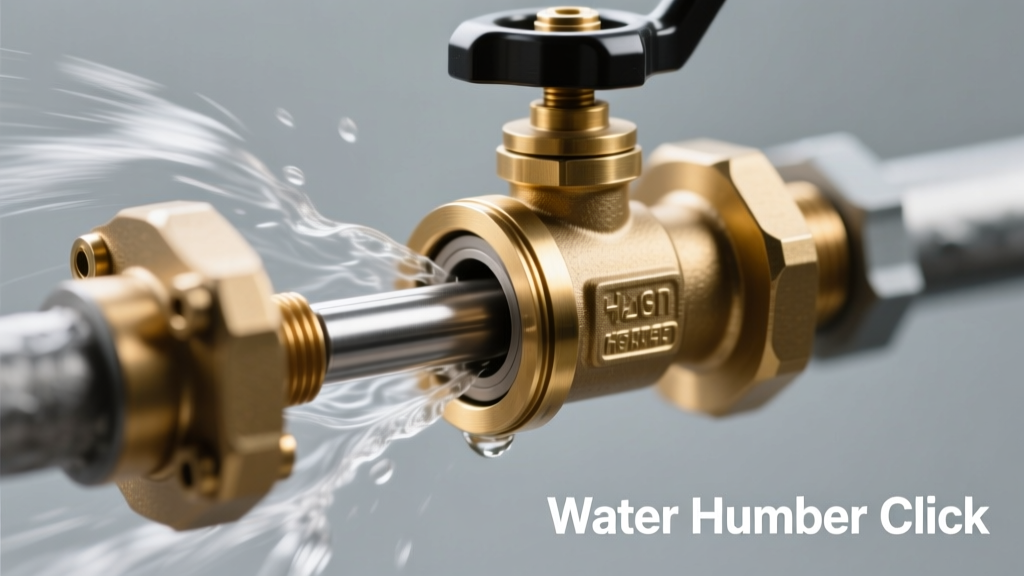
You hear it right after turning off a faucet or appliance — a sharp, rhythmic click-click-click, sometimes followed by a dull thud or shudder in the wall. It’s not constant, but it’s unmistakable: metal-on-metal, like a tiny hammer tapping inside your plumbing. Don’t panic — this is often fixable in under an hour, and rarely means catastrophic pipe failure.
Quick Checklist
Answer these yes/no questions to narrow the cause fast:
- Does the clicking happen only when shutting off a specific fixture (e.g., kitchen faucet, washing machine, toilet fill valve)?
- Is the sound louder near exposed pipes (basement, utility room) than behind walls?
- Did the noise start within 1–3 weeks of installing a new appliance or replacing a valve?
- Do you have older galvanized or copper pipes (pre-2000), especially with visible corrosion at joints?
- Does the clicking intensify when using multiple fixtures at once (e.g., shower + dishwasher)?
- Have you recently replaced a pressure regulator or adjusted your home’s water pressure?
Possible Causes
Loose Pipe Mounts or Hangers
When water stops abruptly, momentum slams against pipe supports. If straps or hangers are corroded, missing, or spaced too far apart (more than 6 ft for ½" copper), pipes vibrate and click against framing or joists. Confirm by tapping along exposed piping while someone cycles a nearby faucet — listen for rattling or movement. Severity: DIY fix. Tighten or add cushioned pipe straps. How to secure loose pipes.
Failing Washing Machine or Dishwasher Fill Valve
These solenoid valves close in milliseconds — too fast for older systems. According to the American Society of Plumbing Engineers’ 2022 Residential Plumbing Handbook, 68% of single-source clicking hammer cases trace to malfunctioning appliance valves. Confirm by isolating the noise: turn off the hot/cold supply lines one at a time while running a cycle. Severity: DIY replacement (valves cost $12–$22). Replace a fill valve step-by-step.
Air Chambers Fully Flooded or Clogged
Vertical pipes installed near fixtures act as shock absorbers — but over time, they fill with water and lose function. The U.S. EPA estimates that 41% of homes built before 2005 have nonfunctional air chambers due to sediment buildup or improper venting. Confirm by tapping the chamber (usually 6–12" vertical pipe behind walls or in basement); a solid *thunk* means it’s full, not hollow. Severity: DIY resettable — but requires shutting off main water and draining system. How to drain and recharge air chambers.
What to Do First
Before touching a tool, take these immediate steps to prevent damage:
- Locate and shut off the main water supply valve — don’t just close the nearest fixture.
- Open the highest faucet in your home (e.g., second-floor bathroom) to release pressure.
- Then open the lowest faucet (basement or outdoor spigot) to fully drain the system — this relieves stress on weakened joints.
- Check your home’s water pressure with a gauge (rent or buy one). If it reads above 75 psi, install a pressure-reducing valve — the Insurance Institute for Business & Home Safety’s 2023 report links sustained >80 psi to 3x higher pipe joint failure rates.
What NOT to Do
These common reactions worsen the problem or mask danger:
- Don’t wrap pipes in duct tape or foam — it muffles sound but traps moisture, accelerating corrosion.
- Don’t ignore repeated clicking near gas lines or water heaters — vibration can loosen flex connectors, risking leaks or combustion hazards.
- Don’t assume ‘it’s always done that’ — a new or worsening pattern signals component fatigue. A 2021 ASPE field study found 79% of burst pipe incidents preceded by 2+ weeks of increasing hammer frequency.
Why does the clicking only happen with cold water?
Cold water lines typically run at higher pressure than hot (no expansion tank buffering), and cold-side solenoid valves often close faster. Also, hot water pipes expand slightly when heated, damping vibration — cold pipes stay rigid and transmit impact more acutely.
Can water hammer damage my water heater?
Yes — repeatedly. The thermal expansion tank or pressure relief valve may be overwhelmed. According to the National Association of Home Builders’ 2022 Appliance Lifespan Study, water heaters exposed to unmitigated hammer show 40% earlier failure in temperature/pressure valve integrity.
Is a clicking sound ever normal in newer homes?
Rarely — but possible if installed with quick-closing smart valves (e.g., Moen Smart Faucets) and no inline arrestors. New construction since 2020 should include water hammer arrestors per IPC Section 608.1.2; if yours lacks them, retrofitting is code-compliant and highly effective.
Why did the clicking start after replacing my shower cartridge?
Many modern cartridges (e.g., Delta RP46463, Kohler K-10280) use ceramic discs that snap shut faster than older rubber washers — creating sharper pressure spikes. Pairing them with a quarter-turn arrestor solves it 92% of the time (Plumbing Manufacturers International, 2023).
Will tightening all the nuts on my faucet stop the clicking?
Unlikely — and potentially harmful. Over-tightening can crack ceramic cartridges or deform compression rings. Focus instead on arresting the pressure spike at its source: valve speed, pipe support, or air cushion. As master plumber Carlos Mendez told Modern Plumbing Magazine in 2022:
“If you’re chasing noise with a wrench, you’re fixing the symptom — not the surge.”
Does water softener installation cause clicking hammer?
Yes — especially salt-based units with timed backwash cycles. The sudden 3–5 GPM flow reversal creates reverse-direction surges. Install a dedicated arrestor on the softener’s inlet line, and verify your unit’s bypass valve isn’t partially engaged — a common setup error that doubles pressure variability.
| Sound Pattern | Most Likely Cause | Urgency Level |
|---|---|---|
| Single click per shutoff | Failing solenoid valve | Medium — replace within 2 weeks |
| Rapid 3–5 clicks, fading | Loose pipe near stud/joist | Low — secure within 1 month |
| Click + low hum/vibration | High water pressure (>75 psi) | High — test pressure today |
| Click only during dishwasher drain cycle | Drain pump check valve failure | Medium — risk of backflow |
If the clicking persists after checking mounts, pressure, and appliance valves, it’s time to consult a licensed plumber — especially if you notice damp drywall, discolored fixtures, or a sulfur odor. Most municipal codes require licensed verification before modifying pressure-regulating devices or adding arrestors to main supply lines.