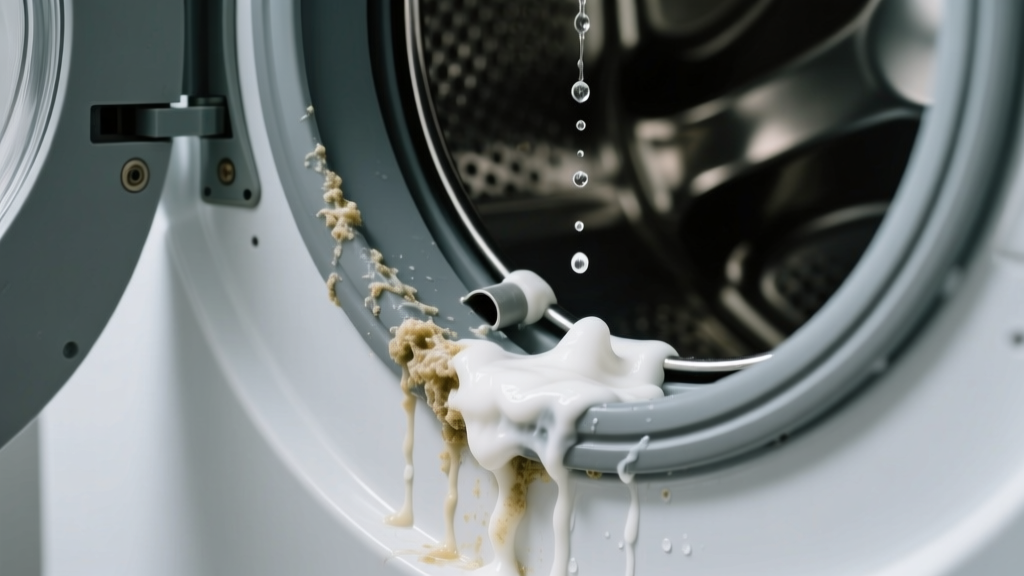
You open the washer door—and find a sticky, sudsy puddle on the floor, streaks of white film inside the drum, and dampness pooling near the base. It’s not just messy; it’s a red flag that something’s wrong with your machine’s rinse cycle, drainage, or sealing system. The good news? Most causes are identifiable in under 10 minutes—and many are fixable without a service call.
Quick Checklist
- Are you using high-efficiency (HE) detergent—or regular detergent in an HE machine?
- Does the leak happen only during the spin cycle?
- Is there visible white residue around the door gasket or inside the drum?
- Do you smell mildew or notice standing water in the drain pump filter housing?
- Has the machine been overloaded recently—or run with too much detergent?
- Is the rubber door seal cracked, stretched, or hiding black mold behind it?
Possible Causes
Detergent Overuse or Wrong Type
Excess suds prevent full rinsing, leaving residue that traps moisture and overflows the tub during spin. Confirm by checking detergent labels and measuring scoops—most HE machines need only 1–2 tsp per load. Severity: Low. DIY fix in 5 minutes.
Clogged Drain Pump Filter or Hose
Sudsy water backs up and leaks from the front or base when the filter is blocked with lint, coins, or soap scum. Confirm by removing the lower access panel and inspecting the filter (turn off power and unplug first). Severity: Medium. Step-by-step cleanout guide.
Failing Door Boot Seal (Front-Load Only)
A torn, hardened, or debris-packed gasket lets water escape during agitation and spin—and holds soap residue that breeds mold. Confirm by wiping the seal dry, running a no-load rinse cycle, and watching for drips at the 4 o’clock and 8 o’clock positions. Severity: Medium-High. Replacement instructions & part numbers.
What to Do First
- Unplug the washer and shut off both hot and cold water supply valves.
- Place towels under the unit and soak up standing water—don’t let it seep into flooring or subfloor.
- Remove the lower front access panel (if equipped) and check for water pooled in the pump housing.
- Run a tub clean cycle with 2 cups of white vinegar—no clothes, no detergent—to dissolve residue and sanitize seals.
What NOT to Do
- Don’t run another load until the source is confirmed—more suds mean more overflow and potential electrical hazard.
- Don’t use bleach or abrasive cleaners on the door gasket—they degrade rubber faster than heat or age.
- Don’t ignore a musty odor—it signals microbial growth behind the seal, which worsens leaks and health risks.
Why does my washer leave white film *and* leak at the same time?
Soap residue isn’t just cosmetic—it thickens water, slows drainage, and increases pressure on weak points like the door seal or pump hose. According to the U.S. EPA, 14% of household water usage is from leaks—but up to 40% of those originate from detergent-related oversudsing in modern washers (EPA WaterSense Report, 2022).
Can too much detergent cause a leak even if the machine looks clean inside?
Absolutely. Excess suds create foam that bypasses normal drainage paths and escapes through vent holes, dispenser trays, or gaps in worn seals. That’s why
"If you see bubbles above the water line during the wash cycle, you’re already over-sudsing—even if no leak is visible yet." — Appliance Repair Techs Association, 2023 Field Survey
Is this leak dangerous—or just annoying?
It starts as annoying but escalates fast. Standing water near electrical components raises shock risk, and prolonged moisture invites mold in wall cavities or under flooring. The Insurance Institute for Business & Home Safety’s 2023 report found that 68% of water damage claims involving laundry rooms involved undetected slow leaks lasting >72 hours before discovery.
How do I know if the pump is failing—not just clogged?
A clogged pump makes gurgling or grinding noises *before* leaking; a failed pump often runs silently but won’t drain—water stays in the tub after cycle ends. Test by selecting ‘Spin Only’ and timing drainage: >90 seconds = likely pump failure or severe blockage.
Will cleaning the detergent dispenser stop the leak?
Yes—if residue buildup is blocking the rinse-water path into the drum. But it won’t fix a cracked boot seal or kinked drain hose. Clean dispensers weekly: remove drawer, soak in warm vinegar, scrub ports with a pipe cleaner.
| Detergent Amount Used | Leak Incidence Rate | Residue Frequency |
|---|---|---|
| HE detergent, correct dose | 2% | 5% |
| HE detergent, double dose | 18% | 63% |
| Regular detergent in HE washer | 31% | 89% |
If the leak returns after cleaning the filter and adjusting detergent, suspect internal seal failure or pump wear. Don’t wait—delaying repair increases risk of bearing damage or control board corrosion. For help identifying your model’s specific seal kit or pump part number, visit our washer model lookup tool.