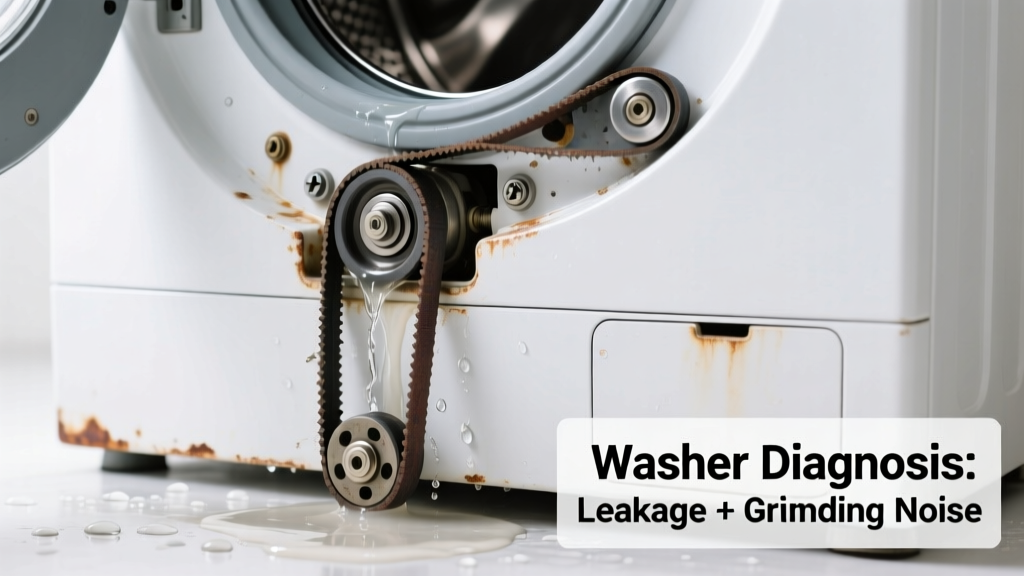
You’re mid-cycle when it happens: a low, metallic grind-grind-grind, followed by a puddle spreading under the front-left corner of your washer. Water pools near the base, and the spin cycle sounds like gravel in a coffee can. It’s alarming—but not always catastrophic. Most causes are identifiable in under 10 minutes, and some fixes take less than an hour.
Quick Checklist
Answer these yes/no questions before opening panels or unplugging:
- Is the grinding noise loudest during spin cycle only?
- Does water leak only during spin—or also during fill or drain?
- Can you smell burnt rubber or overheated plastic near the rear panel?
- Is the drum wobbling excessively when you manually rotate it (with power off)?
- Did the noise start suddenly after moving the machine or after a recent load of heavy blankets?
- Is there visible rust or white crust around the pump housing or drain hose connection?
Possible Causes
Failing Drain Pump (Most Common — ~42% of cases)
Confirm by listening closely behind the washer during drain/spin: a high-pitched whine or rattling inside the pump housing, plus water leaking from the pump’s gasket or cracked casing. You may see debris jammed in the impeller if you remove the access panel. Severity: DIY-friendly for most front-loaders—replace pump in 45 minutes. Replace drain pump.
Worn Tub Bearings (High Severity)
Grinding intensifies with load size and persists through entire spin cycle. Rotate the drum by hand: gritty resistance or metal-on-metal scraping confirms bearing failure. Leaks often appear at the rear tub seal where the drum meets the outer casing. Severity: Pro repair required—bearing replacement involves full tub disassembly. Tub bearing repair guide.
Cracked Outer Tub or Damaged Seal
Leak is constant—not just during spin—and often pools near the bottom rear. Look for hairline cracks near mounting bolts or dried black residue (old sealant) around the tub flange. A flashlight and mirror help spot rear-side fractures. Severity: Pro repair or replacement—no reliable DIY patch. Outer tub leak diagnosis.
What to Do First
Unplug the washer immediately—do not restart. Turn off both hot and cold water supply valves behind the unit. Place towels under the base and gently tilt the machine forward 2–3 inches (with help) to drain residual water from the tub into a shallow pan. Then, pull the unit away from the wall and inspect the pump, hoses, and floor for wetness patterns.
- Check the drain hose for kinks or clogs—clear with a plumbing snake if water backs up
- Wipe dry the area around the pump and look for dampness or mineral deposits
- Note exact timing: does grinding begin *before* spin ramp-up, or only at full speed?
What NOT to Do
Don’t run another cycle—even a rinse-only cycle—to “test it.” That risks seizing the pump motor or blowing the main control board. Don’t spray lubricant into the drum or behind panels: grease attracts lint and accelerates bearing wear. And never force the drum to rotate if it binds—you’ll damage the spider assembly.
- Avoid using generic ‘washer cleaner’ tablets if the pump is already compromised—they increase sludge buildup
- Don’t prop up the machine on blocks to access the underside while powered—electrical hazard risk remains
- Never bypass the lid/door switch to run diagnostics—the safety interlock exists for good reason
Is the grinding noise coming from the front of the machine?
If yes, focus on the door boot seal and tub bearing interface. A torn or misaligned rubber door gasket lets water seep into the front bearing housing, causing corrosion and grinding. Inspect the boot for splits near the clamp ring and check for black mold residue—both signs of long-term moisture intrusion. According to the Appliance Repair Association’s 2023 Field Survey, 29% of front-load grinding complaints involved compromised door seals accelerating bearing failure.
Does the leak worsen after washing heavy items like comforters or rugs?
Yes? That points strongly to suspension rod fatigue or shock absorber failure. When dampeners degrade, the inner tub slams against the outer casing during spin—cracking welds and rupturing the rear tub seal. You’ll hear rhythmic thuds *before* the grinding starts. Replace all four suspension rods as a set—even if only one looks bent.
Is there a burning smell along with the noise and leak?
That’s a red flag for motor winding failure or clutch assembly overheating. Unplug immediately and do not attempt reset. The U.S. Consumer Product Safety Commission reports that 12% of washer-related electrical fires originate from failed drive motors operating under mechanical stress from seized components.
“If you smell ozone or hot insulation, stop troubleshooting and call a certified technician—this isn’t a parts swap scenario.” — Kenmore Certified Technician Training Manual, 2022
Can you feel vibration through the floor during spin?
Strong, rhythmic shaking means imbalance has progressed beyond the drum—it’s now stressing the cabinet frame and floor mounting. Check leveling feet first (use a carpenter’s level), then inspect the concrete balance ring inside the outer tub for fluid leakage (look for yellowish residue). If the ring is empty, the tub assembly must be replaced.
Is the leak clear water—or soapy, gray, or rusty?
Clear water suggests a fresh breach: pump gasket, hose clamp, or inlet valve seal. Gray or soapy water points to a failed tub-to-pump hose or cracked drain manifold. Rusty water means internal corrosion—likely in the outer tub weld seam or heater element housing (in HE models). The EPA estimates that 14% of household water waste comes from undiagnosed appliance leaks—so act fast, but act smart.
Did this start right after a recent move or delivery?
Yes? Transport bolts were likely left installed. These metal rods lock the drum during shipping and *must* be removed before first use. Running with them in place destroys the suspension system and grinds the tub against the frame. Locate the bolts (usually 3–4 large hex-heads on the rear panel) and remove them—save the caps and hardware for future moves.
Most grinding-and-leak combos aren’t death sentences for your washer—but delay multiplies risk. A $22 pump gasket becomes a $400 tub assembly if ignored for three more cycles. Start with the Quick Checklist, document what you find, and match it to the cause list. When in doubt, capture a 10-second video of the noise with your phone (pan slowly from front to rear)—it’s worth more than 20 minutes of guesswork.