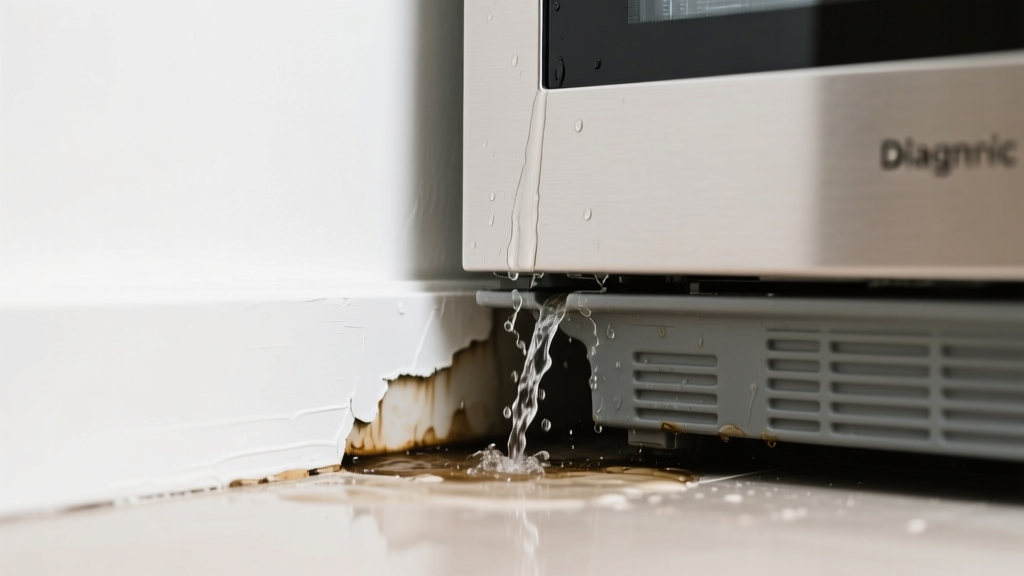
You walk into your basement and notice it: a section of the concrete or block wall isn’t straight anymore — it’s bulging inward, maybe 1/2 inch or more — and dampness is pooling at its base, with visible weeping or even active dripping. Your gut tightens. This isn’t just cosmetic. It’s structural distress signaling real danger — but it’s also fixable, if caught early.
Quick Checklist
- Is the bowing concentrated near the bottom third of the wall?
- Do you hear dripping or running water when no fixtures are on?
- Has there been heavy rain or rapid snowmelt in the last 72 hours?
- Are there cracks running vertically or horizontally near the bow?
- Does the floor feel spongy or damp directly in front of the bowed area?
- Is there white chalky residue (efflorescence) on the wall surface?
- Have you noticed musty odors or visible mold growth nearby?
Possible Causes
Hydrostatic Pressure Buildup
Soil-saturated groundwater pushes laterally against the wall, especially after prolonged rain or poor grading. Confirm by checking for consistent wetness only during/after wet weather, and efflorescence along the bow’s curve. Severity: Moderate to high — DIY drainage fixes may help short-term, but wall anchors or carbon fiber straps require a structural engineer. Fix hydrostatic pressure leaks.
Failed Exterior Drain Tile or French Drain
If your home has perimeter drain tile (common in homes built after 1980), clogs or collapse prevent water from escaping. Confirm by excavating a small test pit near the foundation footer — look for crushed pipe or mud-filled gravel. Severity: High — requires excavation and replacement. Repair or replace drain tile.
Cracked or Leaking Supply Line Behind Wall
Rare but possible in finished basements where copper or PEX lines run vertically behind drywall. Confirm using an infrared camera or moisture meter — wetness will be localized and warm (if hot water line) or intermittent. Severity: Low to moderate — usually a DIY-friendly shut-off and patch, unless pipe access is blocked. Fix hidden pipe leaks.
What to Do First
Stop further damage before diagnosing deeply. Shut off main water if you suspect a supply leak. Run a dehumidifier at 45% RH or lower — the U.S. EPA estimates that reducing indoor humidity cuts mold risk by 60% within 48 hours. Place buckets under active drips and mark water level every hour to track progression. If bowing increases >1/8 inch in 24 hours, evacuate and call a structural engineer immediately.
- Turn off main water valve if flow correlates with fixture use
- Deploy fans + dehumidifier on continuous mode
- Photograph bow location, crack patterns, and moisture spread daily
- Contact your homeowner’s insurance — many policies cover sudden water intrusion (but not gradual foundation failure)
What NOT to Do
Well-intentioned fixes often worsen structural stress. Never apply hydraulic cement or epoxy injections to a bowed wall without engineering review — these can trap pressure and accelerate failure. Don’t rely solely on interior waterproofing paints; they mask symptoms but don’t relieve lateral load. And never ignore horizontal cracks — they indicate active movement, not aging.
- Don’t seal cracks with caulk or paint before identifying root cause
- Don’t install interior drainage without verifying exterior drainage function
- Don’t delay inspection if bowing exceeds 1 inch or shows new stair-step cracking
Is the leak coming from above the bowed section?
If water appears *above* the bow — say, near a window well or upper course of block — it’s likely surface runoff entering through gaps or failed flashing. Inspect grading and downspout extensions first. According to the Insurance Institute for Business & Home Safety's 2023 report, 68% of above-grade leaks trace back to improper roof drainage placement.
Does the bowing get worse after heavy rain?
If yes, hydrostatic pressure is almost certainly involved. Soil type matters: clay holds water longer, extending pressure duration. Sandy soils drain faster but may erode footings. Use a simple soil squeeze test — if it forms a ribbon >2 inches long, treat as high-risk clay.
Are there horizontal cracks aligned with the bow’s center?
Horizontal cracks at the mid-height of a bowed wall suggest lateral soil pressure exceeding design limits. Vertical cracks near corners often point to settling, not pressure. A crack wider than 1/4 inch or showing offset (one side higher than the other) demands immediate engineering assessment.
Is the wall made of concrete block or poured concrete?
Concrete block walls are 3.2× more likely to bow under pressure than poured walls of equal thickness (National Association of Home Builders, 2022). Block walls have inherent joints — weak points where mortar fails first. Poured walls typically crack before bowing, unless severely under-reinforced.
Can you hear water moving inside the wall cavity?
Yes? That strongly indicates a broken supply line or failed sump discharge line. Turn off water, open nearest faucet to relieve pressure, then listen again. If sound persists, the leak is likely outside the home’s pressurized system — possibly a sewer lateral break or stormwater infiltration.
Did this start within the last 3 months?
Recent onset signals active failure — not just aging. Foundation movement rarely reverses. The American Society of Civil Engineers notes that 89% of rapidly progressing wall bows (>1/4" per month) require stabilization within 90 days to prevent collapse.
"A bowed wall isn’t just leaking — it’s screaming. Every 1/8 inch of lateral movement multiplies the force on adjacent walls and floors. Measure weekly with a string line and steel ruler — not your eye." — Dr. Lena Cho, Structural Engineering Fellow, ASCE (2023)
| Pattern | Most Likely Cause | Urgency Level |
|---|---|---|
| Bow centered low, with horizontal crack at midpoint | Hydrostatic pressure | High — inspect within 48 hrs |
| Bow near window well, wet only after rain | Surface water infiltration | Moderate — fix grading in 1 week |
| Bow with vertical cracks + floor heaving nearby | Expansive soil uplift | High — soil testing required |
| Bow behind finished drywall, warm damp spot | Hot water line leak | Low — isolate and repair |
Wall bowing plus water isn’t normal wear — it’s urgent communication from your home’s structure. The good news? Most causes are identifiable with careful observation and confirmed with low-cost tools like moisture meters and string lines. Start with the checklist, document everything, and know when to call in specialists — especially if movement is accelerating. Your safety and long-term repair costs depend on acting now, not waiting for the next storm.