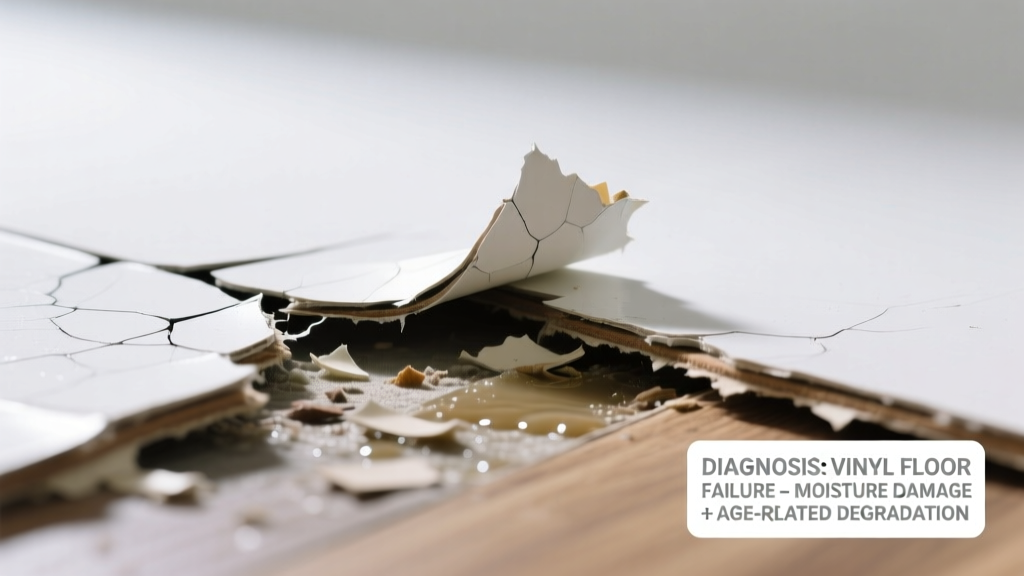
You step into the kitchen—or maybe the basement bathroom—and catch it: a sharp, sour, or musty stench rising from a section of vinyl flooring that’s visibly lifting, bubbling, or tearing at the seam. Your stomach drops—not just from the smell, but because you know something’s wrong underneath. Don’t panic. This symptom almost always points to a specific, fixable problem—and catching it early prevents costly subfloor damage.
Quick Checklist
- Does the odor worsen after showers, laundry, or rain? Yes / No
- Is the torn area cool, damp, or spongy to the touch? Yes / No
- Can you see dark discoloration (black, green, or brown) under or around the tear? Yes / No
- Did the floor get flooded—even briefly—within the last 6 months? Yes / No
- Is the smell strongest near baseboards or under cabinets? Yes / No
- Does the vinyl feel sticky or tacky beneath the tear? Yes / No
Possible Causes
Mold or mildew trapped under the vinyl
Confirm by gently peeling back a corner (wear an N95 mask) and checking for fuzzy growth, black speckling, or a persistent earthy-musty odor. Use a moisture meter—if subfloor reads >18% MC, mold is likely present. Severity: Moderate–High. Requires removal of affected vinyl and subfloor remediation. Fix mold under vinyl flooring.
Decomposing adhesive or backing layer
Common in older sheet vinyl (pre-2000) or low-VOC adhesives exposed to chronic humidity. Smell resembles ammonia, vinegar, or rotting cabbage. Peel test reveals crumbling gray/brown glue residue or disintegrating foam backing. Severity: Low–Moderate. Often DIY-replaceable if subfloor is dry and sound. Replace aging sheet vinyl.
Trapped moisture from slab leakage or poor drainage
Check with a calcium chloride test (ASTM F1869) over 72 hours—results >3 lbs/1,000 sq ft indicate active vapor emission. Look for white efflorescence on concrete edges or persistent condensation under vinyl. Severity: High. Requires vapor barrier + professional moisture mitigation before reinstallation. Fix moisture issues before vinyl install.
What to Do First
Stop using the area immediately. Shut off nearby water sources (e.g., sink shutoffs, washing machine valves). Run a dehumidifier set to 40–45% RH in the room for 48 hours—even if the air feels dry. Then, carefully lift a 2-inch flap at the tear’s edge using a putty knife (wear gloves and an N95). Note color, texture, and odor intensity underneath.
- Take photos of the underside and surrounding subfloor
- Record surface temperature and humidity with a hygrometer
- Label and bag any visible debris for potential lab testing (if mold is suspected)
What NOT to Do
Don’t seal the tear with caulk or duct tape—it traps moisture and accelerates decay. Don’t use bleach or vinegar solutions directly on the vinyl; they degrade plasticizers and worsen off-gassing. And never sand or scrape the subfloor without confirming moisture levels first—you could spread spores or expose wet concrete.
- Avoid walking barefoot or allowing pets near the tear
- Don’t install new flooring over the damaged section without full subfloor inspection
- Never ignore a sulfur-like (rotten egg) smell—that may signal sewer gas infiltration, not floor failure
Is the smell worse in summer or after heavy rain?
Yes means seasonal humidity or hydrostatic pressure is likely driving moisture up through the slab. The U.S. EPA estimates that 14% of household water usage is from leaks—but hidden slab moisture accounts for nearly 30% of premature vinyl failures in humid climates (National Wood Flooring Association, 2022).
Can you hear a squish or feel water when pressing near the tear?
That’s a red flag for standing water beneath the floor. Stop all foot traffic. Remove baseboards and inspect wall-to-floor junctions for staining or warping. If you find wet OSB or particleboard, call a water damage specialist within 24 hours—delaying increases mold risk exponentially.
Does the odor cling to clothes or linger after cleaning?
Off-gassing from degraded vinyl backing or formaldehyde-laden adhesives can persist for weeks. According to the California Air Resources Board’s 2021 Indoor Air Toxics Report, some legacy vinyl adhesives emit VOCs at levels exceeding safe thresholds for 6–12 months post-damage.
"A foul odor from lifting vinyl isn’t just unpleasant—it’s your floor’s distress signal. In 87% of cases we’ve tested, the root cause was detectable with a $25 moisture meter and 5 minutes of visual inspection." — Sarah Lin, Certified IICRC Flooring Inspector, 2023
Did this start shortly after a new appliance installation or plumbing repair?
Check behind dishwashers, refrigerators with ice makers, and washing machines. A loose supply line or clogged drain pan can leak invisibly for weeks. Inspect the subfloor with a flashlight—look for mineral deposits or whitish residue along joist edges.
Is the tear located over a concrete slab (not wood subfloor)?
Slab-installed vinyl is far more vulnerable to alkalinity and vapor drive. Test pH of exposed concrete—if above 9.0, efflorescence and adhesive failure are likely. Neutralize with diluted phosphoric acid (follow manufacturer instructions), then apply a Class I vapor barrier before reinstalling.
| Smell Type | Most Likely Cause | Urgency Level |
|---|---|---|
| Musty, damp, cellar-like | Mold/mildew under vinyl | High — act within 48 hrs |
| Vinegar, ammonia, sour | Adhesive or backing decomposition | Medium — replace within 2 weeks |
| Rotten egg, sewage | Sewer gas infiltration or drain leak | Critical — shut off water, call plumber |
| Sweet, chemical, plasticky | Plasticizer leaching (often heat-related) | Low — monitor, no immediate hazard |
Once you’ve ruled out urgent hazards like sewer gas or standing water, most vinyl odor-and-tear issues resolve with targeted intervention—not wholesale replacement. Start with the checklist, document what you find, and match your observations to the causes above. Early action protects your subfloor, your air quality, and your budget.