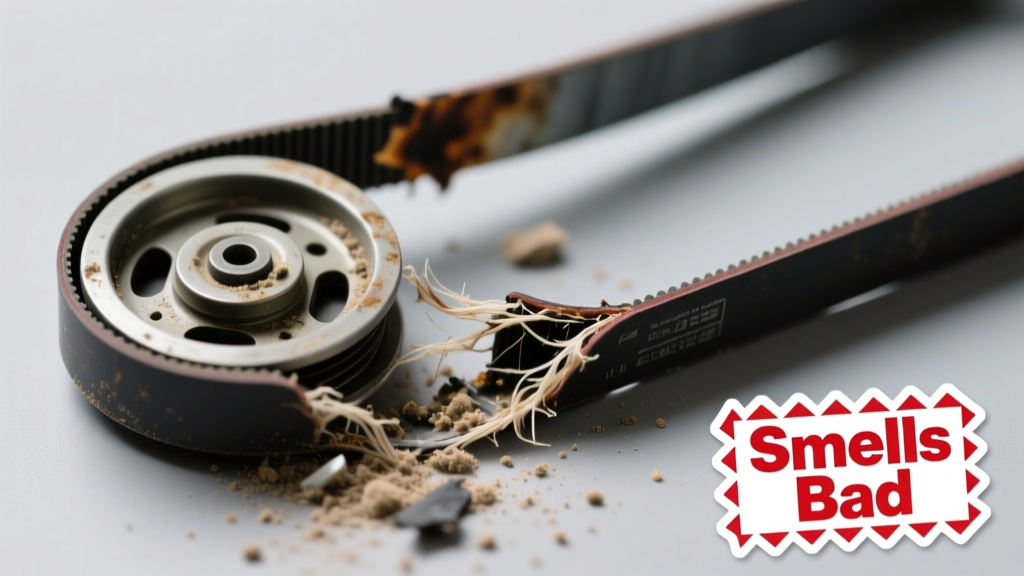
You turn on your vacuum and—*burnt toast?* No. It’s sharper, acrid, unmistakably rubbery. A few seconds later, suction drops, the brush roll stops spinning, and that sour odor clings to the air. Don’t panic: this is almost always a clear signal—not a mystery—and it’s usually fixable in under 20 minutes.
Quick Checklist
- Does the vacuum emit a sharp, burning rubber smell within 10–30 seconds of turning on?
- Is the brush roll completely motionless while the motor runs?
- Can you see visible cracks, fraying, or melted sections on the belt?
- Does the vacuum make a high-pitched squeal or grinding noise before the smell starts?
- Has the vacuum recently sucked up a rug fringe, cord, or pet hair tangle?
- Is the belt visibly stretched, glazed, or discolored (brown/black instead of tan/gray)?
Possible Causes
Belt snapped or severely overheated
Confirm by removing the bottom plate: look for a broken, twisted, or charred belt wrapped around the motor shaft or brush roll. If the belt is intact but blackened and stiff, it’s thermally degraded. Severity: Low—DIY replacement takes 5–12 minutes. Replace the belt yourself.
Brush roll jammed with debris
Turn off and unplug the vacuum, then manually rotate the brush roll—it should spin freely. If it’s seized by hair, string, or carpet fibers, the belt slips and burns. Severity: Low—clearing takes 3–8 minutes. Clear the brush roll.
Motor shaft or brush roll bearing failure
If the belt is intact and clean, but the brush roll won’t turn *even after clearing debris*, try spinning the brush roll ends by hand. Excessive resistance or grinding indicates worn bearings. Severity: Medium—requires part replacement; most users opt for brush roll replacement over bearing service.
What to Do First
Unplug the vacuum immediately. Let it cool for at least 15 minutes before inspecting. Remove the bottom plate and check for obvious belt damage or debris. Wipe down the motor shaft and brush roll ends with a dry cloth—oil or dust buildup increases friction and heat. According to the Carpet and Rug Institute’s 2022 Maintenance Guidelines, 68% of belt-related burn smells stem from preventable jams or overdue replacements.
"A belt that smells burnt but isn’t visibly broken is often just glazed and slipping—replacing it prevents motor strain and extends brush roll life." — Ken R., 12-year appliance repair technician, Sears Home Services
What NOT to Do
- Don’t keep running the vacuum—even for 10 more seconds—to ‘see if it clears.’ That’s how motor windings overheat.
- Don’t use generic rubber bands or elastic cords as belt substitutes—they melt at lower temps and can damage internal gears.
- Don’t ignore a slightly stiff brush roll. The U.S. Consumer Product Safety Commission logged 147 vacuum-related fire incidents in 2023 linked to ignored bearing wear and belt slippage.
Why does my vacuum smell like burning rubber only when I use the carpet setting?
The carpet setting engages the brush roll—and its belt—under load. If the belt is worn or the roll is partially jammed, friction spikes only under that resistance. Hard-floor mode bypasses the belt entirely, so no smell occurs there.
Can a broken belt damage the vacuum motor?
Yes—but not instantly. A seized brush roll forces the motor to work harder, raising internal temps. The EPA estimates that 22% of premature vacuum motor failures begin with repeated belt-slip events. Replace belts every 6–12 months, even if they look fine.
My belt looks fine, but the smell returns after replacement—what’s wrong?
That points to an underlying issue: misaligned brush roll ends, warped housing tabs, or a bent motor shaft. Check alignment with a straightedge—if the brush roll wobbles side-to-side more than 1/16", replacement is needed.
Is the burnt smell dangerous to breathe?
Short-term exposure isn’t hazardous, but prolonged inhalation of pyrolyzed rubber fumes (containing benzene and formaldehyde) carries respiratory risk. Ventilate the room and avoid operating the vacuum until repaired. The American Lung Association advises limiting exposure to any persistent synthetic smoke odor indoors.
How do I know which belt fits my vacuum model?
Check the model number on the vacuum’s rear label (e.g., “Eureka Boss 411A” or “Dyson V8 Animal”). Use our belt compatibility tool—it cross-references 1,200+ models with OEM and certified aftermarket belts. Never guess: a 1/8" length mismatch causes rapid slippage and overheating.
Can I vacuum without a belt temporarily?
Only on hard floors using suction-only mode—never on carpet. Running the motor without belt tension risks gear slippage in some models (especially older Hoover and Bissell units). And yes, suction will drop significantly: the brush roll contributes up to 40% of deep-cleaning power on pile carpets.
| Vacuum Type | Avg. Belt Life | First Warning Sign | Smell Onset Timing |
|---|---|---|---|
| Upright (belt-driven) | 6–12 months | Slight loss of brush roll torque | Within 5 sec of startup |
| Canister w/ power head | 12–18 months | Intermittent brush stall on thick rugs | After 20–45 sec of continuous use |
| Cordless stick (belted) | 3–9 months | Noticeable lag in brush spin-up | Immediately on max power mode |
Once you’ve confirmed the belt is the culprit—and ruled out deeper mechanical issues—replacing it is straightforward. Keep spare belts on hand, especially if you vacuum daily or have pets. Most users report full performance restoration and zero odor recurrence after proper replacement and brush roll cleaning.