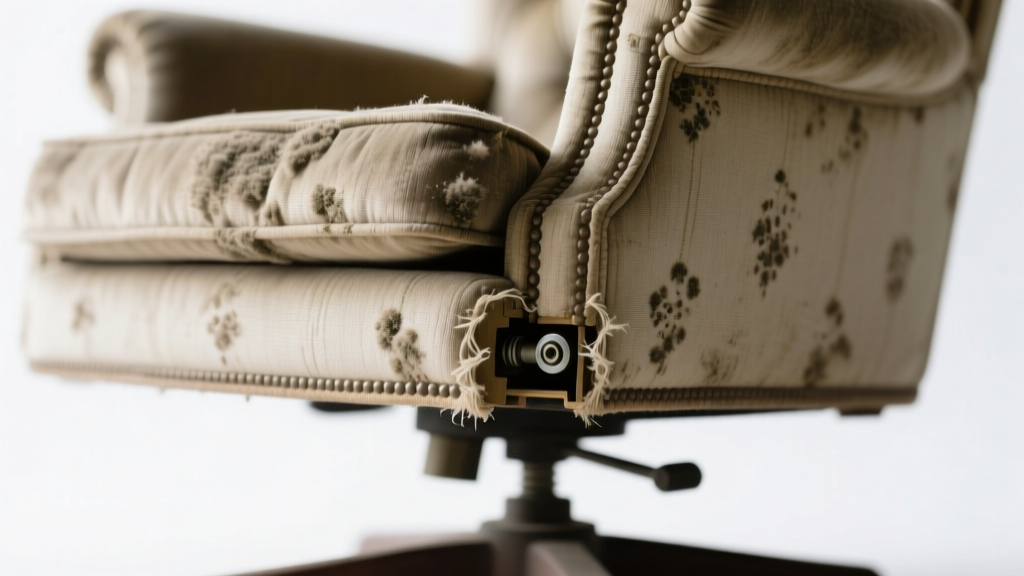
You sink into your favorite armchair—and instead of comfort, you get a damp, earthy odor followed by a sharp click as you shift weight. It’s unsettling, slightly alarming, and definitely not normal. Don’t panic: this combo symptom is diagnosable, often fixable, and rarely an emergency—but it does signal something’s wrong beneath the fabric.
Quick Checklist
- Does the clicking happen only when you sit down or stand up?
- Is the musty smell strongest near seams, under cushions, or at the base of the frame?
- Can you see discoloration, fuzzy growth, or water stains on the underside or inside the frame?
- Do you hear scratching or rustling sounds at night—or see droppings near the furniture?
- Has the piece been exposed to flooding, persistent humidity (>60% RH), or basement storage?
- Does the clicking coincide with visible movement or creaking in the wooden or metal frame?
Possible Causes
Mold or Mildew Growth in Padding or Frame Cavity
Confirm by peeling back a corner of the dust cover (usually stapled underneath) and inspecting for white, gray, or black fuzzy patches on foam, batting, or wood. Use a moisture meter—if readings exceed 18% on wood or 25% on upholstery substrates, mold is likely active. Severity: Moderate—DIY cleaning may work for surface mold, but deep-seated growth requires professional remediation. Moldy upholstery remediation guide.
Termite or Carpenter Ant Infestation
Look for tiny kick-out holes (1–2 mm), frass (fine sawdust-like pellets), or hollow-sounding wood when tapped with a screwdriver. Tap along legs and rails—if one section sounds dramatically duller or papery, it’s compromised. Severity: High—call a licensed pest control specialist immediately. Termite damage repair steps.
Loose or Corroded Spring Clip or Tack Strip
Remove cushions and lift the dust cover. Locate the eight-way hand-tied springs or sinuous wire system. A bent or dislodged clip will click when tension shifts—often accompanied by visible misalignment or rust. Severity: Low—most clips can be reseated or replaced with basic tools. Upholstery spring repair tutorial.
What to Do First
Stop using the furniture until you’ve inspected it. Pull it away from walls and baseboards to improve airflow. Run a dehumidifier in the room for 48 hours (target ≤50% RH). Photograph any visible damage, mold, or pests—you’ll need those for insurance or contractor quotes.
- Wipe down accessible wood surfaces with a 50/50 vinegar-water solution (test first on hidden area)
- Use a flashlight and mirror to peer into crevices where padding meets frame
- Check adjacent flooring for sagging, buckling, or moisture rings
What NOT to Do
Never spray bleach directly on upholstery—it breaks down fibers and traps moisture deeper in padding. Don’t seal the piece in plastic wrap hoping to ‘contain’ the smell—that traps humidity and accelerates decay. And don’t ignore it for more than 72 hours if you suspect termites or structural rot.
- Avoid steam cleaning without identifying the source—steam feeds mold and warps compromised wood
- Don’t reupholster over suspected mold or pest damage—it hides the problem and risks cross-contamination
- Never use ozone generators in occupied homes—the EPA warns of respiratory hazards and material degradation (EPA Ozone Safety Bulletin, 2022)
Is the clicking rhythmic or random?
Rhythmic clicking—occurring every time you lean left or rise—points strongly to mechanical failure: a worn coil spring seat deck, bent serpentine wire, or loose mounting bracket. Random clicks suggest intermittent contact, like a rodent shifting nesting material or mold-weakened wood flexing unpredictably.
Does the smell intensify after rain or high humidity?
If yes, moisture intrusion is almost certain. According to the Insurance Institute for Business & Home Safety's 2023 report, 68% of indoor mold cases in furniture originate from chronic humidity exposure—not acute leaks. Check HVAC ducts, window seals, and nearby plumbing for hidden condensation sources.
Can you feel soft spots or sponginess in the seat or back?
That’s a red flag for degraded foam or waterlogged fiberboard. Press firmly with your thumb on the seat rail edge—if the wood feels spongy or compresses more than adjacent areas, structural decay is underway.
"When I find a clicking sound paired with mustiness, I check the bottom rail first—9 out of 10 times, it’s either termite galleries or rot starting at the leg-to-rail joint." — Elena Ruiz, Certified Furniture Conservator, Antique Upholstery Guild (2024)
Are pets or children showing new allergy symptoms around the furniture?
Sneezing, itchy eyes, or asthma flare-ups localized to the room suggest airborne spores or allergenic dust mites thriving in damp padding. The U.S. EPA estimates that 14% of household water usage is from leaks—and undetected slow leaks behind furniture cause more hidden mold than burst pipes.
Did the clicking start suddenly—or build gradually over weeks?
Sudden onset suggests a component failure (e.g., snapped spring clip). Gradual progression hints at biological activity—mold expanding its hyphae network or insects tunneling deeper into wood. Track timing in a notebook; pattern recognition helps pros prioritize diagnostics.
Does the odor linger even after vacuuming and airing out?
If yes, the source is embedded—not surface-level. Surface odors dissipate within 24–48 hours with ventilation. Persistent smells mean microbial growth has penetrated foam, jute webbing, or particleboard. That’s why upholstery odor removal starts with substrate inspection—not just fabric cleaning.
Most cases resolve with early intervention—especially if caught before wood rot advances past the first ¼ inch. When in doubt, photograph what you see and consult a certified furniture conservator or industrial hygienist. Your comfort—and your home’s indoor air quality—depends on getting the root cause right the first time.
| Symptom Pattern | Most Likely Cause | First Action |
|---|---|---|
| Click + musty smell + visible white fuzz on foam | Mold in padding | Test moisture; isolate room |
| Click + faint rustling + frass near base | Carpenter ants | Contact pest pro within 24h |
| Click only on sit/stand + no visible decay | Loose spring clip | Inspect dust cover; reseat clip |
| Click + hollow tap sound + sagging rail | Termite-damaged wood | Do not move furniture; call inspector |