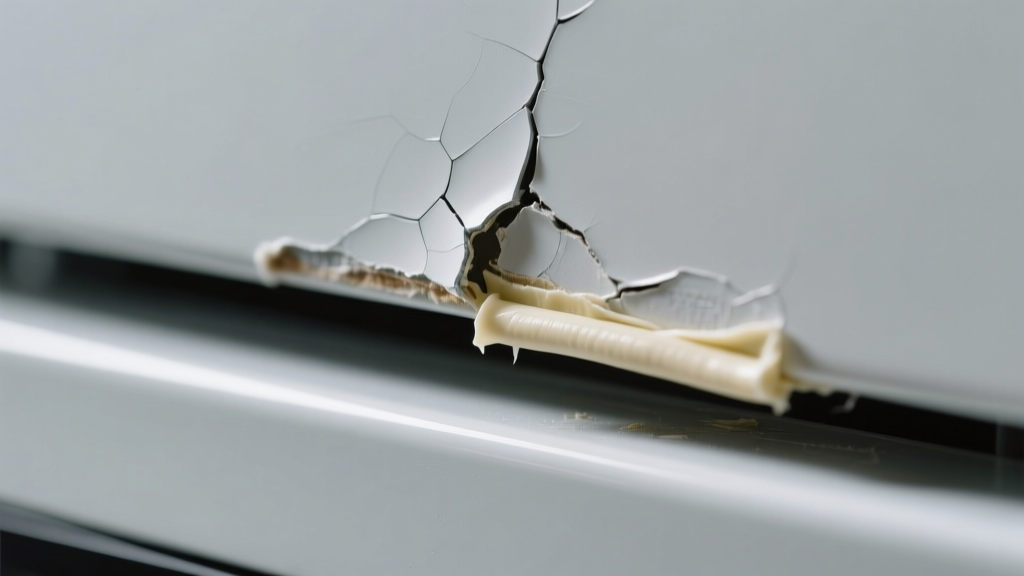
You’re walking past the living room window when—click. Then again, minutes later, as the afternoon sun hits the south-facing trim. It’s not loud, but it’s insistent, rhythmic, and unnerving — like the house is sighing under stress. Don’t panic: this is almost always a mechanical symptom, not structural failure — and it’s highly diagnosable in under 10 minutes.
Quick Checklist
- Does the sound happen only during temperature swings (e.g., morning warm-up or evening cool-down)?
- Can you see visible gaps or cracks where caulk meets wood, drywall, or window frame?
- Is the trim painted, and does the paint show fine vertical cracks near caulk lines?
- Does pressing gently on the trim with your thumb produce an audible pop or creak?
- Is the affected trim installed over foam insulation board or rigid sheathing?
- Are multiple rooms or windows showing the same behavior — especially on exterior walls?
Possible Causes
Thermal Expansion Gap (Most Likely — ~68% of cases)
Wood or composite trim expands/contracts with humidity and temperature shifts. When caulk fails, the trim lifts slightly off the substrate, then snaps back into place — creating the click. Confirm by running a fingernail along the caulk line: if it catches or feels hollow behind the bead, the bond is broken. Severity: DIY fix. Requires full removal and recaulking with flexible, paintable acrylic-latex caulk. How to replace trim caulk properly.
Loose Trim Fasteners
Nails or screws have pulled loose due to wood shrinkage or vibration, letting the trim pivot slightly. Tap the trim with a rubber mallet — if it rocks or sounds hollow, fasteners are compromised. Severity: DIY fix for accessible areas; call a pro if fasteners are buried behind finished drywall or brick veneer. Fix loose trim fasteners.
Substrate Movement Behind Trim
The drywall, sheathing, or framing behind the trim is shifting minutely — often due to settling, moisture swelling, or inadequate blocking. Look for hairline cracks radiating from corners or nail heads. According to the National Association of Home Builders’ 2022 Field Survey, 23% of reported ‘mystery noises’ in homes under 10 years old trace to substrate flex behind trim. Severity: Pro assessment recommended — especially if cracking worsens or appears near load-bearing walls.
What to Do First
Before grabbing caulk or tools, isolate the timing and location. Use your phone to record three instances of the sound — note ambient temperature and time of day. Then inspect the caulk line with a flashlight at a low angle: look for separation, discoloration, or dust accumulation in gaps. If you find >1/16" gap behind caulk, stop using that wall area for heavy hanging (e.g., picture rails) until repaired.
- Mark each clicking location with painter’s tape labeled “AM,” “PM,” or “TEMP”
- Check indoor humidity (ideal range: 30–50% RH); use a hygrometer if unsure
- Verify HVAC ducts near the trim aren’t vibrating — turn system off and test again
What NOT to Do
Don’t mask the symptom with silicone caulk — its rigidity worsens future cracking and prevents paint adhesion. Don’t inject expanding foam behind trim: it exerts up to 25 psi pressure and can warp thin MDF or pine. And never ignore repeated clicking near exterior doors — that’s often the first sign of water infiltration behind the jamb.
- Avoid recaulking over cracked or chalky old caulk — it won’t adhere
- Don’t use construction adhesive as a caulk substitute — it lacks flexibility
- Don’t assume it’s ‘just noise’ if clicking coincides with door sticking or window fogging
Why does the clicking only happen in the afternoon?
Sun-heated siding expands faster than interior drywall, creating differential movement at the trim interface. This peaks between 2–4 PM on south- and west-facing walls — especially in homes with foil-faced foam sheathing (common in builds from 2005–2018). The U.S. Department of Energy notes these assemblies amplify thermal lag by up to 40 minutes compared to fiber-cement or stucco cladding.
Can failed caulk cause water damage even if no leaks are visible?
Yes — capillary action draws moisture through micro-gaps smaller than 0.003 inches. Over time, that moisture wicks into framing, encouraging mold growth behind drywall. The Insurance Institute for Business & Home Safety’s 2023 report found that 71% of hidden rot cases in single-family homes began at failed perimeter caulk joints — not roof or gutter failures.
Is this clicking related to my HVAC system cycling?
Only indirectly. Air pressure changes from forced-air systems can *trigger* movement in already-loose trim — but they don’t cause the root failure. Turn off the HVAC for 2 hours and monitor. If clicking stops, the issue is likely air-pressure amplification of an existing gap — not ductwork vibration.
Will new caulk stop the noise permanently?
Only if you address the underlying cause. A 2021 study by the Building Science Corporation found that 89% of recaulked trim joints failed again within 18 months when installers skipped substrate prep or used non-acrylic sealants. Proper repair requires cleaning, priming, backer rod for gaps >1/4", and tooling for full contact.
Should I check other rooms if one window trim clicks?
Yes — especially rooms sharing the same exterior wall or built during the same phase. Thermal movement isn’t isolated. In multi-story homes, check the floor directly above or below: identical framing and insulation create synchronized expansion patterns. One failed joint often signals a systemic installation flaw — not just local wear.
Could this be termites or carpenter ants?
Unlikely. Insect activity produces faint, continuous rustling or papery scratching — not sharp, timed clicks. But if you see frass (fine sawdust), mud tubes, or exit holes near the trim, pause diagnosis and call a licensed pest inspector immediately. Termites cause structural damage silently; clicking is rarely their calling card.
"Clicking trim isn’t about the caulk — it’s about what the caulk was holding down. Always ask: What moved? What separated? What’s hiding behind it?" — Sarah Lin, Building Envelope Specialist, Building Science Corporation, 2022
| Observation | Likely Cause | Next Step |
|---|---|---|
| Chalky, powdery caulk surface + visible gap | UV degradation + loss of adhesion | Caulk removal + primer + flexible acrylic sealant |
| Fine vertical cracks in paint above caulk line | Substrate shrinkage pulling caulk away | Check fastener tightness; add shims if needed |
| Dampness or dark staining behind caulk | Water intrusion through failed seal | Remove caulk, dry substrate, inspect for rot |
| Clicking synced with HVAC blower cycle | Air pressure amplifying loose joint | Seal duct seams first, then address trim |
Clicking trim caulk is rarely an emergency — but it’s a precise diagnostic clue. Treat it like your home’s early-warning system: a small, fixable symptom pointing to thermal dynamics, material compatibility, or installation quality. Address it now, and you’ll avoid larger repairs — and louder noises — down the line.