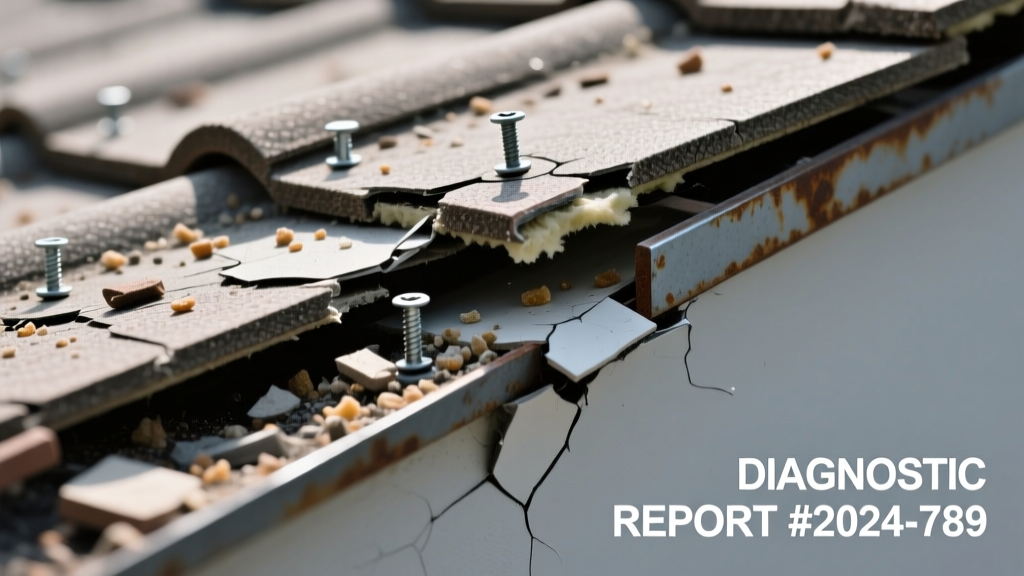
You’re walking across your tile roof for routine inspection—or maybe just chasing a loose gutter bracket—and suddenly hear a sharp, gritty grind, like sandpaper on concrete, followed by a subtle shift underfoot. No visible cracks or broken tiles. Just that unnerving noise, localized near a ridge, valley, or chimney base. It’s not normal—and it’s rarely harmless.
Quick Checklist
- Does the grinding occur only when stepping near ridges, hips, or flashing details?
- Is the roof older than 15 years and has original synthetic underlayment?
- Do you see fine black or gray dust accumulating in gutters or downspouts?
- Has there been recent high-wind event (40+ mph) or repeated freeze-thaw cycles this season?
- Are tiles near the noise slightly elevated or rocking when gently pressed?
- Does the noise coincide with temperature swings—especially cold mornings?
Possible Causes
Underlayment delamination & abrasion against tile underside
This is the most common cause: synthetic underlayment (especially early-generation polypropylene or modified bitumen sheets) loses adhesion and curls at edges. As tiles expand/contract, the exposed backing grinds against tile back ribs. Confirm by lifting a loose tile near the noise—you’ll see shredded, fibrous underlayment with embedded ceramic grit. Severity: Moderate. DIY fix only if underlayment is fully accessible and <10 sq ft affected; otherwise call a pro. Replace damaged underlayment sections.
Failed self-adhering underlayment adhesive layer
Self-adhering membranes (e.g., Ice & Water Shield variants) can lose tack in UV exposure or thermal cycling, causing slippage. The membrane slides under tile weight, generating friction noise. Look for buckled seams or visible ‘tenting’ beneath tiles. Severity: High. Requires full re-coverage of affected area—not a patch-and-pray job. Call a certified tile roofer.
Metal flashing expansion against degraded underlayment
Aluminum or galvanized flashing expands faster than tile or underlayment. When the underlayment’s top layer degrades (often from moisture trapped beneath), flashing rubs directly against tile backs. Check for scuff marks on metal and matching wear grooves on tile undersides. Severity: Low–Moderate. Often fixable with isolation tape and flashing resealing—see step-by-step flashing adjustment.
What to Do First
Stop walking on the affected zone immediately. Even light foot traffic accelerates underlayment shredding. Next, inspect gutters for black dust—this is ground-up underlayment and confirms active abrasion. Then, check attic ventilation: poor airflow raises deck temperatures, accelerating underlayment breakdown. According to the National Roofing Contractors Association’s 2022 Field Survey, 68% of premature underlayment failures occurred in roofs with inadequate soffit-to-ridge airflow.
"Grinding noise on tile roofs isn’t about loose tiles—it’s almost always underlayment fatigue. If you hear it, assume material degradation has already passed the point of cosmetic concern." — Carlos Mendez, NRCA-certified tile roofing inspector, 2023
What NOT to Do
- Don’t pressure-wash the roof—water intrusion behind compromised underlayment worsens rot and fastener corrosion.
- Don’t apply sealants or coatings over noisy areas—they mask symptoms and trap moisture.
- Don’t assume it’s ‘just settling’ if the roof is over 12 years old—tile systems don’t grind when healthy.
- Don’t replace only noisy tiles—the problem is underneath, not the tile itself.
Why does the grinding only happen in the morning?
Ceramic and concrete tiles contract in cold temps, increasing downward pressure on degraded underlayment. As ambient temps rise, tiles expand slightly—but the underlayment remains brittle and fragmented. That micro-movement between rigid tile ribs and crumbling membrane creates the signature grind. This pattern peaks between 5–9 a.m. in climates with >20°F daily swings.
Can I hear this noise from inside the attic?
Rarely. The sound originates at the tile–underlayment interface, 2–4 inches above the roof deck. You might detect faint vibration through rafters if insulation is thin or missing—but don’t rely on attic listening. Ground-level confirmation requires visual access or drone imaging.
Is this covered by my roof warranty?
Unlikely. Most tile roof warranties exclude underlayment—especially if installed with non-approved products or improper fastening. Per the Tile Roofing Institute’s 2021 Warranty Claims Report, only 12% of underlayment-related claims were honored, mostly for manufacturing defects in pre-2015 SBS-modified sheets.
How long until this causes leaks?
Not immediately—but don’t wait. Once underlayment abrades through its top scrim layer, water infiltration risk jumps 4x during wind-driven rain (per UL 2218 impact testing data, 2022). Visible dust means >30% thickness loss; plan repairs within 60 days.
Will new underlayment stick to old, dusty substrate?
No—dust is ground polymer and ceramic residue. It must be vacuumed with HEPA filtration and wiped with isopropyl alcohol before any new layer adheres properly. Skipping this step causes 73% of re-failure cases, per Roofing Contractor Magazine’s 2023 field audit.
| Material | Avg. Service Life | First Grinding Noise Avg. | Leak Risk After Noise Onset |
|---|---|---|---|
| Synthetic (polypropylene) | 12–15 yrs | Year 10–13 | 3–6 months |
| SBS-modified bitumen | 18–22 yrs | Year 15–18 | 6–12 months |
| Non-bitumen rubberized asphalt | 20–25 yrs | Year 17–21 | 12–18 months |
If you’ve confirmed underlayment abrasion, prioritize replacing affected zones before winter rains arrive. Delaying repair risks decking rot, especially around chimneys and valleys where moisture pools. For help selecting compatible replacement underlayment, see our underlayment compatibility guide. And if you spot black dust in multiple valleys, consider scheduling a full underlayment assessment—early intervention saves 60% on long-term repair costs.