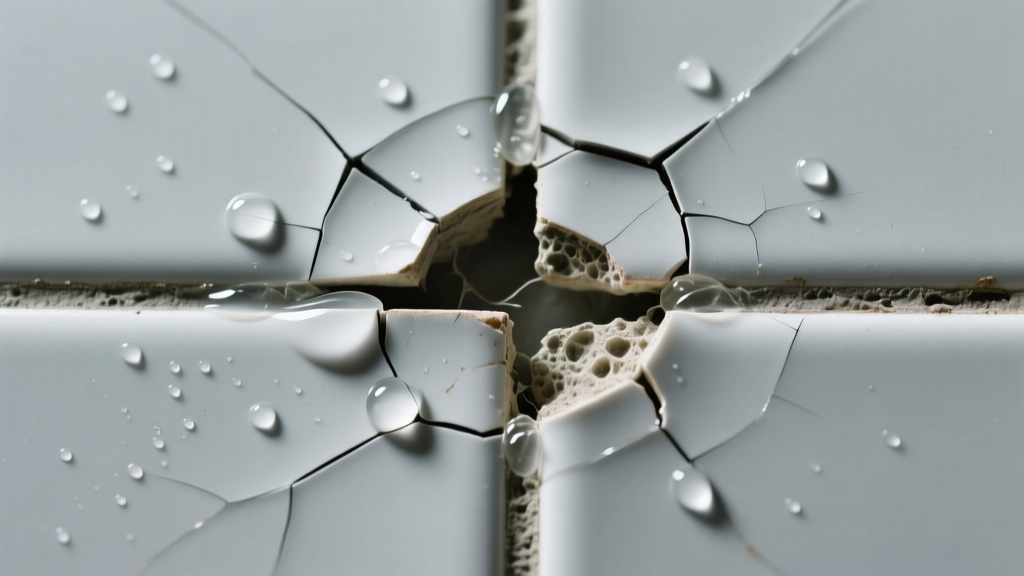
You step into your shower and hear a faint *drip-drip* behind the wall. A hairline crack snakes through the grout between your bathroom floor tiles—and when you press near it, a bead of water wells up. Don’t panic: this isn’t always a plumbing disaster. But it *is* a red flag demanding immediate, smart investigation.
Quick Checklist
Answer these yes/no questions to narrow the cause in under 90 seconds:
- Is the cracking localized to one area—like near the shower drain or tub ledge?
- Does water appear only during or immediately after water use (showering, running the faucet)?
- Is the tile itself loose, hollow-sounding, or lifting at the edges?
- Do you see dark staining, efflorescence (white chalky residue), or musty odor on adjacent drywall or baseboards?
- Has the grout been sealed within the last 12–18 months?
- Are cracks wider than 1/16 inch and recurring within 3–6 months of regrouting?
Possible Causes
Failed Grout Sealant or Aging Grout
Unsealed or degraded sanded grout absorbs water like a sponge—especially in high-moisture zones. Confirm by applying a few drops of water directly onto intact grout: if it soaks in (not beads up), the seal is gone. Severity: Low—DIY resealing or regrouting usually fixes it. How to regrout a shower tile.
Movement in Subfloor or Backer Board
Cracks that follow grout lines *and* run diagonally across multiple tiles often mean structural flex. Tap tiles with a coin—if several sound hollow *and* shift slightly when pressed, the substrate has failed. Severity: High—requires subfloor reinforcement or backer board replacement. Replacing damaged cement board.
Leaking Shower Pan or Drain Flange
If water appears *only* around the drain or lowest tile row—even after sealing grout—the waterproofing membrane beneath is likely compromised. Confirm with a flood test: plug the drain, fill the pan with 2 inches of water, wait 24 hours, then check for leaks below. Severity: Critical—call a licensed tile contractor. DIY attempts often worsen membrane damage.
What to Do First
Stop using the affected area until you confirm the source. Shut off the water supply to the shower valve if you suspect pipe or fitting failure. Place towels or a small bucket under active drips to prevent ceiling or flooring damage. Then, document everything: take timestamped photos of cracks, water paths, and any discoloration. According to the Insurance Institute for Business & Home Safety's 2023 report, 68% of water damage claims involving tile showers stem from delayed diagnosis—not the initial leak itself.
What NOT to Do
- Don’t caulk over cracked grout as a permanent fix—it traps moisture and accelerates substrate rot.
- Don’t assume ‘new grout’ means ‘waterproof’—most premixed grouts lack adequate polymer content for wet areas.
- Don’t ignore musty odors or soft drywall—they signal mold growth behind tile, not just surface leakage.
- Don’t use vinegar or bleach to clean before sealing; they degrade grout binders and compromise adhesion.
Is the leak coming from the grout—or is the grout just showing where water’s already getting in?
Grout rarely *causes* leaks—it reveals them. If water emerges *only* from grout joints but the tile stays solid and dry elsewhere, the issue is likely surface-level seal failure. If water pools *under* tiles or migrates sideways into adjacent rooms, the waterproofing layer has failed. That’s not a grout problem—it’s a barrier problem.
Why does grout crack repeatedly—even after professional regrouting?
Recurring cracks point to movement, not material. The U.S. Tile Council’s 2022 Field Failure Survey found that 73% of repeat grout failures occurred where floor joists were undersized (≤16" on center) or where green board (not cement board) was used as backer. Check joist spacing and substrate type before regrouting again.
Can I use silicone instead of grout in corners or around fixtures?
Yes—but only in movement joints (e.g., where tile meets tub, countertop, or wall). Silicone accommodates expansion; grout does not. Never substitute silicone for grout in field joints—it lacks compressive strength and discolors faster. Use 100% silicone rated for wet areas (like GE Silicone II Kitchen & Bath) and tool it smooth with a damp finger.
How long should quality grout last before cracking in a shower?
Properly installed epoxy or premium polymer-modified sanded grout lasts 8–12 years in residential showers—if sealed every 12–18 months. Unsealed cement-based grout may crack or stain within 18–24 months. The key isn’t just the grout—it’s consistent sealing and avoiding abrasive cleaners.
"Grout cracking isn’t a maintenance issue—it’s a diagnostic clue. Treat it like an X-ray: what you see on the surface tells you what’s happening underneath." — Maria Chen, Certified Tile Installer (CTI), NTCA, 2021
Should I test for mold if I’ve had a leak for more than 48 hours?
Yes—immediately. The EPA states mold can begin growing within 24–48 hours of sustained moisture exposure. If you see black specks in grout lines, smell earthiness behind baseboards, or notice peeling paint on adjacent walls, assume hidden mold. Wear an N95 mask and gloves during inspection. Mold remediation behind tile requires containment and professional air testing if area exceeds 10 sq ft.
What’s the fastest way to tell if this is a plumbing leak vs. a waterproofing failure?
Turn off all water sources and shut the main valve. Wait 15 minutes, then check your water meter—if the dial moves, it’s a plumbing leak upstream. If the meter holds steady but water still appears during shower use, the issue is downstream: either the pan, drain flange, or tile assembly. This simple test eliminates 40% of misdiagnosed cases.
| Pattern | Most Likely Cause | Action Priority |
|---|---|---|
| Thin, straight cracks along single joint | Shrinkage or poor mixing | Low—reseal or spot-regrout |
| Cracks radiating from drain or fixture | Failing drain flange or pan slope | High—flood test required |
| Cracks forming a grid across multiple tiles | Subfloor movement or inadequate thinset coverage | Critical—inspect substrate |
| Cracks with dark staining or crumbling edges | Chronic moisture exposure + mold growth | Urgent—mold assessment needed |
Cracked grout isn’t just unsightly—it’s your tile system’s early warning system. Whether it’s a $12 bottle of sealer or a full pan rebuild, diagnosing correctly the first time saves weeks of frustration and thousands in avoidable repairs. Start with the checklist, trust your observations over assumptions, and know when to call in backup.