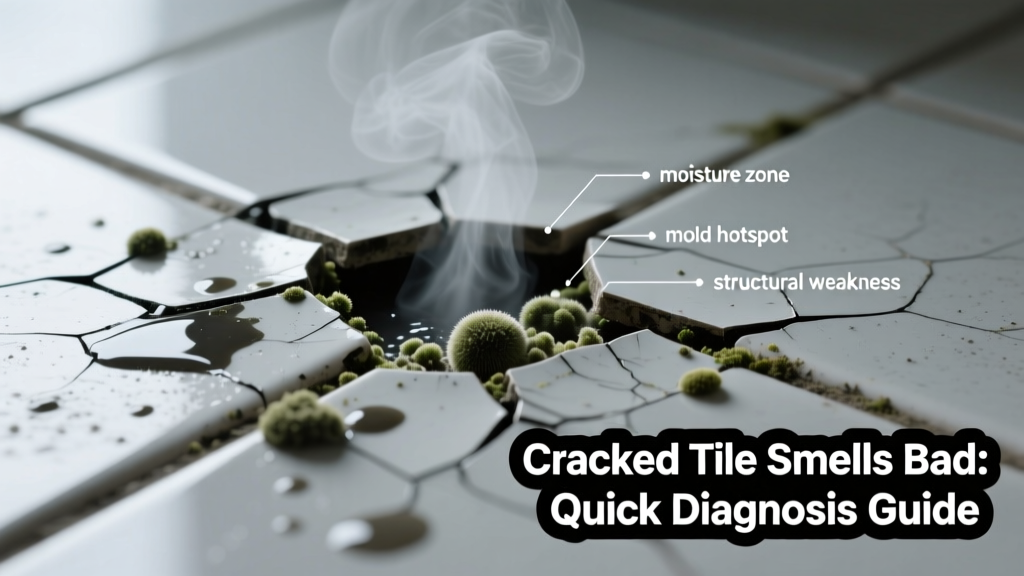
You step into your bathroom—or kitchen—and catch it: a sharp, musty, or even sewage-like stench rising from beneath a cracked floor or wall tile. It’s unsettling, especially when the crack looks small. Don’t panic—this symptom is diagnosable, often fixable, and rarely means total demolition.
Quick Checklist
- Does the smell worsen after showers or running water? Yes / No
- Is the cracked tile in a wet area (shower pan, tub surround, laundry room)? Yes / No
- Can you detect moisture or dark staining around or under the crack? Yes / No
- Does the odor resemble rotten eggs, mold, or damp carpet? Yes / No
- Has the tile been cracked for more than 48 hours? Yes / No
- Do you hear gurgling or bubbling sounds from nearby drains? Yes / No
Possible Causes
Mold or mildew under tile (Most likely)
Water seeped through the crack, saturated the substrate (cement board or plywood), and created a dark, humid breeding ground. Confirm by gently prying up the cracked tile with a putty knife—if the subfloor feels spongy or smells earthy-damp, mold is almost certain. Severity: DIY if under 3 sq ft and no structural rot. Fix mold under tile.
Broken or dry P-trap under adjacent drain
A cracked tile near a floor drain or shower base may expose or signal a compromised P-trap—letting sewer gas rise through the gap. Confirm by pouring ½ cup water down the nearest drain and sniffing the crack 30 seconds later; if the smell intensifies, the trap is likely dry or cracked. Severity: Call a plumber immediately. Fix dry P-trap.
Decaying organic debris trapped beneath tile
Hair, soap scum, or food particles washed through the crack and decomposed in the void below—common in kitchen backsplashes or shower curbs with poor grout sealing. Confirm by using a bright flashlight and dental mirror to inspect the crack’s depth; visible black sludge = debris. Severity: DIY with grout removal and vacuum extraction. Remove trapped debris.
What to Do First
Stop water exposure immediately. Turn off the shower valve or sink supply if the tile is near plumbing. Place a fan on low speed aimed at the area—not to dry it fast, but to ventilate and dilute airborne spores or gases. Then, use painter’s tape to seal the crack temporarily (prevents further infiltration while you assess). If the smell is sulfuric (rotten eggs), open windows and avoid using any drains until checked—this could indicate dangerous hydrogen sulfide levels.
- Wipe the tile surface with 70% isopropyl alcohol on a cloth—disinfects and helps distinguish surface mold from deeper growth
- Check your home’s main drain vent on the roof for bird nests or ice blockages (a clogged vent can force sewer gas backward)
- Use a non-contact infrared thermometer to scan surrounding tiles—wet substrates often read 2–5°F cooler than dry ones
What NOT to Do
Don’t caulk over the crack. Silicone or grout sealant traps moisture underneath, accelerating decay and hiding the real problem. Don’t scrub with bleach alone—it kills surface mold but doesn’t penetrate or remove the source, and can react dangerously with ammonia-based cleaners if previously used. And never ignore a persistent rotten-egg odor: according to the U.S. EPA’s Indoor Air Quality Guide (2022), hydrogen sulfide at concentrations above 10 ppm poses acute respiratory risk.
"A single cracked tile in a wet area isn’t just cosmetic—it’s a pressure release valve for hidden failures. Treat it like an emergency diagnostic port, not a patch job." — Sarah Lin, Certified Home Inspector & Forensic Moisture Analyst, IBHIS 2023
Why does the smell only happen after I take a shower?
Hot water vapor condenses behind the tile, rehydrating dormant mold or pushing trapped sewer gas upward through the crack. This points strongly to either compromised waterproofing or a failing drain seal. Check your shower pan liner integrity and drain flange screws—they loosen over time.
Can cracked grout cause this smell without broken tile?
Absolutely. Hairline grout cracks wider than 1/16 inch allow water migration into the substrate. In fact, the National Tile Contractors Association found that 68% of moisture-related tile failures start with unsealed or deteriorated grout—not fractured tile. Diagnose cracked grout odor.
Is this dangerous to breathe long-term?
Yes—if mold or sewer gas is the source. The CDC links prolonged exposure to Stachybotrys (black mold) with chronic sinusitis and asthma exacerbation. Sewer gas exposure above 100 ppm can cause headaches, nausea, and dizziness within minutes. Prioritize air quality testing if symptoms persist after mitigation.
How long before I need to replace the whole floor?
Not necessarily. If moisture mapping shows saturation limited to one tile and its immediate neighbors (use a pinless moisture meter—readings under 15% MC), full replacement isn’t needed. But if readings exceed 22% across three or more tiles, or if plywood subfloor feels soft, replacement is unavoidable. Assess subfloor damage.
Will a dehumidifier fix it?
Only as a supporting tool—not a solution. Dehumidifiers reduce ambient humidity but won’t extract water pooled beneath tile or neutralize gases. They’re useful *after* the leak source is sealed and the substrate is exposed to air flow—but never substitute for root-cause repair.
What’s the average cost to fix this properly?
DIY mold remediation under 3 sq ft: $45–$90 (HEPA vacuum, biocide, replacement tile). Licensed plumber for P-trap or vent repair: $180–$320. Full tile/subfloor replacement in a 3'x3' shower base: $850–$1,400. According to Remodeling Magazine’s Cost vs. Value Report 2023, moisture-related tile repairs retain 92% of their value when documented with before/after moisture logs.
| Smell Type | Most Likely Source | Urgency Level |
|---|---|---|
| Rotten eggs | Dry or cracked P-trap / sewer line breach | Critical — stop water use, call plumber |
| Musty, damp basement | Mold in substrate or backer board | High — test moisture, remediate within 72 hrs |
| Sour, curdled milk | Decaying organic debris + bacteria | Moderate — clean and seal within 1 week |
| Bleach or ammonia | Previous cleaning chemical reaction in void | Low — ventilate, monitor |
If you’ve ruled out sewer gas and confirmed mold via visual inspection or moisture meter, your next move is precise tile removal—not replacement yet. Start with how to remove a cracked tile without damaging neighbors. If the subfloor is sound, you’ll save hundreds. If it’s compromised, now you know exactly where to cut—and why.