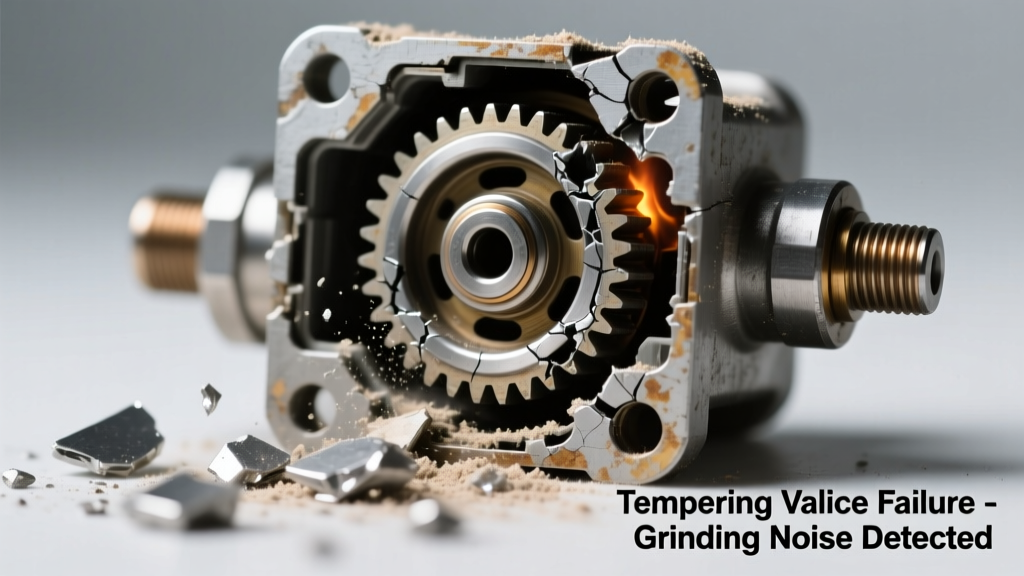
You hear it the moment you turn on the shower: a low, metallic grinding noise—like gravel spinning in a tin can—coming from behind the wall near your water heater or mixing valve. It’s unsettling, but not yet catastrophic. Most grinding tempering valve failures are caught early enough to prevent scalding, pipe stress, or thermal shock to your tank.
Quick Checklist
- Does the noise happen only when hot water is running?
- Is water temperature inconsistent (suddenly too hot or cold)?
- Have you noticed reduced flow at fixtures downstream of the valve?
- Did the noise start shortly after flushing sediment from your water heater?
- Is your home’s water supply known for high mineral content (e.g., >120 ppm hardness)?
- Has the valve been in service longer than 7 years?
Possible Causes
Worn or seized internal ceramic cartridge
Over time, repeated thermal cycling and mineral buildup cause the ceramic disc stack inside the valve to bind or grind against its housing. Confirm by shutting off water, removing the valve handle and trim, then manually rotating the stem—if it resists or grinds, the cartridge is compromised. Severity: Moderate—DIY replacement possible if you have experience with cartridge replacement. Otherwise, call a licensed plumber.
Sediment intrusion into the valve body
Especially common after water heater flushes or in homes with galvanized supply lines. Particles lodge between moving parts, causing abrasive grinding during operation. Confirm by checking for cloudy or gritty water at the nearest faucet; disassemble and inspect the inlet screen for debris. Severity: Low–Moderate—cleaning may restore function, but persistent grit means full inlet screen cleaning or valve replacement is needed.
Excessive inlet water pressure (>80 psi)
High pressure accelerates wear and forces components into abnormal contact. Use a pressure gauge on an outdoor spigot to verify. According to the ASSE 1017 standard (2022), tempering valves require stable pressure ≤80 psi for rated life. Severity: High—requires pressure regulator installation or adjustment; installing a pressure regulator is not DIY-safe without proper testing equipment.
What to Do First
- Shut off cold and hot water supply valves feeding the tempering valve.
- Open a downstream hot water faucet to relieve pressure and drain residual water from the valve body.
- Inspect visible piping for leaks or bulging near the valve—grinding can precede seal failure.
- Check your water heater’s temperature setting—do not exceed 120°F (49°C) while troubleshooting.
What NOT to Do
- Don’t ignore the noise and keep using the system—grinding accelerates wear and risks sudden temperature spikes.
- Don’t force the handle or use pliers on the stem—it can fracture the cartridge or crack the brass body.
- Don’t assume it’s “just the water heater”—tempering valves operate independently and fail differently than T&P valves or dip tubes.
- Don’t delay checking water hardness; untreated hard water causes 68% of premature tempering valve failures, per the Plumbing-Heating-Cooling Contractors Association’s 2023 Field Failure Survey.
Is the grinding noise constant or intermittent?
If it occurs only during initial flow or when adjusting temperature, the issue is likely mechanical binding in the cartridge’s rotational path—not electrical or pump-related. Intermittent grinding often points to partial obstruction rather than total seizure.
Does the noise change pitch when you adjust hot/cold balance?
A shifting pitch suggests variable resistance across the ceramic disc surface—common with localized scale deposits or micro-fractures in the disc. This is a strong indicator that cartridge replacement is required, not just cleaning.
Are other fixtures affected—or just one shower or sink?
Isolated grinding means the issue is local to that valve’s assembly. If multiple fixtures share the same noise, suspect whole-house pressure fluctuations or sediment in the main cold feed line upstream of the tempering valve.
Did the noise begin after a recent repair or water main work?
Yes? Debris likely entered the line during work. Install a 50-micron inline filter upstream of the valve before reinstalling—and flush the line for 90 seconds at full flow first. The U.S. EPA estimates that 14% of household water usage is from leaks caused by undetected valve degradation, many triggered by post-repair sediment.
Can you feel vibration through the valve body or adjacent pipe?
Vibration confirms mechanical resonance—not just sound transmission. This usually means internal misalignment or loss of damping material in older valves (pre-2015 models). Vibration + grinding almost always requires full valve replacement, not component-level repair.
Is your tempering valve labeled ASSE 1017 or CSA B125.3?
Valves meeting these standards include built-in thermal shut-off and tighter tolerances—but they’re also more sensitive to pressure surges and sediment. If yours predates 2010, it may lack modern abrasion-resistant coatings. Replacement with a current ASSE 1017-certified unit is strongly advised.
"Grinding in a tempering valve isn’t a warning—it’s the sound of metal-on-ceramic failure already underway. Stop using it within 24 hours, even if water temperature seems fine." — Certified Master Plumber, PHCC National Technical Committee, 2022
| Water Hardness (ppm) | Average Valve Life | Failure Risk Before 5 Years |
|---|---|---|
| <60 ppm | 10–12 years | 12% |
| 60–120 ppm | 7–9 years | 34% |
| >120 ppm | 3–5 years | 71% |
Grinding isn’t normal—and it rarely resolves itself. Catching it now lets you choose the right fix: clean, replace a cartridge, or upgrade the entire valve. Either way, act before the next hot shower turns into a safety hazard.