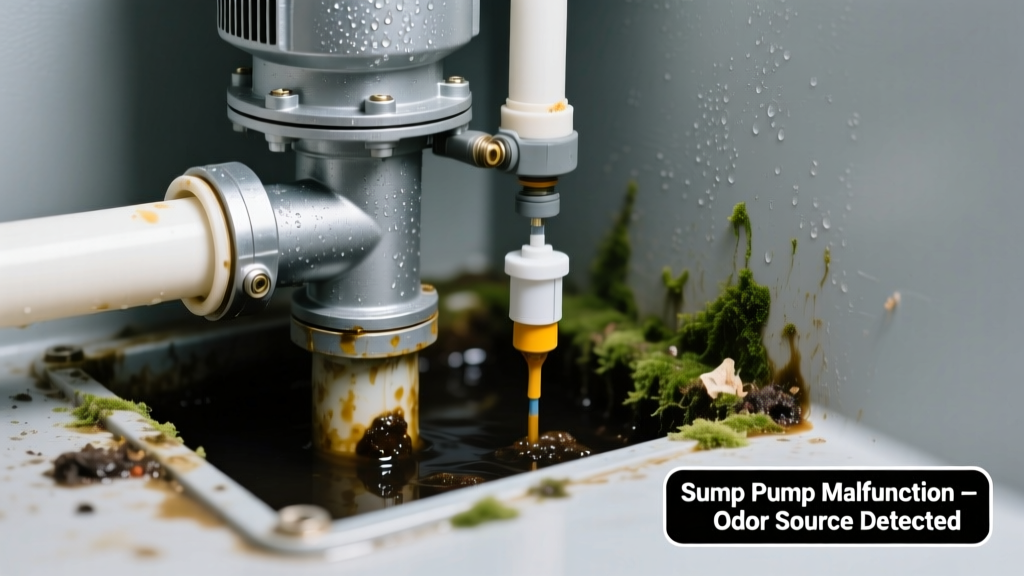
You hear that low, persistent hum from the basement—and then it hits you: a sour, rotten-egg or sewage-like stench rising from the sump pit. Your pump won’t shut off, the air feels damp and heavy, and you’re wondering if mold, sewage, or something worse is brewing. Don’t panic—this symptom has clear, identifiable causes, most of which you can assess in under 10 minutes.
Quick Checklist
- Does the smell worsen after heavy rain or rapid snowmelt?
- Is standing water in the pit cloudy, oily, or discolored (gray/black/green)?
- Can you see or smell sewage near floor drains, toilets, or utility sinks upstairs?
- Has the pump run nonstop for more than 2–3 hours without rainfall?
- Do you hear gurgling or bubbling sounds from nearby drains when the pump activates?
- Is the discharge pipe frozen, blocked, or disconnected outside?
- Has the sump pit gone uncleaned for over 6 months?
Possible Causes
Stagnant water + organic buildup in pit
Algae, mold, decaying leaves, or rodent debris fermenting in warm, still water produce hydrogen sulfide—the classic 'rotten egg' odor. Confirm by shining a flashlight into the pit: look for slimy film, green scum, or floating debris. Severity: DIY fix. Clean the sump pit thoroughly with vinegar and a stiff brush; replace gravel if it’s caked with sludge.
Sewage backup via shared drain line
If your sump pump shares a drain line with a sewer ejector or basement bathroom, a cracked or improperly vented line can allow sewer gas to back up into the pit. Confirm by checking for sewage odors near other fixtures and testing if the smell intensifies when flushing toilets or running showers. Severity: Call a licensed plumber immediately. Sewer gas in sump pit requires professional diagnosis.
Failing float switch or stuck check valve
A jammed float (e.g., tangled on wiring or wedged against pit wall) forces continuous operation—overheating the motor and baking accumulated grime into a burnt-plastic-and-sewage stink. Confirm by gently lifting and releasing the float arm: does the pump start/stop instantly? If not, the switch is faulty. Severity: Moderate DIY (replace switch) or pro call if wiring is corroded. Replace the float switch.
What to Do First
Turn off the pump at the circuit breaker—do not unplug it while running. Then:
- Wear gloves and an N95 mask before approaching the pit.
- Use a flashlight to inspect water level, color, and surface film.
- Check the discharge pipe outside: is water flowing freely? Is the end buried in mulch or snow?
- Sniff near floor drains and basement toilets—if odor is stronger there, suspect sewer crossover.
- Measure pit water depth with a ruler: over 12" deep with no rain = likely pump or switch failure.
What NOT to Do
- Don’t pour bleach directly into the pit—it corrodes pump components and masks but doesn’t eliminate organic decay.
- Don’t ignore gurgling drains—even if the pump runs fine, it signals vent or trap failure upstream.
- Don’t assume "it’s just humidity" if the smell is sulfuric or fecal: those gases indicate biological contamination or cross-connection.
- Don’t restart the pump after cleaning until you’ve verified the float moves freely and the discharge path is clear.
Why does my sump pump smell like rotten eggs even when it’s not running?
This points strongly to stagnant water in the pit—not electrical or mechanical failure. Hydrogen sulfide forms anaerobically in warm, oxygen-deprived water with organic matter. According to the U.S. EPA’s 2022 Indoor Air Quality Guide, sump pits with >2" of standing water left untreated for >30 days almost always develop detectable H₂S levels.
Could a broken sewer line under my foundation cause this smell?
Yes—and it’s dangerous. Cracked clay or cast-iron sewer lines beneath slabs leak methane and hydrogen sulfide directly into soil, then upward through sump pits or cracks. A telltale sign: odor persists year-round, worsens in dry weather, and triggers CO detectors (methane displaces oxygen).
"If you smell sewage and your sump pump isn’t cycling, test for methane with a combustible gas detector before entering the basement." — National Association of Plumbing Inspectors, 2023 Field Manual
Is it normal for a sump pump to run every 5–10 minutes?
No. Healthy sump pumps cycle 2–5 times per day during dry weather and up to hourly during sustained rain. Constant short cycling suggests high groundwater, undersized pump, or a failing check valve letting water backflow into the pit—reintroducing stale, smelly water each time.
Why does the smell get worse after I clean the pit?
Cleaning disturbs biofilm, releasing trapped gases all at once. But if odor returns within 48 hours, the source isn’t just surface gunk—it’s likely ongoing inflow of contaminated water (e.g., from a leaking laundry drain or failed weeping tile seal).
Can a battery backup sump pump cause bad smells too?
Rarely—but if its reservoir sits unused for months, stagnant water inside can sour. Check the backup unit’s basin separately; many homeowners overlook it while focusing on the primary pump. Flush and sanitize both units simultaneously.
How often should I clean my sump pit to prevent odor?
Twice yearly minimum—spring and fall—especially if you have a high water table or older home with clay tile drainage. The Insurance Institute for Business & Home Safety’s 2023 Basement Protection Guide recommends cleaning within 72 hours of any flood event, even minor ones.
| Smell Type | Associated Operation Pattern | Most Likely Cause |
|---|---|---|
| Rotten eggs (H₂S) | Constant or frequent short cycles | Stagnant pit water + organic decay |
| Sewage/fecal | Runs only when upstairs fixtures are used | Sewer line crossover or ejector system failure |
| Burnt plastic/electrical | Runs constantly, motor hot to touch | Failing motor or jammed impeller |
| Mildew/mold | Intermittent, strongest near pit cover | Unsealed lid, poor ventilation, or wet insulation nearby |
If the smell persists after cleaning, checking float function, and verifying discharge flow, the issue lies deeper—possibly in your foundation drainage system or municipal sewer connection. At that point, a video inspection of the sump pit and connected lines is the next logical step. Don’t wait for visible mold or water damage: early intervention prevents $5,000+ remediation jobs down the line.