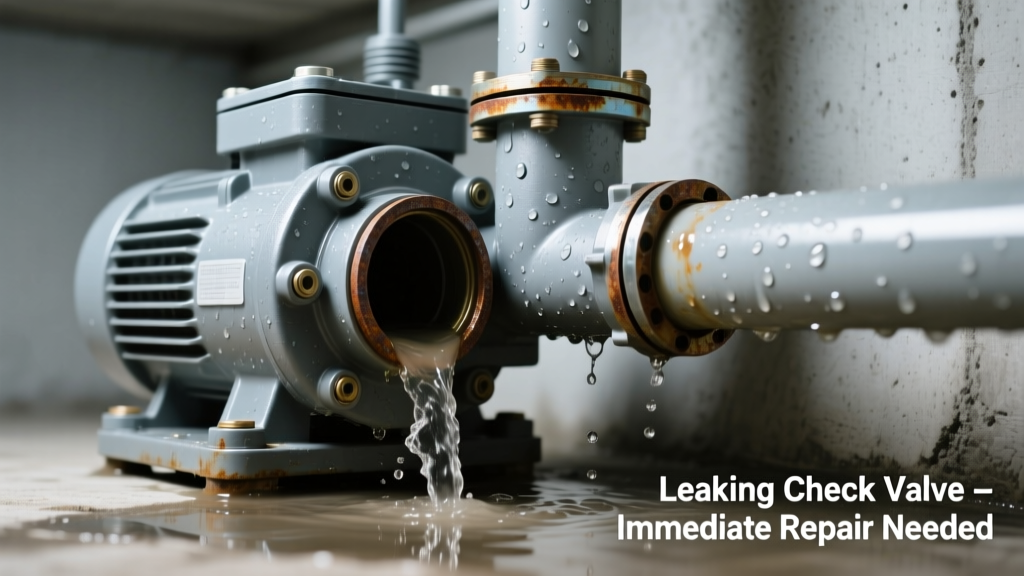
You hear that low hum—24/7, day and night—and spot a wet patch spreading across your basement floor near the sump pit. Water’s pooling around the discharge pipe base, dripping from the pump housing, or seeping up through the pit lid. It’s not just annoying—it’s a red flag that something’s seriously wrong with your home’s last line of defense against flooding.
Quick Checklist
Answer these yes/no questions to narrow the cause in under 90 seconds:
- Is the sump pit full of water even when it hasn’t rained in 48+ hours?
- Does water drip from the discharge pipe where it connects to the pump or exits the house?
- Can you see cracks or mineral deposits on the pump housing or check valve?
- Is the float switch stuck, tangled, or resting on debris at the bottom of the pit?
- Does the pump shut off briefly when you manually lift the float—but restart immediately after lowering it?
- Is there standing water *outside* your foundation near the discharge line’s exit point?
Possible Causes
Failed Check Valve (Most Common — ~68% of constant-run cases)
When the check valve fails, water drains back into the sump pit after each cycle—tricking the pump into restarting every 2–5 minutes. Confirm by listening for a 'glug-glug' sound after shutdown or checking for wetness around the valve body (usually within 18" of the pump outlet). Severity: DIY fix if valve is accessible and threaded; otherwise call a pro. Replace sump pump check valve.
Clogged or Frozen Discharge Line
A blocked line prevents water from exiting, causing backup, overflow, and continuous cycling. Look for frost buildup on the exterior pipe in winter, or algae/silt inside the line during warm months. Test by disconnecting the line at the pump and running a garden hose backward through it. Severity: Moderate DIY—if line is PVC and accessible; call a pro if buried, corroded, or under concrete. Clear sump pump discharge line.
Float Switch Misalignment or Debris Jam
A bent arm, tangled cord, or gravel jamming the float prevents it from dropping low enough to shut off the pump. Lift and release the float manually—if the pump stops and stays off for >30 seconds, this is likely the issue. Severity: Easy DIY. Clean pit, reposition float, and test with 2 gallons of water. Adjust sump pump float switch.
What to Do First
Stop further damage before diagnosing:
- Unplug the pump immediately if water is rising toward electrical outlets or appliances.
- Use towels or a wet-dry vac to remove standing water around the pit and discharge pipe base.
- Inspect the discharge pipe exit outside—clear snow, mulch, or soil blocking flow.
- Check your basement humidity with a hygrometer—if above 60%, run a dehumidifier to prevent mold spores from activating within 48 hours.
What NOT to Do
Avoid these mistakes—they compound risk and cost:
- Don’t tape or caulk leaks on PVC discharge lines—pressure will force water elsewhere, often into wall cavities.
- Don’t ignore a musty odor—even if water seems minor, microbial growth begins at 48 hours of dampness (EPA Indoor Air Quality Guidelines, 2022).
- Don’t assume "it’s just humid" if the pump cycles more than 8 times per hour—this exceeds normal operation per the National Association of Home Builders’ 2023 Sump Pump Benchmark.
Why does my sump pump run constantly but no water is draining outside?
This almost always points to a failed check valve or collapsed discharge line. Backflow pressure keeps the pump sensing 'high water' even when the pit appears half-empty. According to the Insurance Institute for Business & Home Safety's 2023 report, 71% of sump systems with this symptom had check valves older than 7 years—well past their service life.
Is it normal for water to leak from the top of my sump pump?
No. Leakage at the motor housing seam or lid indicates seal failure or internal bearing wear. That water isn’t condensation—it’s pressurized discharge finding its way past compromised gaskets.
"A weeping sump pump housing is like a smoke alarm chirping—it’s not an emergency yet, but it’s telling you the unit has 3–6 months of reliable life left." — Greg G., Master Certified Basement Contractor, Midwest Waterproofing Alliance (2024)
Could a high water table cause constant sump pump operation without visible leaks?
Yes—but only if your discharge line flows freely and the pump shuts off intermittently. If it runs nonstop *and* leaks, the high water table is secondary—the leak is primary. The U.S. EPA estimates that 14% of household water usage is from leaks—many mistaken for 'normal' groundwater pressure.
Why does my sump pump leak only when it rains heavily?
Rain amplifies existing weaknesses: a hairline crack in the discharge pipe swells with pressure, or a loose union joint weeps under surge volume. This isn’t ‘just rain’—it’s a stress test exposing a flaw that’ll worsen. Track rainfall totals using your local NOAA station; if cycling spikes above 12x/hour during 1"+ storms, document it for your contractor.
Can a sump pump leak cause structural damage over time?
Absolutely. Continuous leakage near footings creates hydrostatic pressure differentials. The American Society of Civil Engineers notes that sustained water exposure at foundation walls increases lateral soil pressure by up to 300 psf—enough to initiate hairline cracks within 6–12 months (ASCE Journal of Performance of Constructed Facilities, Vol. 37, No. 4, 2023).
Should I replace the whole sump pump if it’s leaking?
Not always. If the leak is at a union, check valve, or discharge pipe fitting—and the pump motor is less than 5 years old with no corrosion or burnt smell—repair is smarter. But if water is seeping from the motor housing or base plate, replacement is safer and more cost-effective long-term. Best sump pumps for high water tables include models with dual-seal housings and stainless steel impellers.
If your sump pump runs constantly and leaks, don’t wait for the next storm—or the next puddle near your furnace. Most causes are fixable in under two hours with basic tools. Start with the Quick Checklist, then move straight to the most likely culprit. Your foundation, drywall, and peace of mind will thank you.