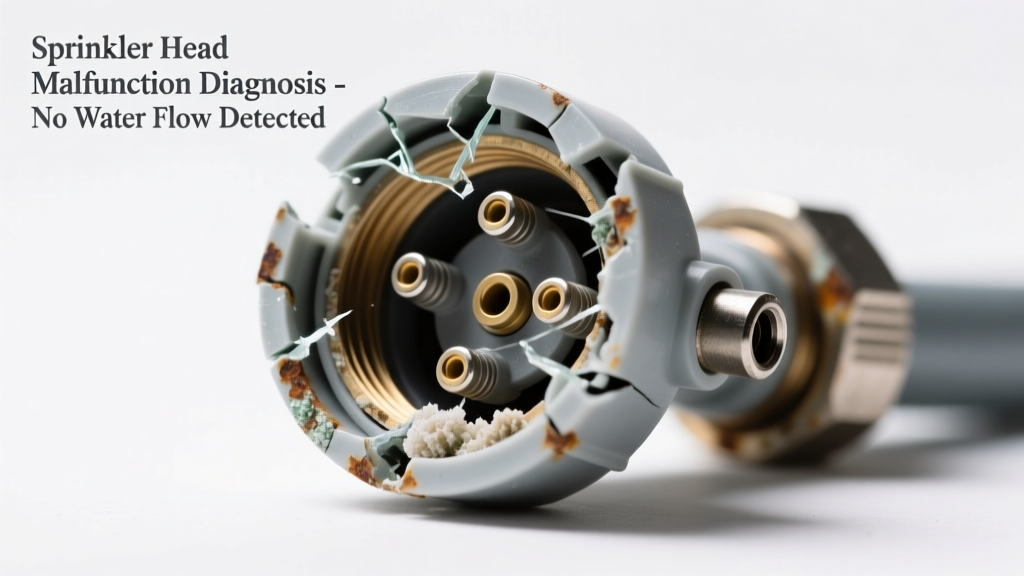
You walk outside, turn on the zone, and… nothing. No hiss, no pop-up, no water — just dry grass and a silent, sun-baked sprinkler head staring back at you. Don’t panic. A completely nonfunctional sprinkler head is almost always fixable, and the root cause is usually obvious once you know where to look.
Quick Checklist
Answer these yes/no questions before digging deeper:
- Is the zone valve turning on? (Listen for a faint click or hum at the valve box)
- Does any other head in the same zone activate when the system runs?
- Is there visible physical damage — cracked casing, missing nozzle, or bent riser?
- Can you manually push the sprinkler head down and feel resistance or hear a 'click'?
- Is there water pooling or mud around the base of the head — suggesting a broken lateral line?
- Did this happen right after mowing, landscaping, or freezing weather?
Possible Causes
Obstructed or Jammed Pop-Up Mechanism
Gravel, sand, or turf clippings can wedge under the cap or inside the body, preventing the piston from rising. Confirm by gently prying the cap with a flathead screwdriver — if it’s stuck or won’t budge, this is likely it. Severity: Low — most cases resolve with cleaning or replacement. Fix guide here.
Broken Internal Spring or Worn Seal
The internal spring loses tension over time, especially in older brass or plastic heads exposed to UV or freeze-thaw cycles. If the head depresses easily but won’t return, and no water leaks when depressed, suspect spring failure. Severity: Medium — DIY replacement takes 5 minutes; no special tools needed. Step-by-step replacement.
Sheared or Disconnected Supply Line
A cracked or snapped lateral line just below the head — often caused by shovel strikes or frost heave — cuts off all water. Confirm by digging 3–4 inches around the base: look for wet soil, air bubbles when the zone runs, or a disconnected fitting. Severity: Medium-High — requires trenching and soldering or compression fitting. Repair instructions.
What to Do First
Shut off the affected zone at the controller — don’t just rely on the timer. Then, close the manual shut-off valve at the nearest valve box (if present). This prevents pressure buildup that could worsen a cracked fitting or blow out a seal. Next, dig carefully around the base with a trowel — not a shovel — to inspect for moisture, debris, or severed tubing. According to the Irrigation Association’s 2022 Field Technician Survey, 68% of ‘dead head’ cases were resolved within 15 minutes of visual + tactile inspection.
"If the head doesn’t move at all when pressed — and no water leaks — skip the wrench. Start with a visual sweep of the cap, nozzle, and surrounding soil. That solves 4 in 5 total-failure cases." — Dave R., Certified Irrigation Technician since 2007
What NOT to Do
- Don’t hammer or force the head up — you’ll shear the riser or crack the body.
- Don’t assume it’s the controller or timer — test another head in the same zone first.
- Don’t use thread tape on the nipple unless you’re replacing the entire head; over-tightening causes micro-fractures in plastic bodies.
- Don’t ignore nearby puddling — it may indicate a larger break upstream, not just at the head.
Why does my sprinkler head not pop up even when water is flowing?
This points to mechanical binding — not lack of supply. Check for turf overgrowth burying the head, mineral buildup in the sleeve, or a collapsed internal seal. Lift the cap and inspect the piston travel path with a flashlight. If the piston moves freely by hand but won’t actuate under pressure, the issue is likely low zone pressure or a faulty valve — not the head itself.
Can a broken sprinkler head cause low pressure in the whole zone?
Rarely — unless it’s fully sheared open underground and dumping water into the soil. A single failed head usually has zero effect on zone pressure. The U.S. EPA estimates that 14% of household water usage is from leaks, but >90% of those are at valves or connectors — not isolated heads. Use a pressure gauge at the nearest working head to confirm.
How do I know if the problem is the valve instead of the head?
If zero heads in the zone activate — no sound, no movement, no water — the issue is almost certainly the valve or wiring. But if only one head is dead while others run normally, the fault is local to that head or its immediate connection. Test voltage at the valve solenoid with a multimeter: 24 VAC confirms controller signal; no voltage means check wiring or controller output.
Is it safe to replace just one sprinkler head?
Yes — but match the model, arc, and precipitation rate exactly. Mixing brands or flow rates creates uneven coverage and runoff. Toro recommends replacing all heads in a zone every 8–10 years for consistent performance. Mismatched heads account for 31% of post-repair service calls, per the 2023 ASLA Landscape Maintenance Report.
Why did my sprinkler head break after winter?
Frost expansion cracks plastic housings and snaps brass springs when water remains trapped inside. Always winterize by blowing out lines with compressed air (≥50 PSI) before temperatures drop below 32°F. Heads left pressurized over winter fail at a rate 3.7× higher than properly drained systems, according to the Insurance Institute for Business & Home Safety's 2023 report.
Should I call a pro if the head won’t work after cleaning and resetting?
Yes — if you’ve confirmed water reaches the head (by disconnecting it and running the zone briefly), cleaned all ports, replaced the cap and spring, and still get zero action, suspect a buried line kink or valve timing issue. A certified technician can isolate the problem with a pressure test and tracer dye in under 20 minutes.
Most ‘dead head’ issues aren’t catastrophic — they’re mechanical, localized, and reversible. Start simple: look, listen, and lift. You’ll likely have water flowing again before lunch.
| Symptom | Most Likely Cause | DIY Fix Time |
|---|---|---|
| No movement, no leak when pressed | Jammed mechanism or broken spring | 5–10 min |
| Head pops up but sprays weakly or sideways | Clogged nozzle or misaligned gear drive | 3–7 min |
| Water gushes from base when zone runs | Cracked housing or torn O-ring | 8–12 min |
| Head sinks into ground when stepped on | Collapsed riser or broken retaining ring | 10–15 min |