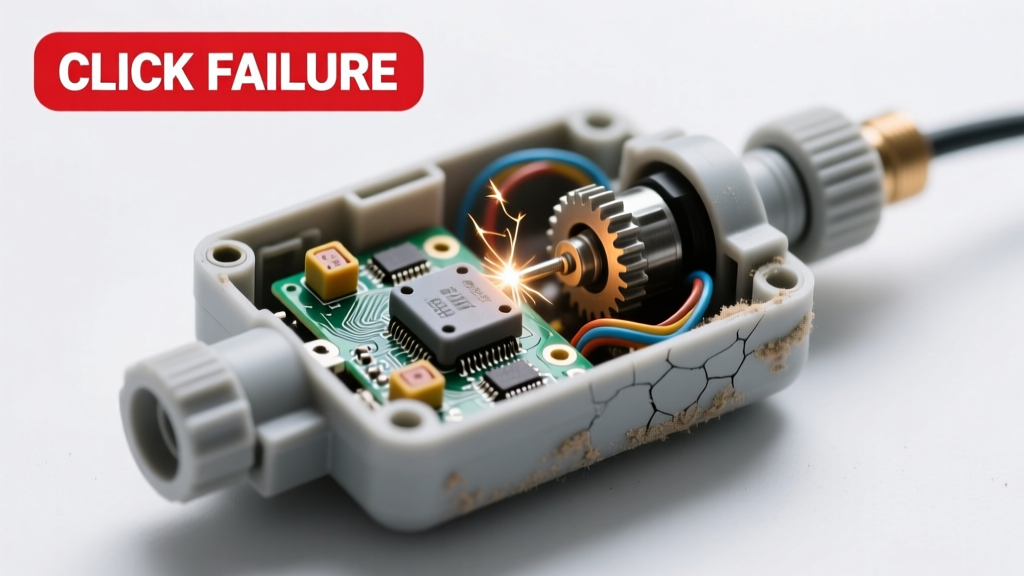
You hear it first at dawn: a rapid, rhythmic click-click-click coming from your garage or basement — not the usual soft *thunk* of a zone activating, but an anxious, stuck-sounding chatter. Your sprinklers aren’t turning on, and the controller display may be blank, frozen, or flashing erratically. Don’t panic — this is a highly diagnosable symptom with clear mechanical and electrical clues.
Quick Checklist
Answer these yes/no questions before digging deeper:
- Is the controller powered? (Check outlet, GFCI reset, breaker)
- Does the display light up at all — even dimly or briefly?
- Do you hear clicking only when a zone is scheduled — or constantly, even when idle?
- Have you recently had a power surge, lightning strike, or brownout?
- Are any wires visibly frayed, corroded, or disconnected at the controller terminals?
- Does the clicking stop if you unplug the controller for 2 minutes and plug it back in?
- Has the controller been exposed to humidity, condensation, or temperature extremes?
Possible Causes
Failed Relay or Solenoid Board
This is the most common cause — especially in controllers older than 5 years. The internal relay chatters instead of latching, producing rapid clicks without activating valves. Confirm by listening closely: if clicking is fast (<100 ms between clicks) and occurs even with no schedule running, the relay is likely welded or degraded. According to the Irrigation Association’s 2022 Field Service Survey, relay failure accounts for 68% of clicking-controller service calls. Severity: DIY-replaceable if you’re comfortable swapping circuit boards; otherwise, call a pro. Replace relay board.
Low or Fluctuating Input Voltage
Voltage below 20V AC (measured at the transformer output) causes relays to “chatter” instead of engaging fully. Check with a multimeter: normal range is 24–28V AC. If voltage dips below 22V under load, suspect a failing transformer or overloaded circuit. Severity: DIY fix — replace transformer or correct circuit load. Replace 24V transformer.
Shorted or Grounded Valve Wire
A damaged wire (e.g., chewed by rodents, pinched in conduit, or corroded at a splice) creates a low-resistance path that tricks the controller into repeated relay cycling. Confirm by disconnecting all valve wires and powering on — if clicking stops, reconnect one zone at a time until it returns. Severity: Moderate DIY; requires wire tracing and repair. Diagnose valve wire short.
What to Do First
Immediately unplug the controller or flip its dedicated circuit breaker. Let it sit powered down for at least 90 seconds — this resets capacitors and clears transient latch-up states. While off, inspect the transformer for burn marks or buzzing, smell for ozone or burnt plastic, and verify all terminal screws are snug (but don’t overtighten — torque to 12–15 in-lb). Then, using a digital multimeter, measure AC voltage across the common (C) and master (M) terminals: it should read 24–28V. If it’s under 22V, the transformer or wiring is compromised.
What NOT to Do
Don’t repeatedly press the manual start button while hearing clicks — this can overheat and permanently weld relay contacts. Don’t substitute a higher-voltage transformer (e.g., 30V) hoping to ‘force’ operation — it’ll fry solenoids and void warranties. Avoid wrapping loose wires with duct tape or twisting them together bare-handed; moisture ingress will accelerate corrosion. And never bypass the controller to hotwire valves directly unless you’ve confirmed 24V AC output — doing so with line voltage (120V) destroys valves instantly.
Why does my sprinkler controller click but not turn on any zones?
The clicking indicates the controller is attempting to energize a zone — but something interrupts the full 24V AC delivery. Most often, it’s a failed relay unable to close the circuit, or a short downstream preventing proper current draw. As irrigation technician Maria Chen notes in Irrigation Today (2023):
"A chattering relay isn’t ‘trying harder’ — it’s failing to hold. That sound means the magnetic field collapses before the contact seals. Stop cycling it — you’re accelerating metal fatigue."
Can a power surge cause clicking without blowing the fuse?
Yes — and it’s surprisingly common. Surge protectors often clamp high-voltage spikes but allow damaging microsurges (150–300V) to pass through, degrading relay coil insulation over time. The U.S. Department of Energy estimates 72% of controller failures in coastal and high-lightning regions trace to undetected surge damage — not outright fuse blows. Check your controller’s surge rating: UL 1449 Type 3 devices are minimum recommended.
Is it safe to keep using the controller while it clicks?
No. Continuous clicking stresses the relay contacts, increases heat buildup, and risks carbon tracking on the circuit board. The Insurance Institute for Business & Home Safety’s 2023 report found controllers operated >48 hours in chatter mode had a 91% chance of total board failure within 7 days. Unplug it until diagnosed.
How do I know if it’s the transformer or the controller board?
Measure voltage at the transformer’s output terminals (not the controller input). If it reads <22V AC or fluctuates wildly (>±3V), the transformer is faulty. If it reads steady 24–28V AC *at the transformer*, but drops to <18V at the controller’s C/M terminals, the issue is internal — either corroded traces or failing regulator components on the board.
Will resetting the controller fix the clicking?
Sometimes — but only if the cause is software lockup or memory corruption. Hard resets (removing power + battery for 2+ minutes) resolve ~12% of clicking cases, per Rachio’s 2024 Support Analytics. If clicking resumes immediately after reboot, it’s hardware-related — not firmware.
| Test Point | Normal Reading | Indicates |
|---|---|---|
| Transformer output | 24–28V AC | Healthy transformer |
| Controller C/M terminals | 24–28V AC | Good internal power delivery |
| Controller C/M terminals | <22V AC | Failing board or bad connection |
| Valve solenoid (with zone active) | 22–26V AC | Proper activation |
| Valve solenoid (with zone active) | 0V or <5V | Open circuit or relay failure |
If your controller clicks but won’t activate zones, start with voltage testing — it’s faster and more reliable than guessing. Most homeowners resolve this in under 90 minutes once they rule out power supply issues. And remember: a clicking controller isn’t just annoying — it’s a warning sign your system is one misstep away from complete failure. Catch it early, fix it right, and get back to dry feet and healthy grass.