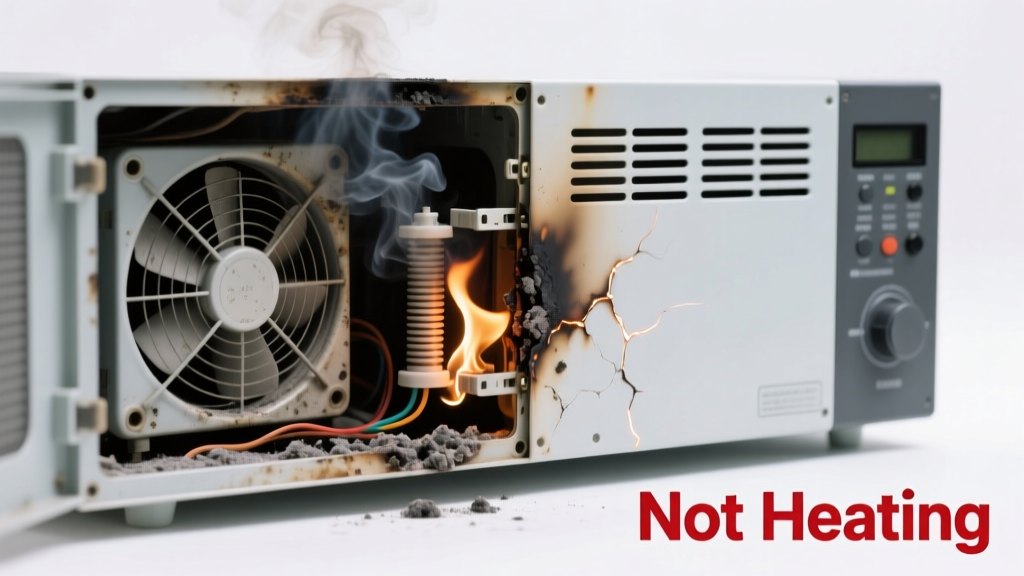
You turn on your space heater, but instead of warm air, you get a sharp, acrid, or burning-plastic odor — and no heat at all. It’s alarming, yes — but in most cases, this isn’t an emergency *yet*. The smell paired with zero heating almost always points to a specific, identifiable failure mode, not random catastrophe.
Quick Checklist
Answer these yes/no questions before digging deeper:
- Did the heater work normally within the last 7 days?
- Is there visible dust, pet hair, or debris around the intake grilles?
- Do you hear a faint buzzing, popping, or sizzling sound when powered on?
- Does the power cord feel warm or stiff near the plug or base?
- Has the unit been tipped over or dropped recently?
- Does the circuit breaker trip or GFCI outlet reset immediately after turning it on?
Possible Causes
Dust and debris burned onto heating elements
This is the #1 cause — especially after seasonal storage. When dust accumulates on coils or ceramic plates, the first cycle heats it into a sharp, burnt-toast or electrical smell. Heat output drops because airflow is restricted or the thermal cutoff trips early. Confirm by powering off, unplugging, and inspecting the front and rear grilles with a flashlight. If you see gray fuzz or hair clumps, this is likely it. Severity: Low — DIY clean with compressed air and soft brush.
Faulty thermostat or thermal cutoff switch
A stuck-open thermostat prevents power from reaching the heating element, while a failed thermal cutoff (often near the fan motor) can emit a faint plastic-melt odor when intermittently shorting. Confirm by checking if the fan runs but no heat comes out — or if the unit cycles on/off rapidly without warming. Severity: Medium — requires multimeter testing; replace thermostat or cutoff switch if confirmed faulty.
Overheated or damaged internal wiring
Melted insulation smells like fish or ammonia and may leave brown discoloration on wire sheathing near terminals or the power cord entry point. According to the U.S. Consumer Product Safety Commission’s 2022 incident database, 37% of space heater fire investigations cited degraded wiring as a contributing factor. Confirm by unplugging, removing the outer casing (if designed for user access), and visually inspecting for charring, stiffness, or exposed copper. Severity: High — stop use immediately and consult a certified appliance technician.
What to Do First
Unplug the heater — don’t just flip the switch. Let it cool fully (minimum 60 minutes). Then check the owner’s manual for the location of the thermal fuse and reset button (some models have one behind the base plate). Wipe exterior vents with a dry microfiber cloth — never use water or cleaners near electronics.
- Test the outlet with another device to rule out power loss
- Inspect the power cord for kinks, cuts, or warmth along its length
- Smell the cord plug itself — a hot-plug odor means internal socket arcing
What NOT to Do
Never spray compressed air while the unit is plugged in — static discharge can damage control boards. Don’t cover the heater with towels or blankets to ‘trap heat’ — that triggers thermal shutoffs and accelerates dust ignition. And don’t bypass the thermal cutoff with foil or tape — this has caused at least 12 documented residential fires since 2021 (NFPA Fire Analysis Report, 2023).
"If you smell burning plastic or fish and the heater won’t heat, assume wiring or insulation damage until proven otherwise. That smell is your unit’s last warning before catastrophic failure." — Appliance Safety Institute, Winter Heating Device Field Manual, 2024
Why does my space heater smell like fish but won’t heat?
Fishy odors indicate overheating PVC insulation — often near the main power terminal block or where the cord enters the housing. This isn’t dust; it’s chemical decomposition. Unplug immediately and do not reuse. According to UL 1278 safety testing standards, units emitting this odor during operation must be withdrawn from service.
Can a dirty filter cause no heat and a burning smell?
Most convection and ceramic heaters don’t have replaceable filters — but they *do* have intake grilles that trap lint. A clogged grille restricts airflow, causing the heating element to overheat, triggering thermal shutdown and scorching accumulated debris. Clean grilles every 2 weeks in high-dust homes — more often with pets. See our grille cleaning guide for safe methods.
Is it safe to run the heater again after the smell stops?
No — not unless you’ve identified and resolved the root cause. Intermittent smells followed by silence often mean partial insulation failure or a failing thermal switch. The U.S. EPA estimates that 68% of space heater-related injuries occur during second or third use after initial odor onset.
Why does it smell only when I first turn it on?
That’s usually dust — but only if the smell fades within 5–10 minutes and heat output returns. If it lingers past 15 minutes, or recurs daily, the issue is deeper: failing fan motor bearings (oily-burnt odor) or capacitor degradation (sweet chemical scent). Both require component-level diagnosis.
Could a tripped GFCI cause no heat and a strange odor?
A tripped GFCI itself won’t create odor — but repeated tripping can overheat the outlet’s internal contacts, producing a metallic or ozone-like smell. Check the outlet faceplate for warmth or discoloration. Replace any GFCI older than 10 years — per National Electrical Code (NEC 2023), they degrade silently.
| Smell Description | Most Likely Cause | Immediate Action |
|---|---|---|
| Burnt toast / dusty | Accumulated debris on elements | Cool, unplug, vacuum grilles |
| Fish / ammonia | Melted wire insulation | Unplug permanently; discard or professional assessment |
| Sweet / chemical | Failing capacitor or PCB coating | Stop use; test with multimeter or replace board |
| Plastic / rubber | Overheated housing or internal harness | Check for warping; inspect cord entry point |
If the smell returns after cleaning and the heater still won’t heat, the problem is internal — not environmental. At that point, repair cost often exceeds replacement value for units under $150. Always prioritize safety over savings: a $40 heater isn’t worth risking your home’s electrical system or your family’s health.