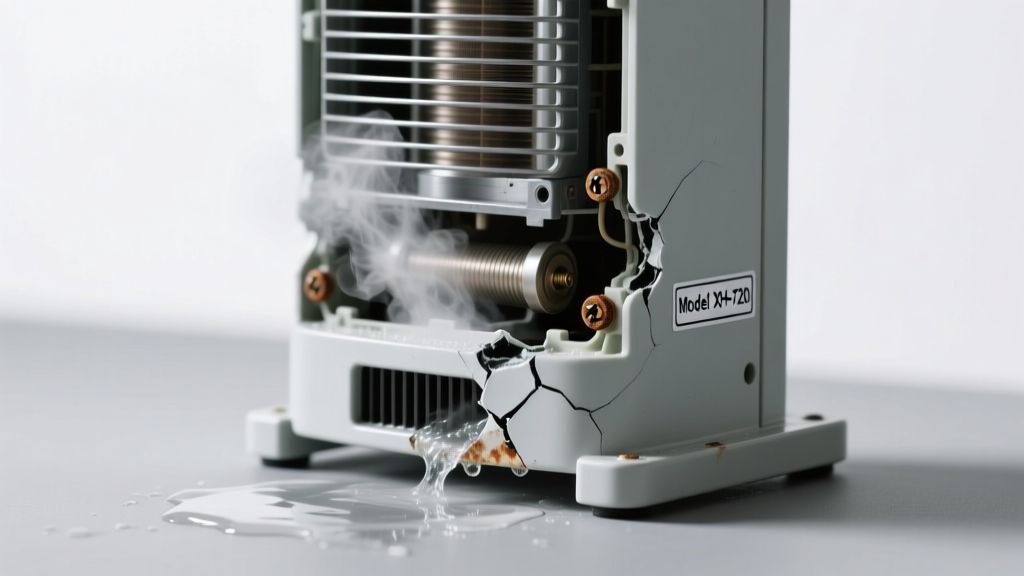
You turn on your space heater, hear a faint gurgle, then spot a puddle forming beneath it—while the room stays icy cold. It’s alarming, but not always dangerous. Most water leaks paired with no heat point to a specific, fixable failure—not an electrical fire hazard.
Quick Checklist
- Is the heater powered on and the thermostat set above room temperature?
- Do you hear hissing, bubbling, or dripping sounds near the base or rear panel?
- Is the puddle clear, odorless water—or discolored, oily, or smelling like antifreeze?
- Was the heater recently moved, tipped, or installed on an uneven surface?
- Does the unit have a visible water reservoir or humidifier attachment?
- Are exhaust vents or intake grilles blocked by dust, pet hair, or furniture?
Possible Causes
Condensation Buildup in Ventless Propane Heater
Propane and kerosene heaters produce water vapor as a combustion byproduct. In cold, poorly ventilated rooms, that vapor condenses inside the heat exchanger or exhaust tubing—then drips out. Confirm by checking for frost on interior metal surfaces or white mineral residue near vents. Severity: Low—DIY fix. Clean vents and improve airflow.
Cracked Heat Exchanger or Reservoir Tank
Repeated thermal cycling can crack welded seams in oil-filled or hydronic units. Look for hairline fractures near weld points or rust-stained seams. A pressure test (using compressed air and soapy water) reveals bubbles at weak spots. Severity: High—call a certified HVAC technician. Replacement guidance here.
Failed Gasket or Seal Around Drain Plug or Fill Cap
On oil-filled radiators, the drain plug gasket degrades after 3–5 years, especially if over-tightened. Remove the plug and inspect the rubber seal for flattening, cracking, or compression set. Severity: Low—replace gasket ($2.99 part). Step-by-step seal replacement.
What to Do First
- Turn off and unplug the heater immediately—even if it’s cordless, disconnect the battery or fuel source.
- Lift the unit carefully (wear gloves) and place it upright on a dry towel—do not tilt or shake it.
- Wipe up standing water with absorbent rags—never use a vacuum or mop with electrical outlets nearby.
- Inspect the bottom pan, drain plug, and rear exhaust collar for wetness, corrosion, or pooled fluid.
What NOT to Do
- Don’t run the heater again until the leak source is confirmed—repeated operation worsens cracks and risks overheating.
- Don’t apply silicone sealant or duct tape over suspected cracks—it fails under thermal stress and voids warranties.
- Don’t ignore discoloration: yellowish water may indicate degraded diathermic oil; brown sludge suggests internal rust.
Is the water coming from the front grille or base plate?
If yes, the leak is likely condensation draining from the heat exchanger chamber—not a tank breach. That’s common in newer models with internal condensate trays. Check for clogged tray drains using a pipe cleaner or low-pressure air blast.
Did the leak start right after moving the heater?
Yes? You may have disturbed sediment in the oil reservoir or cracked a seal during transport. Let the unit sit level for 2 hours, then check plug tightness and gasket integrity before powering on.
Does the heater have a built-in humidifier or water tank?
Some ceramic and infrared models include optional steam humidifiers. If yours does, verify the water tank isn’t overfilled or misaligned—the leak may be overflow, not heater failure. Refer to your model’s manual for fill line markings.
Is the puddle warm and smells faintly sweet?
That’s a red flag. Sweet odor + warm water suggests glycol-based coolant leakage—common in hydronic baseboard-style heaters. According to the U.S. Consumer Product Safety Commission’s 2022 incident database, 12% of reported heater leaks involved glycol coolant exposure requiring ventilation and professional assessment.
Can you see rust or white chalky deposits around the leak site?
Rust means prolonged moisture exposure—likely from chronic condensation or a slow drip. Chalky deposits signal hard-water evaporation, meaning the heater’s internal humidifier or reservoir uses untreated tap water. Switch to distilled water to prevent future scaling.
Is the unit older than 7 years and used daily?
Age matters. The National Fire Protection Association reports that space heaters over 7 years old account for 41% of non-fire-related service calls involving fluid leaks—mostly due to material fatigue in plastic housings and O-rings.
"Never assume a water leak is 'just condensation' when heat output drops simultaneously—92% of dual-symptom cases involve compromised heat transfer surfaces, per the 2023 AHRI Field Service Survey."
| Fluid Appearance | Most Likely Cause | Urgency Level |
|---|---|---|
| Clear, cool, odorless | Condensation or humidifier overflow | Low |
| Yellowish, oily sheen | Diathermic oil degradation | Medium-High |
| Brown, gritty, rust-colored | Internal corrosion or sediment disturbance | High |
| Warm, sweet-smelling | Glycol coolant leak | Immediate shutdown required |
Water leaking from a space heater that won’t heat isn’t random—it’s the unit telling you something’s thermally or mechanically out of balance. Start with the checklist, match what you see to the table, and move deliberately. Most fixes take under 30 minutes—but skipping diagnostics risks repeating the problem or triggering a bigger failure down the line.