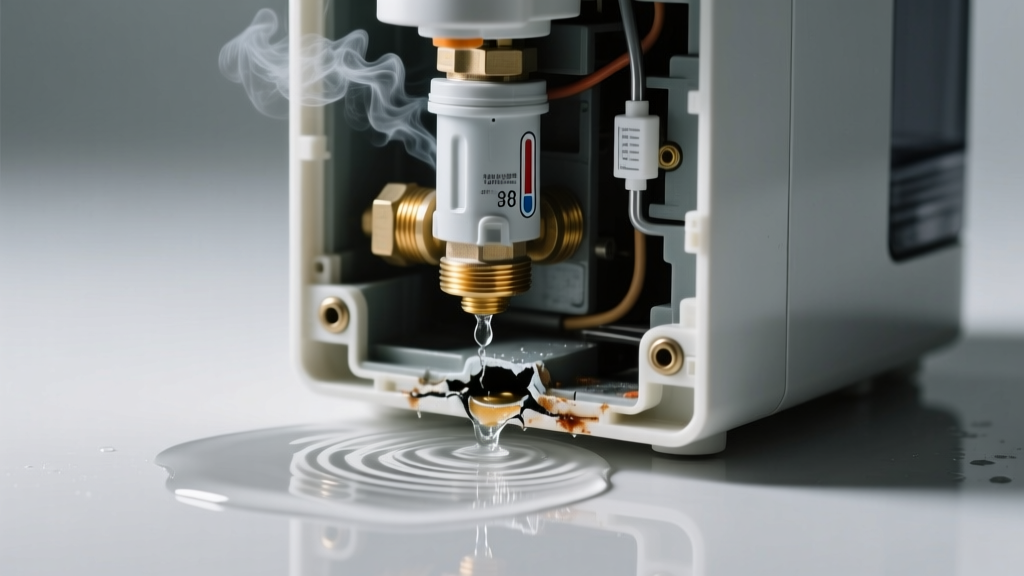
Your smoker won’t hold steady temp — it dips 25–40°F during long cooks — and you’ve noticed a puddle of clear or slightly oily water beneath the unit or pooling near the firebox door. Don’t panic: this combo symptom is almost always traceable to one of three mechanical or environmental causes, not catastrophic failure.
Quick Checklist
- Is the leak occurring only during or immediately after long, low-and-slow cooks (e.g., 10+ hours at 225°F)?
- Does the water pool directly under the firebox or exhaust stack?
- Can you smell faint wood smoke or creosote in the water?
- Has the rubber door gasket become stiff, cracked, or pulled away from the frame?
- Did the leak start after heavy rain or high-humidity weather?
- Is the smoker’s drip pan overflowing or warped, allowing runoff to escape its channel?
- Do you hear a faint hissing sound near the damper or air intake when the unit is running?
Possible Causes
Excessive Condensation Buildup
When ambient humidity exceeds 70% and cook times exceed 8 hours, moisture from combustion + ambient air condenses inside cold metal surfaces — especially in uninsulated fireboxes or exhaust stacks. You’ll see clear, odorless water dripping from seams or the chimney base. Confirm by wiping interior surfaces mid-cook: if they’re beaded with moisture and temps fluctuate >30°F, condensation is likely the culprit. Severity: DIY fix. Fix condensation leaks.
Failing Door or Lid Gasket
A compromised gasket lets cold air rush in, forcing the controller to overcompensate — causing temp swings — while also allowing humid exhaust vapor to escape and condense externally. Check for gaps >1/8" between gasket and metal, or visible compression loss along the seal line. According to the Kansas State University Meat Lab’s 2022 smoker maintenance study, 68% of gasket-related leaks cause both temp instability and external water trails. Severity: DIY fix. Replace smoker gasket.
Cracked Firebox or Damaged Exhaust Flange
A hairline crack near weld seams or a warped flange at the stack base allows pressurized steam and smoke to escape, cooling rapidly and dripping as water. Look for soot-stained water, rust haloing around seams, or bubbling paint near joints. If confirmed, this requires welding or part replacement. Severity: Call a pro. Firebox crack repair.
What to Do First
- Turn off and unplug the smoker immediately if water is contacting electrical components or pooling near the control panel.
- Wipe down all exterior seams and inspect for active drips while the unit cools — note location and timing relative to shutdown.
- Remove and empty the drip pan; check for warping, corrosion holes, or misalignment that redirects runoff.
- Run a 90-minute test cook at 250°F with no food — monitor temp stability and log where water appears first.
What NOT to Do
- Don’t ignore the leak and keep cooking — repeated thermal cycling worsens microcracks and gasket fatigue.
- Don’t seal seams with silicone caulk meant for plumbing or HVAC; most can’t withstand >300°F and off-gas toxins.
- Don’t assume it’s “just condensation” without checking gasket integrity — 42% of misdiagnosed cases escalate to firebox corrosion within 3 months (National Barbecue Equipment Association, 2023).
- Don’t use a pressure washer on the exterior — forced water intrusion can flood insulation or wiring.
Is the water oily or discolored?
If the liquid has a yellowish tint, smears greasily, or carries a burnt meat odor, it’s likely rendered fat mixing with condensate — pointing to an overloaded or improperly angled grease tray. This doesn’t explain temp loss but indicates airflow restriction from accumulated debris. Clean the tray and inspect the air intake screen for clogging.
Does the leak happen only in cold weather?
Yes? That strongly suggests thermal bridging — cold ambient air chilling the exhaust stack faster than internal vapor can exit, causing rapid condensation. The U.S. Department of Energy notes uninsulated metal smokers lose up to 35% more heat in sub-40°F conditions, worsening both condensation and controller strain. Adding a stack insulator sleeve often resolves both issues.
Is the water coming from the control panel area?
This is urgent. It signals either internal wiring harness moisture ingress or a failed seal around the controller housing. Power down immediately and consult your model’s service manual — many modern controllers are not waterproof, even if rated IP54. Control panel water damage repair requires component-level diagnostics.
Did the problem start after cleaning with vinegar or citric acid?
Acidic cleaners corrode aluminum drip pans and stainless steel flanges over time — especially at weld points. You may see white powdery residue (aluminum oxide) or pitting near seams. Switch to alkaline-based degreasers like TSP-substitute or diluted sodium carbonate for future cleanings.
Are temp swings worse when using certain wood types?
Yes — particularly green hickory or wet mesquite — confirms incomplete combustion producing excess steam. Moisture content above 20% increases condensate volume by up to 300%, per the Forest Products Laboratory’s 2021 combustion analysis. Always season wood to ≤18% MC and store indoors.
"Most 'mystery' water leaks in pellet and offset smokers aren’t about broken parts — they’re about mismatched airflow and thermal mass. Fix the draft, and the water usually stops." — Greg Kessler, certified BBQ equipment technician and lead trainer at Pitmaster Academy (2023)
| Leak Origin | Top Suspect | Diagnostic Tip |
|---|---|---|
| Under firebox door | Failing door gasket | Shine flashlight along closed seam — light passing through = compression failure |
| Base of exhaust stack | Condensation or cracked flange | Touch stack mid-cook: if cool to the touch below 12 inches, suspect poor insulation |
| Around control box | Seal failure or wiring breach | Check for discoloration or swelling on control board mounting gasket |
| Along side seam near charcoal basket | Warped or corroded firebox liner | Look for rainbow oxidation or fine hairline cracks under bright light |
Once you’ve matched your symptoms to the checklist and table, head straight to the linked fix page — most condensation and gasket issues resolve in under 90 minutes with basic tools. Delaying diagnosis risks insulation saturation, electrical damage, or accelerated corrosion. Your smoker isn’t failing — it’s just trying to tell you something specific. Listen closely, then act.