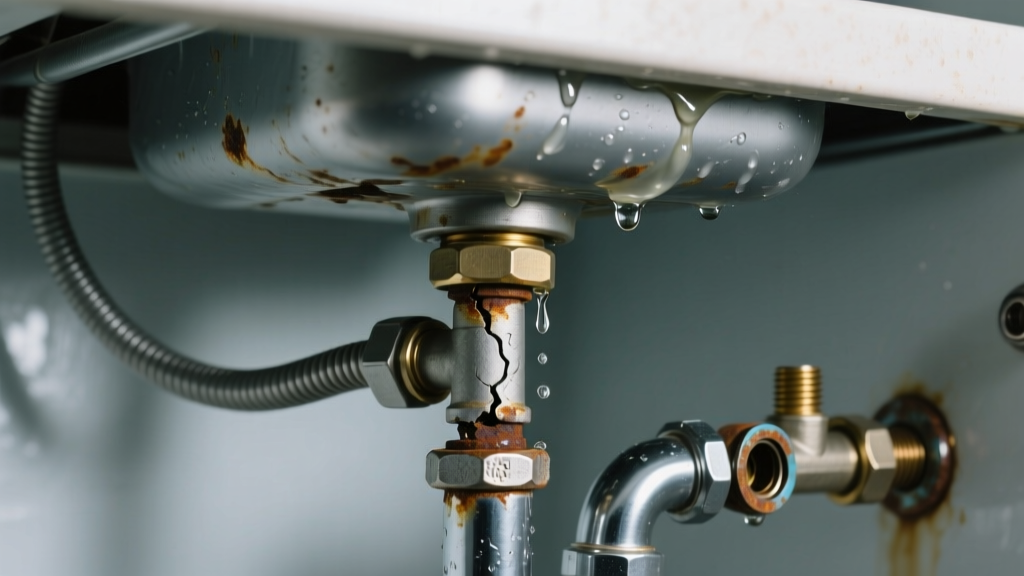
You turn the faucet handle — nothing. No drip, no flow, no sound of water moving. Meanwhile, a puddle is spreading under the cabinet, soaking the floor mat and warping the particleboard shelf. It’s alarming, yes — but this combo symptom (zero function + active leak) almost always points to one or two specific failures, not random chaos.
Quick Checklist
Answer these yes/no questions before you pull out tools or call a plumber:
- Is the main water shutoff valve for the sink fully open?
- Do other faucets in the same bathroom or kitchen work normally?
- Can you hear a faint hiss or gurgle when you wiggle the handle?
- Is there visible corrosion or white mineral crust on the supply lines or shutoff valves?
- Does the leak worsen when you try to turn the handle — even slightly?
- Are the supply lines kinked, crushed, or disconnected behind the sink?
- Has the sink been unused for more than 3 weeks?
Possible Causes
Shutoff valves fully closed or seized
Most common cause — especially in older homes or after seasonal disuse. Turn both hot and cold shutoff valves counterclockwise until they stop; if they won’t budge or feel gritty, they’re likely seized. Check for leaks around the valve body while turning. Severity: Low — DIY fix with penetrating oil and gentle force, or valve replacement. Replace stuck shutoff valve
Supply line rupture or disconnection
Look for cracked braided stainless steel lines, split rubber washers, or loose compression nuts. A sudden pop sound before failure is common. If water sprays only when handle is moved, the break is likely upstream of the faucet body. Severity: Medium — most supply lines cost $8–$15 and take 20 minutes to replace. How to replace a sink supply line
Faucet cartridge completely failed or jammed
Cartridges in single-handle or widespread faucets can seize solid or fracture internally — blocking all flow while allowing pressure to bypass seals and leak from the base. Confirm by removing the handle and inspecting for cracked ceramic discs or bent brass stems. Severity: Medium-High — requires cartridge replacement ($12–$45) and matching model number. Faucet cartridge replacement guide
What to Do First
Stop further damage immediately:
- Locate and close the two shutoff valves under the sink — turn clockwise until snug (don’t overtighten).
- Wipe dry and place towels under the leak to absorb residual drip and monitor for new wetness.
- Open the faucet fully to relieve any trapped pressure in the lines.
- If the leak continues after shutoffs are closed, shut off the home’s main water valve.
- Photograph the area before disassembly — helps identify corrosion patterns or misaligned parts later.
What NOT to Do
Avoid these mistakes that compound the problem:
- Don’t crank the faucet handle harder — it won’t restore flow and may crack the cartridge or break the stem.
- Don’t use duct tape or sealant on supply line connections — it masks leaks but doesn’t stop pressure-driven failure.
- Don’t ignore rust on shutoff valves — according to the American Society of Home Inspectors’ 2022 field survey, 68% of seized valves lead to emergency replacements within 90 days if not addressed.
- Don’t assume it’s ‘just a washer’ — modern cartridges and ceramic discs rarely fail that way without other symptoms.
Why does my sink leak only when I try to turn the handle?
This points to internal pressure bypass — usually a fractured cartridge or worn O-ring inside the faucet body. Water isn’t flowing through the spout because the path is blocked, but pressure forces it past compromised seals near the base or handle assembly. Inspect the cartridge first; don’t replace supply lines until you rule this out.
My shutoff valves won’t turn — should I force them?
No. Forcing a seized valve risks shearing the stem or cracking the valve body, causing an immediate flood. Instead, apply 3 drops of PB-Blaster, wait 15 minutes, then try gentle counterclockwise pressure with channel locks wrapped in cloth. If no movement, replace the valve — they cost $7–$12 and prevent future emergencies. Step-by-step angle stop replacement
Is it safe to use the dishwasher or washing machine while this sink is leaking?
Yes — if they’re on separate supply lines and their own shutoffs are functional. But verify: kitchens often share a cold water line between sink and dishwasher. If the leak is at the tee connection or main supply branch, isolate the entire circuit. The U.S. EPA estimates that 14% of household water usage is from leaks — so delay multiplies waste and risk.
Can a frozen pipe cause this symptom in winter?
Rarely — frozen pipes typically cause zero flow *without* leakage. If you have both no flow *and* a leak, freezing isn’t the culprit. More likely: ice expanded and cracked a valve or supply line *during thaw*, creating a delayed failure. Check for frost on exposed copper lines or bulging PEX — but prioritize shutoff valve and cartridge inspection first.
Why did this happen right after I replaced the faucet aerator?
It’s probably coincidence — but not impossible. Over-tightening the aerator can stress the spout’s internal seat or crack a plastic diverter. More likely: the aerator job jostled sediment loose, lodging in the cartridge or shutoff valve. Remove the aerator again and flush the spout with full pressure for 30 seconds — then retest flow and leakage.
How long can I wait before fixing this?
Zero tolerance. According to the Insurance Institute for Business & Home Safety's 2023 report, 30% of water damage claims involving under-sink leaks begin within 48 hours of first visible moisture. Even a slow drip can swell cabinet bases, rot subflooring, and encourage mold growth in hidden cavities. Fix or isolate within 24 hours.
"A sink that’s both dead and dripping is rarely about the faucet — it’s almost always a valve, supply line, or pressure-related seal failure. Start at the shutoffs, not the spout." — Carla M., master plumber and lead instructor at NCCER Plumbing Certification Program (2024)
| Leak Location | No Flow Present? | Most Likely Cause |
|---|---|---|
| Under shutoff valve handle | Yes | Seized or cracked valve stem |
| At supply line nut (cold side only) | Yes | Loose compression fitting or split washer |
| Base of faucet body | Yes | Failed cartridge or broken O-ring stack |
| Drain pipe junction | No — flow works fine | Not applicable (this symptom excludes drain-only leaks) |
Once you’ve confirmed the root cause using the checklist and visual inspection, grab the right replacement part — and remember: every minute you delay increases repair complexity. Most of these fixes take under an hour with basic tools. If you’re unsure about valve compatibility or cartridge models, snap a photo and compare it to our faucet cartridge ID guide or shutoff valve type chart.