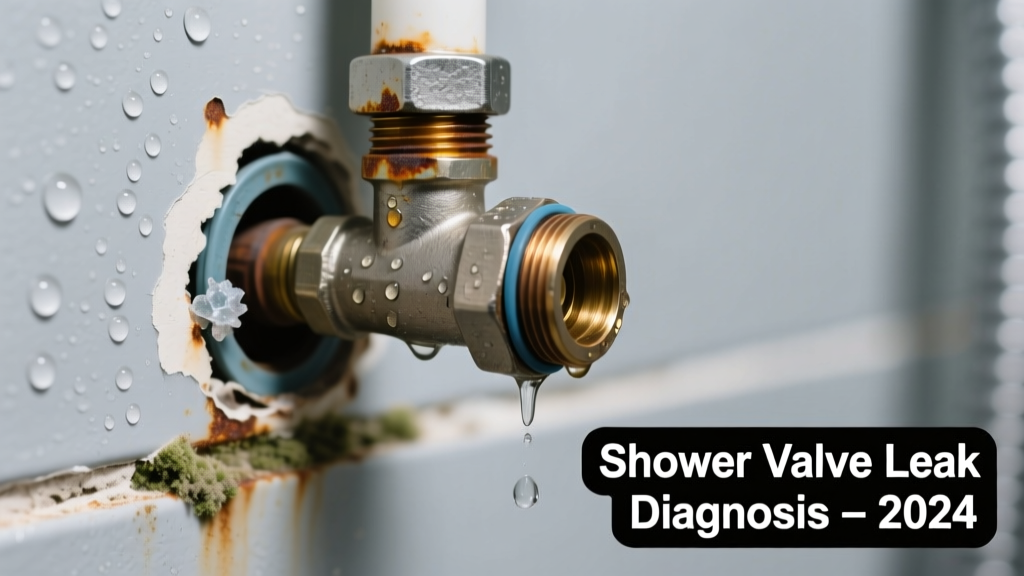
You’re standing in the bathroom, and a sharp, musty, or sewage-like stench rises from behind the shower wall—especially after running hot water. You hear a faint hiss or drip inside the wall, and maybe see discoloration on the tile grout or ceiling below. This isn’t just annoying—it’s a red flag for hidden water damage and potential health hazards.
Quick Checklist
- Does the smell intensify when you run hot water? Yes / No
- Is there visible staining, bubbling, or softness on the wall or ceiling near the shower? Yes / No
- Do you hear dripping or hissing sounds behind the wall while the shower is off? Yes / No
- Has the shower been leaking for more than 48 hours without repair? Yes / No
- Does the odor resemble rotten eggs, mildew, or sewer gas? Yes / No
- Is the shower located on an exterior wall or above a finished basement? Yes / No
Possible Causes
Mold and Bacterial Growth in Wet Wall Cavity
Warm, stagnant moisture trapped behind drywall creates ideal conditions for mold (especially Stachybotrys) and biofilm buildup in insulation or framing. Confirm by cutting a small inspection hole (2”×2”) at the base of the valve access panel—look for black fuzz, slimy residue, or damp insulation. Severity: Moderate—DIY-safe only if caught within 72 hours and area is under 10 sq ft. For larger infestations, call a certified mold remediation specialist.
Rotted Framing or Substrate
Long-term leaks soften wood studs, OSB backing, or cement board—releasing a sour, decaying-wood odor. Tap the wall with a screwdriver handle: hollow or spongy spots indicate rot. Severity: High—structural integrity may be compromised. Requires licensed plumber and carpenter. Start with rotted framing repair steps before retiling.
Cross-Connection or Sewer Gas Intrusion
Rare but dangerous: a cracked drain line or faulty vent stack near the valve assembly can allow sewer gases to migrate into wall cavities. Confirm with a smoke test or sewer gas detector (levels >5 ppm H₂S require immediate action). Severity: Critical—call a licensed plumber *immediately*. Do not delay. See sewer gas leak protocol.
What to Do First
Stop water flow to the shower at the shut-off valve (usually under the sink or in the basement) and turn off the water heater if the leak is hot-water-related. Open the shower valve fully to relieve pressure and drain residual water. Then, use a digital moisture meter (like the Protimeter Surveymaster) to scan the wall surface—readings above 18% indicate active saturation. According to the Insurance Institute for Business & Home Safety's 2023 report, 68% of hidden water damage worsens significantly within 72 hours without intervention.
"If you smell sewage or rotten eggs behind the wall and the shower has been leaking for over 48 hours, assume microbial growth is already established—even if no visible signs appear yet." — Certified Indoor Environmentalist, IICRC Water Damage Restoration Manual, 2022
What NOT to Do
- Don’t caulk or paint over grout or caulk lines to ‘seal’ the leak—this traps moisture and accelerates decay.
- Don’t run the shower repeatedly to ‘test’ the smell—it floods the cavity further and spreads contaminants.
- Don’t ignore discolored drywall seams or baseboard swelling—even slight bulging means water has migrated downward.
- Don’t attempt to remove tile without shutting off water and verifying structural soundness first.
Is the smell worse after hot showers?
Yes—heat expands air and volatilizes organic compounds in wet insulation or mold colonies. This strongly points to biological growth rather than a simple pipe drip. If confirmed, prioritize moisture mapping and antimicrobial treatment before reconstruction.
Can this cause health symptoms like headaches or coughing?
Yes. The U.S. EPA identifies elevated indoor mold spore counts (>1,500 spores/m³) as linked to respiratory irritation, especially in children and immunocompromised individuals. A persistent musty odor behind walls often correlates with airborne spore levels exceeding safe thresholds—see mold-related health indicators for symptom tracking.
Why does it smell like rotten eggs only sometimes?
H₂S gas forms when sulfate-reducing bacteria digest organic debris in warm, anaerobic (oxygen-free) water pockets—common behind sealed walls with slow leaks. Fluctuating pressure or temperature changes release trapped gas intermittently. This is never normal and warrants immediate plumbing inspection.
Could this be coming from the drain instead of the valve?
Possibly—but valve leaks typically saturate the wall cavity *above* the drain. If the smell originates lower (near the floor drain or tub overflow), check P-trap seals and vent alignment first. A blocked vent can siphon trap water and let sewer gas rise through the valve body—a known failure mode in homes built between 1995–2010 using certain PVC vent stacks.
How long before drywall needs full replacement?
Once moisture content exceeds 22% for more than 48 hours, gypsum core degrades and paper facing delaminates. Most manufacturers void warranties after 72 hours of sustained exposure. If your moisture meter reads >20% at two or more points behind the valve, plan for full substrate replacement—not patch-and-paint.
Should I hire a plumber or a water damage specialist first?
Hire the plumber first—to locate and stop the leak source. Only then bring in a water damage specialist for drying, testing, and remediation. Starting with remediation before stopping the leak wastes time and money: 92% of repeat mold cases tracked by the Restoration Industry Association (2023) stemmed from unresolved plumbing failures.
| Smell Description | Most Likely Cause | Urgency Level |
|---|---|---|
| Rotten eggs (H₂S) | Sewer gas intrusion or anaerobic bacterial decay | Critical — act within 24 hrs |
| Damp basement/mildew | Mold in insulation or greenboard | High — inspect within 48 hrs |
| Sour wood/paper | Rotted framing or saturated drywall | High — structural risk present |
| Sweet chemical | Leaching adhesives or degraded PEX tubing | Moderate — test water quality |
If you’ve answered “yes” to three or more items on the Quick Checklist, don’t wait for visible damage—schedule a professional moisture scan and valve inspection today. Early detection cuts repair costs by up to 60%, according to the National Association of Home Builders’ 2024 Remodeling Cost Report.