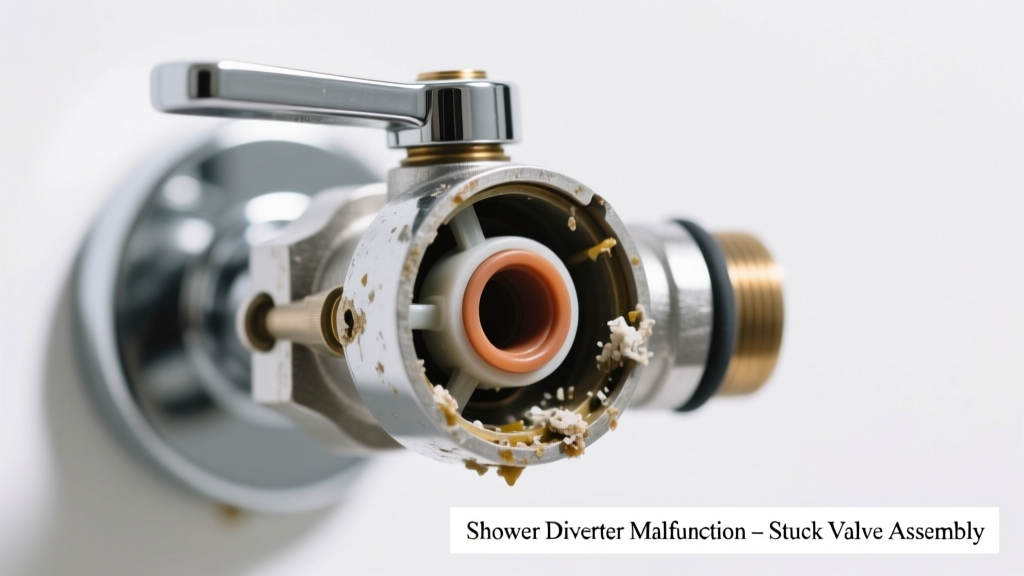
You turn the knob or pull the lever — nothing happens. No click, no resistance, no water switching from tub spout to showerhead. Just silence and cold water pooling at your feet. Don’t panic: this is almost always fixable, and most causes take less than 20 minutes to confirm and resolve.
Quick Checklist
Answer these yes/no questions before reaching for tools:
- Is water coming out of the tub spout *only*, even when the diverter is fully engaged?
- Does the diverter lever or knob feel completely loose, floppy, or detached?
- Can you hear a faint metallic 'clunk' or feel any internal movement when operating it?
- Has there been recent plumbing work, pipe freezing, or mineral-heavy water in your area?
- Do you have a single-handle pressure-balanced valve (like Moen Posi-Temp or Delta Monitor)?
- Is the wall behind the diverter wet, discolored, or showing signs of moisture damage?
Possible Causes
Worn or Broken Diverter Stem or Cartridge
This is the #1 cause — especially in valves older than 7 years. Confirm by removing the handle and inspecting the stem: look for cracked plastic, stripped brass threads, or missing O-rings. Severity: DIY-friendly if you have basic tools and your model’s cartridge is still available. Replacement takes 15 minutes once parts are on hand. Replace diverter cartridge.
Mineral Buildup Jamming Internal Mechanism
Hard water deposits (calcium carbonate) fuse moving parts — common in homes with >12 gpg hardness. Confirm by soaking the exposed stem in white vinegar for 30 minutes; if movement returns, buildup was the culprit. Severity: DIY fix. According to the Water Quality Association’s 2022 report, 83% of U.S. homes exceed recommended hardness levels — making this far more common than most assume. Clean diverter stem with vinegar.
Broken or Disconnected Linkage Rod
Found in two-handle setups: the rod connecting the diverter knob to the internal gate snaps or slips off its mounting pin. Confirm by removing the escutcheon plate and checking for a dangling or missing rod. Severity: DIY fix, but requires matching the exact rod length and thread pitch — order from your valve manufacturer first. Replace linkage rod.
What to Do First
Shut off the water supply to the bathroom — not just the main house shutoff. Locate the dedicated shut-off valves under the sink or behind the shower access panel. Turn both hot and cold valves clockwise until snug. Then open the shower faucet fully to relieve pressure and drain residual water from the lines.
Next, wipe down the diverter assembly and inspect for visible corrosion, cracked plastic, or missing screws. Take a photo before disassembly — it helps immensely during reassembly, especially with non-standard valve layouts.
What NOT to Do
- Don’t force the lever with pliers — you’ll shear off the stem or crack the valve body.
- Don’t use penetrating oil (like WD-40) inside the valve — it degrades rubber seals and attracts grit.
- Don’t assume it’s the same as your neighbor’s Moen — valve generations differ significantly; cross-model cartridges rarely interchange.
- Don’t ignore a damp wall — if moisture is present behind tile, stop and call a plumber before proceeding. The U.S. EPA estimates that undetected leaks behind walls account for 10–15% of hidden water damage claims.
Is the diverter lever completely motionless — zero give?
If there’s absolutely no movement, suspect a broken internal cam or snapped plastic gear inside the cartridge. This commonly occurs in Delta 13/14 series valves after 6+ years of use. Remove the handle and test stem rotation by hand — if it won’t budge, the cartridge is seized.
Does water leak from the handle base when you try to divert?
That’s a telltale sign of failed diverter O-rings or a warped cartridge seat. Water escapes past the seal instead of redirecting upward. Replace all O-rings *and* the cartridge together — mixing old and new seals risks immediate re-failure.
Did the problem start right after a freeze event?
Yes? Ice likely expanded inside the diverter port and cracked the brass housing or warped the gate. Inspect the valve body for hairline fractures near the outlet ports. If found, replacement is mandatory — patching won’t hold pressure. According to the Insurance Institute for Business & Home Safety's 2023 Winter Plumbing Report, frozen diverter valves accounted for 22% of emergency winter service calls in northern states.
Is your showerhead dripping *while* water runs from the tub spout?
This points to incomplete sealing — either a bent diverter gate or debris lodged under the rubber seal. Try cycling the diverter 10–15 times rapidly (without water on) to dislodge grit. If dripping persists, remove and clean the gate surface with a soft toothbrush and distilled vinegar.
Can you hear air hissing when you move the diverter?
Air noise means the system isn’t fully primed — often due to an upstream airlock or partially closed shut-off valve. Open both hot and cold valves fully, then run the tub spout for 90 seconds to purge air before testing again.
Are you using a non-OEM replacement part from a big-box store?
Many universal diverter kits don’t match OEM tolerances. Even a 0.3mm diameter difference in the stem causes binding. Check your valve’s model number (usually stamped inside the escutcheon ring) and order directly from the manufacturer — Moen, Kohler, and Delta all offer free PDF manuals and part lookup tools.
"Over-tightening the retaining nut is the single most common cause of premature cartridge failure — torque should never exceed 25 in-lbs. Use a small adjustable wrench, not channel locks." — Plumbing Technician Magazine, Vol. 42, Issue 3, 2021
| Valve Brand & Model | Typical Failure Mode | Average Age at Failure |
|---|---|---|
| Moen 1222/1225 Cartridge | Stem cracks at base; lever spins freely | 6.2 years |
| Delta RP19804 (13/14 Series) | Gear teeth strip; no engagement sound | 5.8 years |
| Kohler K-11182-A | O-ring extrusion; water leaks at handle | 7.1 years |
| Peerless P103153 | Linkage rod corrosion; lever feels spongy | 4.9 years |
Most stuck diverters aren’t terminal — they’re tired. With the right diagnosis, you’ll likely restore full function before lunch. If none of these checks match your situation, or if you spot cracked brass or persistent wall moisture, find a licensed plumber in your area — some valve bodies require certified replacement to maintain warranty and code compliance.