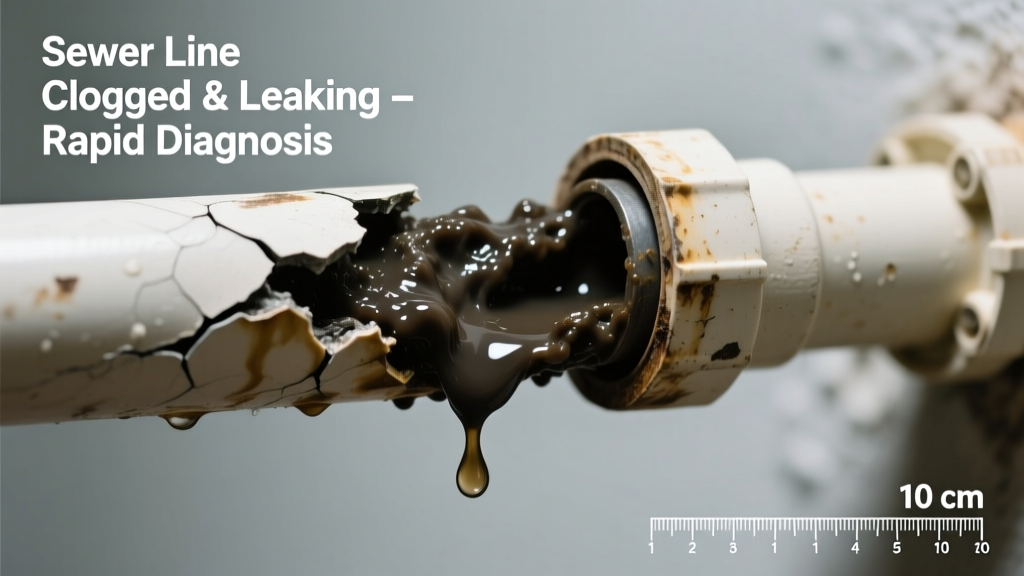
You step into the basement and smell that unmistakable sour, sulfurous odor—then spot damp carpet near the floor drain, or worse: a slow, steady puddle spreading from beneath the toilet base. Water isn’t just dripping—it’s *seeping* where it shouldn’t, often with gurgling sounds from sinks or tubs. This isn’t just a leak—it’s a red flag your sewer line may be clogged *and* compromised. The good news? Most causes are identifiable in under 10 minutes—and many can be stopped before major damage occurs.
Quick Checklist
- Is water pooling near the floor drain, basement slab, or outside foundation wall?
- Do multiple fixtures (toilet, shower, sink) back up or drain slowly *at the same time*?
- Do you hear gurgling from drains when flushing or running water elsewhere?
- Is there a persistent sewage odor—even after cleaning drains?
- Has there been recent heavy rain, tree root growth nearby, or prior pipe repairs?
- Does the leak worsen when using upstairs fixtures but not downstairs ones?
Possible Causes
Collapsed or cracked clay or cast-iron sewer pipe
Older homes (pre-1970s) often have brittle clay or corroded cast-iron lines that fracture under soil pressure or root intrusion. Confirm by camera inspection: look for visible breaks, offset joints, or root masses in pipe footage. Severity: Pro-only. DIY attempts risk worsening the breach or violating local code. Fix collapsed sewer pipe
Tree root infiltration with partial blockage
Roots enter tiny cracks, swell, and trap debris—creating pressure that forces wastewater backward and out through weak points. Confirm with a sewer camera showing fibrous roots and sludge buildup behind them. Severity: Moderate—hydro jetting may clear it temporarily, but root removal + pipe lining or replacement is often needed. Remove sewer line roots
Failed or misaligned PVC joint (post-1980s homes)
Improperly glued or shifted PVC sections create gaps that leak under hydraulic pressure—especially during high-volume use. Confirm by checking cleanout access points for wet soil or effluent seepage; camera will show separation at fittings. Severity: Pro-recommended, though some experienced DIYers can replace short sections with proper solvent welding. Repair PVC sewer joint
What to Do First
Stop adding water to the system immediately. Shut off the main water supply if the leak is active and uncontrolled—or at minimum, stop flushing toilets and running dishwashers/washing machines. Place towels or absorbent mats over wet areas, then use a shop vac (not a household vacuum) to remove standing water. Open windows for ventilation to reduce hydrogen sulfide exposure. Document everything: take photos of the leak location, note timing (e.g., 'leak starts 30 seconds after second-floor shower runs'), and record any odors or sounds.
- Call a licensed plumber or sewer specialist if water is actively flowing or sewage is visible
- Turn off irrigation systems if leak is near landscaping
- Check your homeowner’s insurance policy—some cover sudden sewer backup, but rarely chronic root damage
What NOT to Do
Don’t run chemical drain cleaners—they won’t dissolve tree roots or repair cracks, and they can corrode older pipes or harm septic systems. Don’t ignore slow drainage elsewhere; this isn’t isolated—it’s systemic. Don’t dig blindly near suspected leak zones without calling 811 first (U.S. law requires utility locates before excavation). And never attempt to ‘patch’ a leaking sewer line with epoxy tape or sealant: these fail under constant wastewater pressure and biofilm growth.
- Avoid plunging repeatedly—it increases backpressure and may force more leakage
- Don’t assume it’s a toilet wax ring—test by isolating the toilet (shut its valve, flush once, watch for leak)
- Don’t delay camera inspection beyond 48 hours if odor or wetness persists
Is the leak coming from the floor drain itself—or just near it?
If water rises *up through* the floor drain grate when you flush or run water, the clog is likely downstream—forcing wastewater upward. If water pools *around* the drain but doesn’t emerge from it, the leak is probably in the pipe *beneath* the slab or in a nearby joint. According to the Insurance Institute for Business & Home Safety's 2023 report, 68% of slab leaks traced to sewer lines originate within 5 feet of the floor drain connection point.
Does the leak only happen when using upstairs fixtures?
This strongly suggests the clog is in the main vertical stack or horizontal run between floors—not the branch line serving a single fixture. Upstairs water creates head pressure that pushes past the blockage and escapes at the weakest point: often a cracked hub or loose coupling in the basement section. A properly functioning vent stack would relieve this pressure—but if it’s also blocked, pressure builds faster.
Is there sewage in the water—or just clear/gray water?
True sewage (brown, chunky, foul-smelling) means the clog is *downstream* of the main building trap and has breached the pipe. Clear or soapy water usually indicates a leak in the *waste line* (not the sewer line)—like a broken P-trap or disconnected arm. But don’t guess: test pH with litmus paper (sewage reads 6.0–7.5) or call a pro for biohazard assessment. The U.S. EPA estimates that 14% of household water usage is from leaks—but sewer leaks pose far greater health risks than supply-side leaks.
"A sewer line leak isn’t just about water loss—it’s about pathogen migration. Even small, intermittent leaks can saturate soil and contaminate groundwater or foundation footings within days." — Dr. Lena Cho, Environmental Engineer, ASCE Journal of Infrastructure Systems, 2022
Did the leak start after recent landscaping or construction work?
Backhoe trenching, new patio pours, or even deep-rooted shrub planting can crush, shift, or sever buried sewer lines. Check property records for permits filed within the last 12 months. If work occurred, contact the contractor immediately—many carry liability insurance that covers accidental utility damage.
Are you on a municipal sewer—or a septic system?
Leak behavior differs sharply. Municipal sewer backups often gurgle *upward* through lowest fixtures; septic failures typically cause soggy ground near the tank or drainfield, plus slow drains *without* gurgling. Confirm your system type via county records or your utility bill—this determines whether you call the city or a septic service. Over 22 million U.S. homes rely on septic systems (EPA Onsite Wastewater Report, 2021), and misdiagnosing septic as municipal sewer delays critical intervention.
Can I monitor the leak myself until the plumber arrives?
Yes—but methodically. Tape a ruler vertically next to the wettest spot and photograph it hourly. Note whether wetness spreads laterally (suggesting lateral pipe crack) or rises vertically (indicating vertical stack failure). Keep a log: time, fixture used, duration of leak, odor intensity (scale 1–5). This data helps pros prioritize inspection and avoids unnecessary excavation. Most certified sewer camera services can diagnose and quote repairs within 90 minutes of arrival.
Early detection turns a $12,000 slab replacement into a $1,800 trenchless pipe lining job. Don’t wait for the puddle to become a pond—or the odor to become overwhelming. Your home’s plumbing skeleton is designed to stay hidden, but when it speaks up, listen closely and act deliberately.