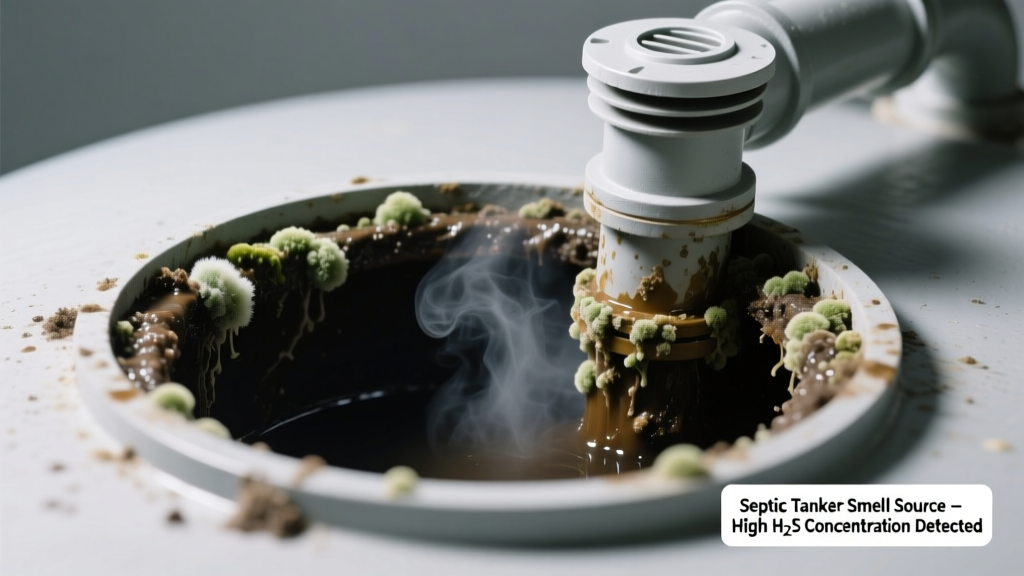
You step outside near your leach field—or even open a basement floor drain—and hit by that unmistakable rotten-egg, sewage-like stench. It’s sharp, persistent, and makes your eyes water. Don’t panic: most septic smells have clear, identifiable causes—and many are fixable fast.
Quick Checklist
- Does the smell worsen after heavy rain or prolonged wet weather?
- Is the odor strongest near floor drains, basement sinks, or laundry tubs?
- Have you noticed gurgling sounds from toilets or drains?
- Is your septic tank due for pumping (typically every 3–5 years)?
- Do you see standing water or soggy ground over your drainfield?
- Has anyone recently used large amounts of bleach, antibacterial cleaners, or garbage disposal additives?
Possible Causes
Clogged or Dry Floor Drain Trap
Evaporated water in basement floor drain traps lets sewer gas rise into living space. Confirm by pouring 2–3 cups of water down the drain—if odor fades within hours, this is likely it. Severity: Low. DIY fix in under 5 minutes. Fix dry floor drain trap.
Blocked or Frozen Vent Pipe
A cracked, bird-nested, or ice-clogged roof vent prevents gases from escaping upward—so they back up through fixtures. Check vent opening from roof (safely) or listen for gurgling when flushing. Severity: Medium. Often DIY with a plumbing snake or steamer; call a pro if frozen or damaged. Fix clogged septic vent pipe.
Failing Drainfield (Leach Field)
When effluent can’t percolate, it pools and anaerobically decomposes—releasing hydrogen sulfide. Look for lush green grass, black slime, or surfacing gray water. According to the U.S. EPA, 40% of failing systems show surface seepage before full collapse. Severity: High. Requires immediate professional assessment. Fix failing leach field.
Overloaded or Undersized Septic Tank
Tanks overwhelmed by high water use or too-small capacity generate excess sludge and scum layers, reducing holding time and increasing gas production. Confirm via recent pump-out records showing >40% solids depth. Severity: Medium–High. Pumping helps short-term; long-term may need tank upgrade. Fix oversized or undersized tank.
What to Do First
Stop using water-intensive appliances (dishwasher, washing machine) until you isolate the source. Pour 1 quart of water into every unused floor drain and sink trap—including garage and basement—to reseal them. Open windows for ventilation—but don’t run exhaust fans that pull air *from* the house (they can worsen negative pressure).
- Check for obvious vent obstructions (bird nests, leaves) from ground level
- Inspect cleanout caps near the tank for cracks or missing seals
- Note timing: Does smell peak during showers? After rain? At night?
What NOT to Do
Never pour chemical drain cleaners, caustic lye, or excessive bleach into drains—they kill beneficial bacteria and accelerate system failure. Don’t ignore recurring odors—even if they come and go. And never attempt to dig, probe, or pump your tank yourself: confined-space entry risks hydrogen sulfide poisoning, which can cause rapid unconsciousness at concentrations above 500 ppm (NIOSH, 2022).
"A persistent septic odor isn’t just unpleasant—it’s your system’s distress signal. Ignoring it for more than 48 hours increases risk of backup by 3x." — National Onsite Wastewater Recycling Association (NOWRA), 2023 Field Response Guidelines
Why does my septic smell only after it rains?
Rain saturates soil around the drainfield, blocking oxygen flow and forcing gases upward through foundation cracks or vent stacks. It can also flood the tank’s outlet baffle, causing temporary backpressure. If this happens regularly, your drainfield may be compacted or undersized.
Why does the smell get worse at night?
Lower nighttime air pressure and reduced household airflow create negative indoor pressure—sucking gases in through dry traps or faulty seals. Run bathroom fans on low overnight to equalize pressure, but avoid over-venting.
Can a full septic tank cause odors inside the house?
Yes—but rarely without other signs. A truly full tank usually triggers slow drains, gurgling, or backups first. However, if the tank’s inlet baffle is damaged or the outlet is clogged with scum, gases can travel backward through the main line into your home’s vent stack.
Why does my bathroom smell like sewage only when I flush?
This points to a failed toilet wax ring seal or loose closet bolts allowing gas leakage at the base. Also check for hairline cracks in the toilet’s underside or a blocked vent above that fixture. Replace the wax ring (or use a rubber alternative) and tighten bolts evenly—don’t overtighten.
Is septic smell dangerous to breathe?
Low-level exposure causes eye/nose irritation and headaches. Chronic exposure to hydrogen sulfide—even at 10–50 ppm—can impair memory and motor function (CDC, 2021). If you feel dizziness, nausea, or shortness of breath near the odor, evacuate and call a licensed septic contractor immediately.
How often should I pump my septic tank to prevent odors?
The U.S. EPA recommends pumping every 3–5 years for a 1,000-gallon tank serving 3–4 people. But households using garbage disposals, cloth diapers, or high-volume cleaning products may need service every 2 years. Keep a maintenance log—you’ll spot trends faster.
| Smell Location | Top 2 Suspects | First Diagnostic Step |
|---|---|---|
| Basement floor drain | Dry trap, cracked pipe | Pour water in drain; wait 1 hour |
| Near septic tank lid | Loose lid, failed riser seal | Inspect lid gasket and bolt tightness |
| Entire yard, especially after rain | Failing drainfield, lateral line break | Look for soggy spots or greener grass patches |
| Under kitchen sink | Clogged P-trap, broken garbage disposal seal | Run disposal with cold water; check for leaks |
If the smell persists beyond 48 hours—or you see wet soil, bubbling, or backups—call a certified septic professional. Early intervention prevents thousands in excavation costs and protects your groundwater. You’ve already taken the hardest step: noticing the problem. Now act with clarity, not panic.