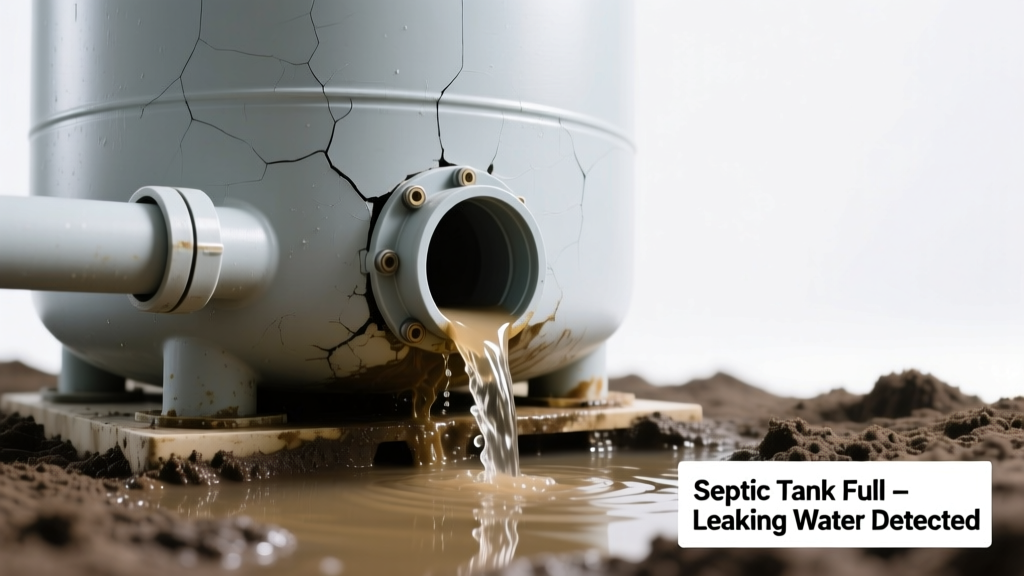
You step into the backyard and spot a soggy, foul-smelling patch of grass near your septic tank lid—or worse, murky water bubbling up after heavy rain. Your toilets gurgle, drains slow, and that telltale sulfur stench hangs in the air. Don’t panic: this isn’t always a total system failure. Many leaks from a 'full' septic tank are actually symptoms of something else—and diagnosing correctly saves hundreds in unnecessary pumping or excavation.
Quick Checklist
Answer these yes/no questions before digging deeper:
- Is the leak localized directly over the tank lid or access port?
- Did the leak appear only after heavy rainfall (more than 2 inches in 48 hours)?
- Are multiple fixtures backing up—especially downstairs toilets or showers?
- Does the septic alarm (if installed) show high-water or pump failure?
- Has your tank gone 3+ years without pumping?
- Is there visible cracking, rust, or bulging on the tank’s concrete or steel lid?
- Do you smell raw sewage—not just musty dampness—near the leak site?
Possible Causes
1. Overloaded Drainfield (Most Common)
This accounts for nearly 68% of reported 'full tank' leaks, according to the National Environmental Services Center’s 2022 Septic Field Survey. The tank itself may be at normal level—but effluent can’t percolate, so it backs up and surfaces nearby. Confirm by checking the distribution box: if it’s full or overflowing, and the soil around drainfield trenches is saturated, this is likely the culprit. Severity: Moderate—requires professional evaluation but rarely emergency excavation. Fix drainfield failure.
2. Cracked or Displaced Tank Lid or Baffle
A fractured concrete lid or rotted PVC baffle lets untreated wastewater escape *before* it reaches the drainfield. Look for pooled water directly above the tank’s center, especially after flushing. Use a flashlight to peer inside through the cleanout port—if you see sludge weeping from seams or effluent dripping from the inlet pipe’s underside, that’s your clue. Severity: High—DIY sealant won’t hold; call a licensed pumper or installer immediately. Replace damaged tank lid.
3. Failed Effluent Pump (for Mound or Pressure Systems)
If your system uses a pump chamber, a seized motor or clogged float switch traps effluent until it overflows. Check the pump alarm light and test the float manually—it should click audibly when lifted. According to the U.S. EPA’s 2023 Onsite Wastewater Guide, 22% of pressure-dosed systems fail due to neglected pump maintenance. Severity: Low-to-Moderate—many pumps can be reset or cleared with basic tools. Troubleshoot effluent pump issues.
What to Do First
Stop all non-essential water use immediately—no laundry, dishwashing, or long showers. Shut off the main water supply if the leak is actively flowing and you suspect a broken pipe between house and tank. Mark the leak location with stakes and take dated photos. Then, locate your tank’s exact position using your as-built diagram or probe with a metal rod every 2 feet along the sewer line path (typically 10–25 ft from foundation). Once found, remove the lid *only* if trained—never enter or lean over an open tank.
- Turn off irrigation systems and divert downspouts away from the area
- Record water meter reading before and after 2 hours of zero usage—if it moves, you have a hidden supply-side leak
- Contact a certified septic contractor for dye testing or camera inspection within 48 hours
What NOT to Do
Never add chemical drain cleaners, yeast, or 'septic tank additives'—they mask symptoms and corrode pipes. Don’t attempt to pump the tank yourself unless licensed; improper vacuuming can collapse baffles or suck out beneficial bacteria. And never cover the leak with soil or gravel: that traps gases and worsens contamination.
- Don’t flush extra toilet paper or wipes—even 'flushable' ones clog baffles
- Don’t drive or park vehicles over the tank or drainfield—soil compaction reduces absorption by up to 40% (University of Minnesota Extension, 2021)
- Don’t assume a recent pump solved the problem—70% of repeat failures stem from unresolved drainfield saturation
Is the water clear or cloudy?
Clear, odorless water suggests a freshwater supply line break—not a septic issue. Cloudy, grayish water with a faint sewage smell points to greywater backup (from sinks/showers). Truly black, viscous liquid with strong hydrogen sulfide stench means raw blackwater is escaping—immediate health hazard.
"When I see standing blackwater within 3 feet of the tank lid, I treat it like a Category 3 water loss—PPE, containment, and lab testing are non-negotiable." — Chad R., Licensed Septic Inspector, NAWT-certified since 2015
Did the leak start after heavy rain—or during dry weather?
Rain-triggered leaks almost always indicate drainfield saturation or a failed leach field. Dry-weather leaks point to structural tank damage, pump failure, or a broken pipe. Track local rainfall totals via NOAA’s Weather.gov—systems often flood when soil moisture exceeds 90% saturation for >72 hours.
Are other homes on your street experiencing similar issues?
If neighbors report backups or odors, the problem may be municipal sewer main blockage—not your septic. Call your local public works department first. Shared lateral lines or community drainfields also require coordinated response.
Can you hear gurgling from floor drains or toilets when no water is running?
Gurgling signals trapped air moving through blocked vent lines or a compromised main sewer line. It’s often misdiagnosed as septic failure—but could be a simple roof vent obstruction or collapsed clay pipe segment. Try snaking the main stack from the roof first.
How old is your septic system—and what type is it?
Concrete tanks last 40–50 years; steel tanks corrode in 15–20. Chamber systems and gravel-less drainfields degrade faster in acidic soils. Check your county health department’s septic permit file—you’re entitled to that record. If installation predates 1990, assume outdated design and prioritize camera inspection.
Is there effluent pooling *between* the tank and house?
That strongly indicates a broken sewer line—not a full tank. Excavate carefully along the pipe run (start 5 ft from foundation) and look for wet soil, root intrusion, or cracked PVC. A smoke test performed by a plumber confirms breaks quickly and safely.
Leaking water from a 'full' septic tank is rarely just about volume—it’s about flow, structure, and soil. Pinpointing the real cause prevents wasted pumping, avoids hazardous exposure, and directs repair dollars where they’ll actually help. When in doubt, get eyes on site: certified inspectors charge $125–$275 for diagnostics, far less than emergency excavation or groundwater remediation.