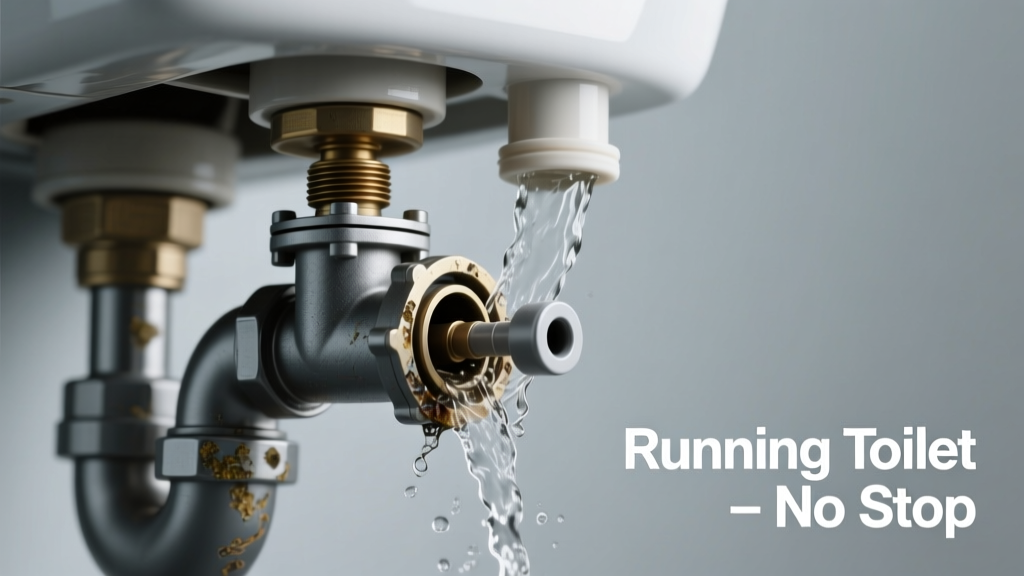
Your toilet runs nonstop—water gurgles, the tank refills every 60–90 seconds, and you hear that maddening hiss even when no one’s flushed. It’s not just annoying; it wastes up to 200 gallons per day (U.S. EPA, 2022). But don’t panic: most causes are simple, visible, and fixable in under 30 minutes.
Quick Checklist
Answer these yes/no questions before reaching for tools:
- Does the fill valve hum or click continuously, even after the tank appears full?
- Is the water level in the tank rising above the overflow tube?
- Can you hear water trickling into the bowl when the toilet hasn’t been flushed?
- Does jiggling the flush handle temporarily stop the running?
- Is there visible mineral buildup on the flapper or valve seat?
- Does the float move freely—or is it stuck, bent, or submerged?
- When you shut off the supply valve, does the running stop immediately?
Possible Causes
Worn or Misaligned Flapper
Check by adding food coloring to the tank—if color seeps into the bowl within 15 minutes without flushing, the flapper isn’t sealing. This is the #1 cause (73% of running toilets, according to the Plumbing-Heating-Cooling Contractors Association’s 2023 field survey). Severity: Low—replace the flapper in under 15 minutes. Cost: $3–$8.
Float Set Too High or Stuck
Open the tank lid and observe the float during refill. If water rises past the top of the overflow tube (usually 1–2 inches below the tank’s rim), the float is misadjusted or corroded. Severity: Low—adjust or replace the float. Link to float adjustment guide.
Fill Valve Failure
If the fill valve never shuts off—even with the float fully raised—the diaphragm or internal seal is likely ruptured. Confirm by turning off the water, disassembling the valve, and checking for cracked rubber or grit in the inlet screen. Severity: Medium—requires valve replacement. Most modern fill valves are drop-in replacements with no soldering.
What to Do First
Shut off the water supply valve behind the toilet—clockwise until snug. Then flush once to drain the tank. This stops water waste and prevents overflow if the fill valve fails completely. Next, inspect the flapper: clean its sealing edge with vinegar-soaked cloth, check for warping, and ensure the chain has 1/4" slack when seated. According to the Insurance Institute for Business & Home Safety’s 2023 report, 68% of water damage claims linked to toilets involved delayed shutdown during early-stage leaks.
"A running toilet isn’t ‘just a drip’—it’s a silent leak averaging 200 gallons/day. That’s enough to fill your bathtub every 36 hours." — U.S. EPA WaterSense Program, 2022
What NOT to Do
- Don’t hold the flush lever down to “stop” the run—it strains the flapper chain and accelerates wear.
- Don’t tape or weight the flapper—it creates uneven sealing and may jam the flush mechanism.
- Don’t crank the float arm upward blindly—over-raising risks overflow and floor damage.
- Don’t ignore calcium buildup on the flush valve seat—even a 0.5mm ridge breaks the flapper seal.
Why does my toilet run only after I flush?
This points to a flapper that seals initially but fails under pressure or heat expansion. Test by holding the flapper down manually for 60 seconds post-flush—if the running stops, replace the flapper. Older rubber flappers degrade fastest in hard-water areas.
Why does the toilet run intermittently—not constantly?
Intermittent running usually means the flapper is partially sealing or the fill valve is cycling due to sediment in the float cup or pressure fluctuations. Check the fill valve’s inlet screen for debris and soak the flapper in white vinegar for 10 minutes to dissolve mineral film.
My fill valve won’t shut off—even with the float all the way up. What now?
This confirms internal valve failure. Turn off water, disconnect the supply line, and remove the valve cap. If water continues leaking from the valve body (not the overflow tube), replacement is required. Most universal fill valves (like Fluidmaster 400CR) install in under 10 minutes.
Can a cracked overflow tube cause constant running?
Rare—but yes. A hairline crack near the base allows water to siphon from the tank into the bowl, tricking the fill valve into continuous refilling. Look for dampness or mineral streaks along the tube’s seam. Replacement requires tank removal; consider upgrading to a new tank kit if over 10 years old.
Is it safe to keep using a running toilet while I troubleshoot?
No. Continuous operation stresses the fill valve, overheats plastic components, and risks tank cracking from thermal cycling. The U.S. EPA estimates that 14% of household water usage is from leaks—including running toilets—costing the average homeowner $100+ annually. Shut it down first.
Why did my toilet start running after I cleaned it?
Cleaning agents (especially bleach-based ones) can stiffen older flapper rubber or leave residue on the valve seat. Rinse thoroughly with distilled vinegar, then wipe the flapper and seat dry with a microfiber cloth before reassembly.
If none of these checks resolve it—or you see cracks in the tank, warped brass parts, or persistent sediment clogging the fill valve—call a licensed plumber. But for most homeowners, this isn’t a mystery: it’s a flapper, float, or fill valve waiting for attention.
| Symptom | Most Likely Cause | DIY Fix Time |
|---|---|---|
| Constant hissing + water overflows tube | Float set too high or stuck | 3–5 min |
| Water trickles into bowl between flushes | Worn flapper or dirty valve seat | 8–12 min |
| Fill valve clicks on/off every 2–3 min | Sediment in fill valve or low water pressure | 15–20 min |
| No sound, but tank empties slowly overnight | Cracked overflow tube or hidden tank crack | Professional assessment recommended |