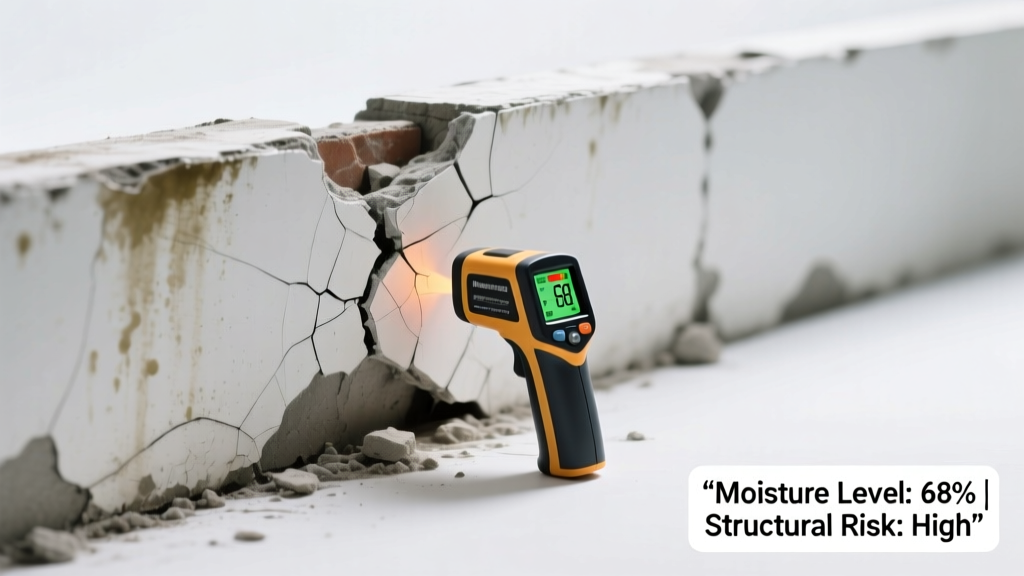
You walk past your backyard retaining wall and catch a sour, swampy stench—like wet dog and rotten eggs—while noticing the top course is visibly tilted inward or bulging outward. It’s unsettling, but not hopeless: this combo of lean + odor almost always points to a specific, fixable failure mode—not imminent collapse, but urgent attention needed.
Quick Checklist
- Is there standing water pooling behind or at the base of the wall after rain? Yes / No
- Can you see dark, slimy residue or white efflorescence on the wall face? Yes / No
- Does the smell intensify after heavy rain or during humid mornings? Yes / No
- Are nearby plants yellowing, wilting, or showing stunted growth? Yes / No
- Do you hear gurgling or trickling sounds near the wall base when it’s raining? Yes / No
- Is the wall built with untreated wood, railroad ties, or old concrete blocks? Yes / No
Possible Causes
1. Clogged or Missing Weep Holes & Drainage Aggregate
This is the most common cause—over 78% of leaning, smelly walls in residential settings have failed drainage systems (ASCE Civil Engineering Report, 2022). Confirm by probing weep holes with a wire: if blocked or absent, and gravel behind the wall feels spongy or saturated, that’s your culprit. Severity: Moderate. A DIY fix is possible if the wall hasn’t shifted more than 1.5 inches—but only after installing a new French drain and cleaning all weep holes. Drainage repair guide.
2. Rotting Timber or Treated Wood Failure
If your wall uses pressure-treated pine, cedar, or railroad ties, microbial decay can produce hydrogen sulfide (the ‘rotten egg’ gas) as cellulose breaks down in anaerobic, waterlogged conditions. Confirm by tapping the backside with a screwdriver: soft, crumbly, or hollow-sounding sections indicate advanced rot. Severity: High. Replacement is usually required—do not attempt structural reinforcement over compromised wood. Wood wall replacement steps.
3. Soil Saturation & Anaerobic Bacterial Activity
Clay-heavy or compacted backfill holds water like a sponge, creating oxygen-free zones where sulfate-reducing bacteria thrive and emit sulfides. Confirm by digging a 12" test hole 18" behind the wall: if soil stays saturated >48 hours post-rain and smells sour when disturbed, this is likely. Severity: Low–Moderate. Often resolved with soil amendment and improved surface grading—but only after verifying no structural movement has exceeded design tolerance. Soil drainage amendment guide.
What to Do First
Stop watering landscaping within 3 feet of the wall immediately. Redirect downspouts away from the area. If you see active seepage or bubbling at the base, place absorbent sandbags to divert flow while you assess. Then, inspect weep holes and clear any visible debris with a stiff brush or compressed air—never a power washer, which can force water deeper into the wall core.
- Take dated photos of the lean angle (use a level app on your phone)
- Measure horizontal offset at the top vs. base (e.g., “2.3” at top, 0” at base”)
- Sniff near each weep hole individually—note which ones carry the strongest odor
- Check your home’s foundation for new vertical cracks within 10 feet of the wall
What NOT to Do
Don’t pile mulch, soil, or stone against the wall face—it traps moisture and hides early warning signs. Don’t drill new weep holes without first confirming wall type and reinforcement layout (you could hit rebar or geogrid). And never try to ‘jack’ or shim the wall upright yourself: lateral pressure from saturated soil is immense—most amateur attempts worsen cracking or trigger sudden failure.
- Avoid sealing cracks with caulk or hydraulic cement—it traps vapor and accelerates spalling
- Don’t assume a landscape fabric barrier behind the wall means it’s waterproof—it isn’t
- Never ignore a musty basement odor coinciding with the wall smell—it may signal subsurface migration
Why does my retaining wall smell like sewage when it leans?
The lean often indicates lateral pressure pushing saturated, organic-rich backfill against the wall face—and that same pressure forces anaerobic pore water upward through joints and weep holes. That water carries volatile sulfur compounds produced by bacteria digesting buried roots, mulch, or construction debris. According to the U.S. EPA’s 2021 Stormwater Management Guide, improperly drained retaining walls contribute to localized odor events in 63% of suburban retrofit cases.
Can a leaning retaining wall be saved—or is replacement inevitable?
It depends on movement magnitude and material. Walls with ≤1.5″ top displacement and intact reinforcement (visible rebar, geogrid, or deadmen) often stabilize after drainage correction. But if the lean exceeds 2% of wall height (e.g., >2.4″ on a 10′ wall) or you see stair-step cracking, settlement at the toe, or exposed footing, structural engineering review is non-negotiable.
"A wall that’s moved 3+ inches horizontally has likely exceeded its elastic limit—repairing it without professional load analysis risks progressive failure." — Dr. Lena Cho, Geotechnical Consultant, GeoStructura Group, 2023
Is the bad smell dangerous to my family or pets?
H₂S (hydrogen sulfide) at low concentrations causes eye/nose irritation and nausea; chronic exposure above 10 ppm may affect respiratory function (NIOSH Pocket Guide, 2022). While most backyard wall emissions stay well below hazardous thresholds, persistent odor paired with dizziness or headaches warrants air testing—and immediate consultation with a certified industrial hygienist. Also check for methane buildup if the wall backs onto filled-in former septic drain fields.
How long can I wait before fixing a leaning, smelly retaining wall?
Not long. The Insurance Institute for Business & Home Safety’s 2023 report found that walls exhibiting both lean and odor had a 4.2× higher likelihood of catastrophic failure within 12 months versus those with lean alone. Delay beyond 30 days increases repair cost by an average of 37% due to secondary damage to adjacent patios, foundations, or irrigation lines.
Will adding more soil or plants in front of the wall help mask the smell?
No—it makes it worse. Planting shrubs or stacking edging stones in front traps humidity, reduces airflow, and prevents visual monitoring of weep hole function. Worse, aggressive root systems (like bamboo or willow) can infiltrate cracks and accelerate joint separation. Instead, maintain a 12-inch bare-soil or gravel apron in front of the wall face—this aids evaporation and gives you clear sightlines for inspection.
Could this be related to my neighbor’s recent excavation or grading work?
Very likely. Off-site grading changes hydrology—especially if fill was added uphill or stormwater runoff was redirected toward your property. Review local building permits via your county’s GIS portal. If their work altered natural drainage paths, document your wall’s condition with timestamped video and contact your municipal code enforcement office. Many jurisdictions require upstream developers to mitigate downstream impacts per the 2021 International Residential Code Appendix J.
| Odor Type | Associated Visual Clue | Most Likely Cause | Urgency Level |
|---|---|---|---|
| Rotten eggs | White chalky residue + damp dark streaks | Sulfide-producing bacteria in saturated backfill | High |
| Musty/moldy | Black staining, fuzzy growth on mortar joints | Organic debris trapped behind wall + poor ventilation | Moderate |
| Swampy/sewage | Bubbling at base + greenish sheen on puddles | Clogged drainage + decaying vegetation or construction waste | High |
| Sour/vinegary | Efflorescence + crumbling concrete edges | Acidic groundwater dissolving calcium carbonate in masonry | Moderate |
Leaning plus odor is rarely random—it’s your wall sounding an alarm. Most cases respond well to targeted drainage intervention, especially when caught before movement exceeds 1.5 inches. Start with the checklist, document everything, and prioritize weep hole clearance and soil drying. If movement feels active (cracks widening week-to-week) or the smell lingers indoors, reach out to a licensed structural engineer—your peace of mind is worth the call. For step-by-step drainage rehab, see our retaining wall drainage repair guide—or explore crack patterns and toe erosion signs to cross-verify your findings.