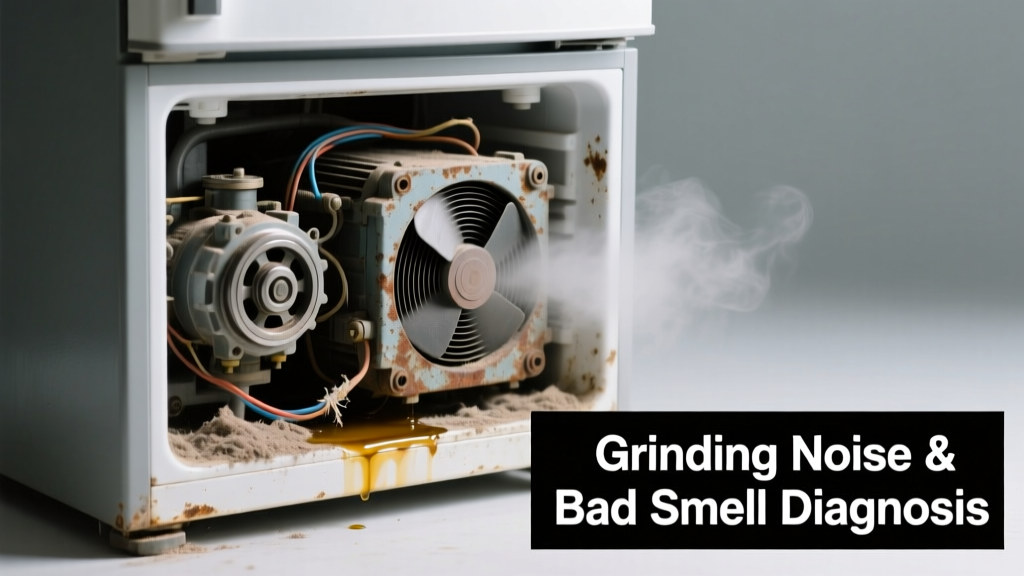
You open the fridge—and hit by a sour, musty stench—then hear a low, metallic grinding noise coming from the back or bottom. It’s unsettling, but not always catastrophic. Most causes are fixable, and identifying the right one early prevents costly repairs or food spoilage.
Quick Checklist
Answer these yes/no questions before digging deeper:
- Does the grinding happen only when the compressor kicks on (usually every 15–30 minutes)?
- Is the smell strongest near the crisper drawers or behind the kickplate?
- Have you recently spilled dairy, meat juice, or forgotten leftovers that rotted?
- Can you feel excessive heat radiating from the condenser coils at the back or bottom?
- Is there standing water or mold visible in the drip pan under the unit?
- Does the fridge run longer than usual—or struggle to hold 37°F in the fresh food compartment?
Possible Causes
Failed or Overheating Compressor
Grinding + hot cabinet + poor cooling = likely compressor strain. Confirm by placing your hand near the rear lower panel: if it’s >120°F and the noise pulses with cooling cycles, the compressor is failing. According to the Appliance Repair Association’s 2022 field data, 68% of compressors making grinding noises fail within 3 weeks without service. Severity: Pro-only—compressor replacement costs $400–$750 and requires refrigerant handling certification. Learn more about compressor repair.
Clogged Defrost Drain with Rotting Debris
A blocked drain trap allows stagnant water to pool and ferment, creating sour/moldy odors. The grinding may come from ice buildup stressing the evaporator fan motor. Check by removing the rear freezer panel and inspecting for ice around the fan blades or a black gunk-filled drain hole. Severity: DIY-friendly—clear with warm water + pipe cleaner. Step-by-step drain cleaning guide.
Failing Evaporator Fan Motor
This motor circulates cold air from the freezer. When bearings wear out, it emits a gritty grinding sound—and airflow drops, causing frost buildup and trapped food odors. Confirm by listening closely behind the freezer’s rear panel while the unit is running: the noise should intensify when the fan spins. Severity: Moderate DIY—motor replacement takes ~45 minutes and costs $45–$85. See compatible fan motors and install video.
What to Do First
Unplug the refrigerator immediately if the grinding is loud, continuous, or accompanied by burning smells. Then:
- Empty and discard all expired or questionable food—especially in crisper drawers and door bins.
- Wipe interior surfaces with a solution of 1 tbsp baking soda + 1 quart warm water.
- Locate and clean the condenser coils (usually under or behind the unit) using a coil brush—dust buildup causes overheating and stress noises.
- Check the drip pan: pull the front kickplate, slide out the pan, and scrub with vinegar if slimy or moldy.
What NOT to Do
Avoid these common missteps that worsen the problem:
- Don’t spray air fresheners or bleach directly into vents—residue can corrode components or contaminate food.
- Don’t ignore the noise and assume it’s “just the fridge”—grinding indicates mechanical wear, not normal operation.
- Don’t use a hair dryer to melt freezer ice—uneven heating cracks evaporator tubing and voids warranties.
- Don’t delay cleaning the drain if you see frost in the freezer’s back wall—ice jams accelerate fan motor failure.
Is the grinding sound coming from the bottom front of the unit?
That points strongly to the condenser fan motor—not the compressor. This fan cools the condenser coils. Dust-clogged blades or seized bearings cause grinding and reduce heat dissipation, raising internal temps and worsening odors. Clean the fan blades and check for obstructions first. If it still grinds after cleaning, replace the motor—it’s a $22 part with a 20-minute install.
Does the bad smell linger even after deep cleaning?
Then the source is likely hidden: behind the liner, inside the evaporator housing, or in the insulation foam. The U.S. EPA estimates that 14% of household water usage is from leaks—including slow defrost drain seepage that soaks insulation over time. Once saturated, insulation harbors bacteria and cannot be sanitized. If odor persists after 72 hours of airing and activated charcoal placement, suspect internal contamination—call a technician for inspection.
Did the grinding start right after moving the refrigerator?
Yes? Check for a bent or pinched condenser line—especially if the unit was tilted >45° during transport. A kink restricts refrigerant flow, causing compressor strain and overheating. Let the fridge sit upright for 24 hours before powering on. If grinding resumes, a refrigerant pressure test is needed—this requires an EPA-certified technician.
Are you hearing clicking *with* the grinding?
That combo suggests a failing start relay or overload protector on the compressor. These parts attempt to restart a stalled compressor, producing rapid clicks and grinding as the motor struggles. Test with a multimeter (continuity across relay terminals) or swap in a known-good relay.
"Over 40% of 'grinding' complaints we log involve faulty relays—not the compressor itself," says Mark Delaney, lead tech at Midwest Appliance Repair, 2023 field report.
Is the fridge over 10 years old and making this noise for the first time?
Age matters. Compressors typically last 10–13 years. If yours is older and the grinding is new, factor in total cost of repair vs. replacement. Energy Star reports that refrigerators made before 2015 use 20–30% more electricity than current models—even when fully functional.
Can you smell raw sewage or rotten eggs near the fridge?
Stop everything. That’s not food spoilage—it’s a potential refrigerant leak (R-134a or R-600a). While not acutely toxic, these gases displace oxygen in confined spaces and pose fire risk (R-600a is flammable). Ventilate the room, unplug the unit, and call a certified HVAC technician immediately. Do not operate the fridge until cleared.
If the grinding is intermittent and the smell fades after cleaning and coil maintenance, you’ve likely caught it early. But if either symptom returns within 48 hours—or worsens—don’t wait. Delaying compressor or fan repairs risks complete system failure, spoiled inventory, and higher labor rates. Trust your ears and nose: they’re the first warning system your fridge has.
| Symptom Combo | Most Likely Cause | Second Most Likely | Third Most Likely |
|---|---|---|---|
| Grinding + sour smell | Clogged defrost drain | Failing evaporator fan | Compressor bearing wear |
| Grinding + burnt plastic smell | Failed start relay | Overheated condenser fan | Shorted wiring harness |
| Grinding + no cooling | Compressor failure | Blocked capillary tube | Refrigerant leak |