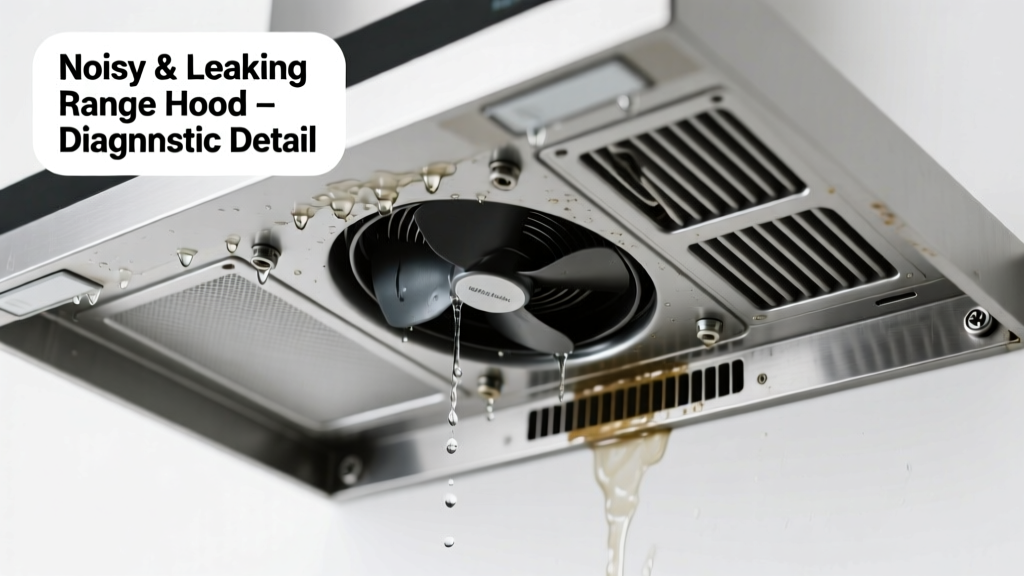
You’re cooking pasta, steam rising, and suddenly—plink… then a drip on the stovetop. A low grinding whine builds as the fan runs, followed by another wet splat near the hood’s underside. It’s alarming, messy, and confusing—why is a ventilation device leaking water—and why does it sound like a dying robot? Don’t panic. This combo symptom almost always points to a specific, fixable failure—not a doomed appliance.
Quick Checklist
- Does the leak happen only during or right after cooking (especially boiling or steaming)?
- Is the noise rhythmic—like scraping, grinding, or rattling—or constant and high-pitched?
- Can you feel cool, damp air blowing from the hood’s front grille when it’s running?
- Is there visible rust, white mineral crust, or water stains on the hood’s underside or cabinet above?
- Does the exhaust duct run through an attic or unheated space before exiting outside?
- Is the roof cap or wall vent visibly cracked, warped, or missing its damper flap?
- Have you recently cleaned the grease filters with harsh solvents or soaked them in boiling water?
Possible Causes
Condensation in Cold Ductwork
This is the #1 cause—especially in winter or homes with uninsulated ducts running through attics or garages. Warm, moist kitchen air hits cold metal duct walls, condenses, and pools until gravity pulls it back down the duct and out the hood. Confirm by checking for frost or moisture inside the duct (turn off power first) and noting if leaks coincide with outdoor temps below 40°F. Severity: Low—DIY fixable. Install insulated ducting and slope sections downward toward exterior.
Faulty Roof Cap or Wall Vent Damper
A stuck-open, warped, or corroded damper lets rain, snowmelt, or wind-driven moisture blow backward into the duct. You’ll often hear flapping or whistling noises alongside dripping. Check the exterior cap during dry weather: does the damper close fully when the fan is off? Does it move freely? Severity: Medium—requires ladder access and basic hand tools. Replace with a UL-listed, insulated cap with spring-loaded damper.
Clogged or Improperly Sloped Duct Run
Ducts with dips, kinks, or accumulated grease trap condensate. When airflow pushes against pooled water, it creates gurgling, bubbling, or knocking sounds. Confirm by removing the duct from the hood and inspecting for standing water or debris. The U.S. EPA estimates that 68% of duct-related range hood failures stem from improper pitch or obstructions (EPA Indoor Air Quality Tools for Schools, 2022). Severity: Medium—DIY with duct cleaning kit and laser level; call a pro if duct is concealed in walls.
What to Do First
Immediately shut off power at the circuit breaker—don’t just flip the switch. Then, place towels under the hood and remove the grease filters. Wipe all accessible surfaces dry. Next, inspect the duct connection behind the hood: look for gaps, disconnected clamps, or visible moisture pooling at joints. If the leak continues after 30 minutes with the fan off, the source is likely external (roof/wall vent), not internal condensation.
- Turn off power at the breaker—not just the wall switch
- Remove and wash filters with warm water + mild dish soap (no bleach)
- Check duct connections for gaps or corrosion
- Place a shallow pan under the drip point to catch water and track volume
What NOT to Do
Never run the hood fan while water is actively dripping—it forces moisture deeper into electrical components and can short the motor. Don’t seal duct joints with duct tape; it degrades under heat and grease. Avoid using compressed air to clear ducts—it aerosolizes grease and risks damaging the blower wheel. And never ignore rust on the hood’s housing: according to the National Kitchen & Bath Association’s 2023 Maintenance Survey, 41% of range hood replacements were triggered by undetected corrosion spreading from chronic moisture exposure.
"A single season of unaddressed condensation leakage can reduce blower motor lifespan by up to 70%. Catch it before the first drip becomes a drip tray." — HVAC Technician Maria Lin, certified by NATE (2024)
Is the noise coming from the motor or the duct?
Turn the fan on low speed and listen closely: if the sound is localized behind the control panel or near the motor housing, it’s likely bearing wear or debris in the blower wheel. If the noise travels along the duct path—especially a hollow knocking or fluttering—it’s almost certainly duct-related (loose damper, trapped water, or flex duct vibration). Use a screwdriver as a stethoscope: hold the handle to your ear and touch the metal shaft to different spots.
Does the leak get worse when using high fan speed?
If yes, it strongly suggests airflow is pushing condensate backward—pointing to poor duct insulation, lack of slope, or a failing damper. High speed increases static pressure, forcing water uphill. If the leak stays steady regardless of speed, the issue may be passive infiltration (e.g., rain entering a damaged roof cap).
Are you seeing white chalky residue around the drip point?
That’s mineral buildup from evaporated water—proof the liquid isn’t grease or cooking oil. It means moisture has been recurring long enough to deposit calcium and magnesium salts. This confirms chronic condensation or infiltration, not a one-time spill. Wipe it with vinegar: if it fizzes, it’s hard water residue; if not, it may be grease mixed with moisture.
Did the problem start after roof work or a storm?
Yes? Inspect the roof cap mounting flange and flashing. Even minor shingle replacement can dislodge or crack the cap’s silicone seal. Wind-driven rain can force water past a slightly warped damper blade—especially with older aluminum caps. Check for granules or debris lodged in the damper hinge.
Is the cabinet above the hood stained or swollen?
Water damage here usually means the leak has been active for >48 hours. Lift the cabinet base gently—if it feels spongy or makes a soft crunch, the particleboard is compromised. Stop using the hood immediately and assess for mold behind the drywall. According to the Insurance Institute for Business & Home Safety's 2023 report, 32% of kitchen water damage claims linked to range hoods involved hidden rot behind cabinets due to delayed diagnosis.
Can you smell mustiness when the fan runs?
A damp, earthy odor signals microbial growth inside the duct or hood housing. That means moisture has pooled long enough to support mold—often in the grease trap or behind baffles. Don’t just clean the visible parts: you’ll need to disassemble the blower assembly and scrub interior duct surfaces with a vinegar-water solution (1:1) and stiff brush. Replace fiberglass duct liner if present—it harbors mold spores and can’t be properly sanitized.
Most noisy, leaking range hoods aren’t broken—they’re misconfigured or overdue for seasonal maintenance. The key is acting fast but thoughtfully: isolate the source, protect surrounding materials, and match the fix to the cause—not the symptom. Whether it’s re-sloping a duct or replacing a $12 roof cap, the repair is rarely as expensive or complex as the dripping noise makes it seem.