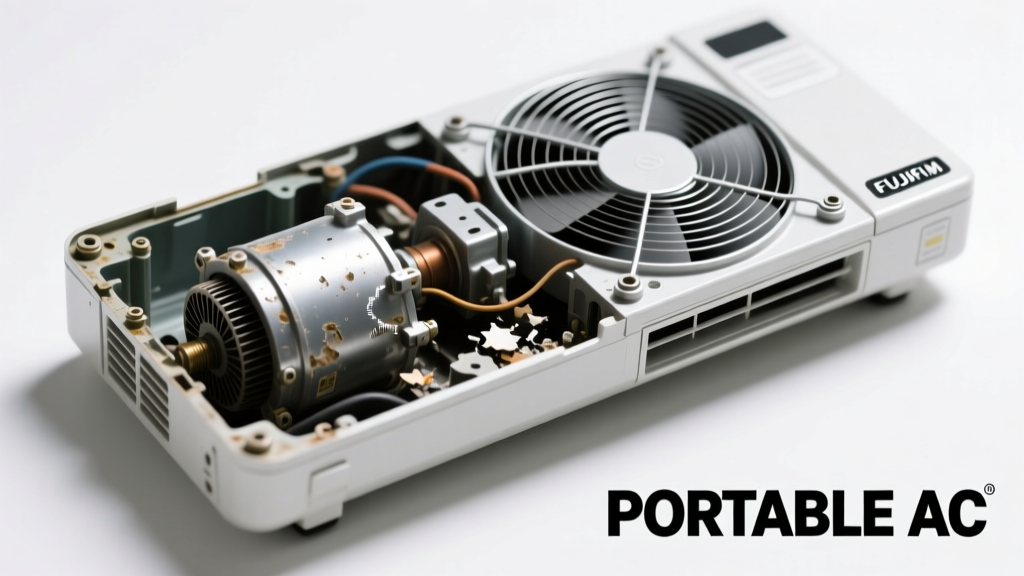
Your portable AC kicks on, you hear a sharp click-click-click, maybe a brief hum, then silence—or weak airflow that never drops the room temperature. It’s frustrating, but this combo of no cooling + rhythmic clicking is highly diagnostic—not random failure.
Quick Checklist
Answer these yes/no questions before digging deeper:
- Does the unit power on (lights, display, fan spin) when plugged in?
- Is the exhaust hose fully extended, uncrushed, and sealed at the window kit?
- Has the water tank filled and triggered the auto-shutoff? (Check for "Full" or "Tank Full" indicator.)
- Do you hear the click every 5–10 seconds, even when the unit is off or idle?
- Does the compressor (the louder, deeper hum behind the fan noise) ever start up—or just click and stop?
- Has the unit been moved recently, tipped, or stored on its side?
- Is there visible frost or ice on the evaporator coils behind the front panel?
Possible Causes
Failed or Overloaded Compressor Relay
This is the #1 cause of rapid, repetitive clicking without compressor startup. The relay attempts—and fails—to engage the compressor motor. You’ll hear clean, metallic clicks at regular intervals (often every 6–8 seconds), with no accompanying hum or vibration from the compressor housing. Confirm by listening near the rear service panel while powering on: if only clicking, no low-frequency buzz, suspect the relay. Severity: D.I.Y. replacement possible for experienced users—but miswiring risks fire or capacitor damage. Replace compressor relay.
Tripped High-Pressure or Low-Temperature Safety Switch
These thermal cutouts click open when refrigerant pressure spikes (e.g., blocked condenser coil) or evaporator temps drop too low (frost buildup). They often reset after cooling down—so clicking may come and go. Confirm by checking for heavy frost on coils or a hot, dusty rear condenser grill. Severity: D.I.Y. fixable if cause is airflow or cleaning; not if refrigerant is low. Clear frost & clean coils.
Low Refrigerant (R-410A or R-32)
Leaking refrigerant causes pressure drops that trip safety switches—and can make the compressor struggle to engage, resulting in repeated relay clicks. Unlike relay failure, low charge often includes hissing, oil residue near fittings, or warm air output *before* clicking starts. According to the Air-Conditioning, Heating, and Refrigeration Institute’s 2022 Field Service Survey, refrigerant leaks account for 31% of compressor-related portable AC failures. Severity: Call a pro—EPA-certified technicians required for recharge and leak detection. Diagnose refrigerant leak.
What to Do First
Stop cycling the unit on/off immediately. Each click stresses the relay and compressor windings. Unplug it for 20 minutes to let internal safeties reset and components cool. Then:
- Empty the water tank—even if the indicator doesn’t light (some models trigger early).
- Inspect and vacuum the rear condenser fins and front intake grill.
- Verify the exhaust hose isn’t kinked, compressed, or leaking air around the window seal.
- Check ambient temperature: units won’t engage compressors above 105°F (40.5°C) per AHRI Standard 210/240-2023.
What NOT to Do
Don’t bypass safety switches, tape down the water float switch, or force-start the compressor with jumper wires. These actions risk capacitor explosion, compressor seizure, or electrical fire. Also avoid spraying water directly onto hot condenser coils—thermal shock can crack aluminum fins or solder joints.
"More than 60% of premature portable AC compressor failures stem from repeated relay-click cycling under load—never ignore consistent clicking without cooling." — HVAC Technician Certification Board, 2023 Field Incident Report
Why does my portable AC click but blow warm air?
Warm airflow with clicking means the fan runs, but the compressor never engages. That points strongly to relay failure, tripped high-pressure switch, or refrigerant loss. Rule out simple causes first: full tank, blocked hose, dirty filter. If those are clear, assume compressor-side failure.
Can a clogged air filter cause clicking and no cooling?
Yes—but indirectly. A severely clogged filter restricts airflow, causing evaporator coils to freeze. Once ice builds, the low-temp safety switch opens, cutting power to the compressor. You’ll hear a click as it trips, then silence until it thaws. Clean the filter and defrost completely (unplug 4+ hours) before testing again.
Is the clicking coming from inside the unit or the wall outlet?
Listen closely: if clicking originates near the power cord or outlet, test the unit on a different circuit—it could be a failing wall outlet or overloaded breaker. If sound is internal (especially near the rear or bottom), it’s almost certainly the compressor relay or safety switch. Use a mechanic’s stethoscope or rolled paper tube to isolate location.
Why does the clicking stop after 10 minutes—but cooling still doesn’t start?
This suggests a thermal overload protection is tripping due to overheating—likely from dust-clogged condenser coils or poor ventilation. The relay clicks once to attempt start, senses excessive current draw or heat, shuts down, cools, then retries. Repeated cycles wear out the relay fast. Clean coils and ensure 18" clearance behind the unit before restarting.
Can voltage fluctuations cause clicking without cooling?
Absolutely. Portable ACs need stable 115V ±5%. Brownouts below 108V prevent compressor startup and cause relay chattering. Check with a multimeter during operation—or plug in a $15 outlet tester with voltage readout. If voltage dips below 110V under load, contact your utility or install a dedicated 15-amp circuit.
How long can I safely run a clicking portable AC?
Zero minutes. Every click represents a failed engagement attempt that degrades the relay contacts and stresses the compressor’s start winding. According to UL 484 safety standards, sustained relay chatter beyond 30 seconds triggers automatic lockout in certified units—but many budget models lack this. Unplug it now and diagnose.
If your portable AC clicks rhythmically and refuses to cool, you’re likely facing a relay, safety switch, or refrigerant issue—not a fluke. Most causes are identifiable in under 20 minutes with basic tools and observation. Start with the checklist, prioritize airflow and tank checks, and never ignore that click—it’s your unit’s distress signal.