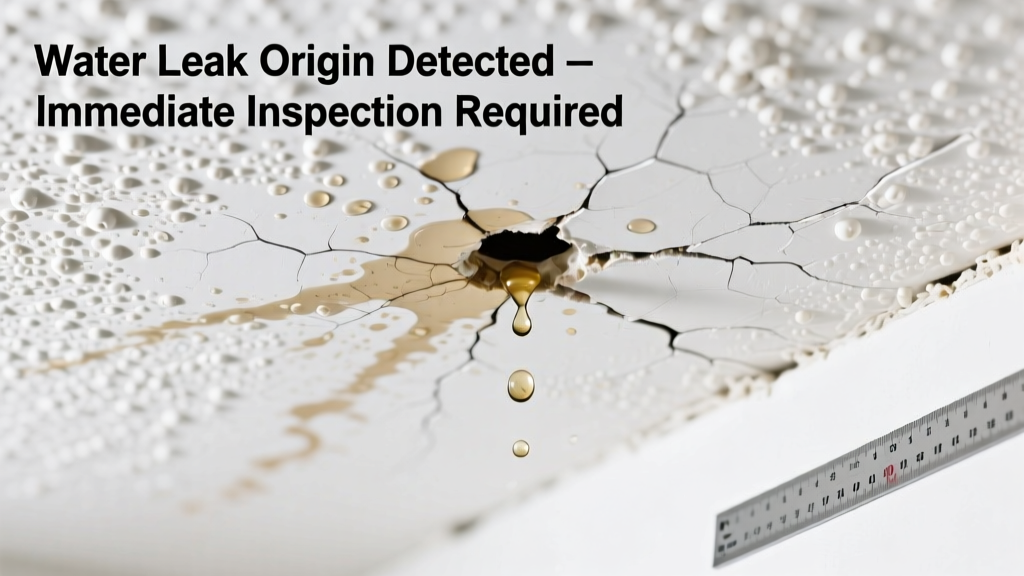
You look up and see a dark, expanding stain on your popcorn ceiling — maybe even droplets clinging to the textured surface or dripping onto the floor. It’s unsettling, but don’t panic: most popcorn ceiling water leaks have clear, traceable origins, and catching them early prevents $2,000+ in mold remediation or structural repair (Insurance Institute for Business & Home Safety, 2023).
Quick Checklist
- Is the leak happening only during or right after rain?
- Does it worsen when you run upstairs showers, sinks, or toilets?
- Is the stain centered directly below an attic access hatch or HVAC duct?
- Do you smell musty, damp odors near the stain — not just wet drywall?
- Has your home had recent roof work, HVAC servicing, or plumbing upgrades?
- Are there visible cracks, sagging, or crumbling texture around the stain?
Possible Causes
Rooftop or flashing failure (Most common)
Look for missing shingles, cracked chimney flashing, or deteriorated vent boot seals — especially if the leak aligns with a roof penetration. Confirm by inspecting the attic during light rain: use a flashlight to spot active drips or wet insulation above the stain. Severity: Moderate — DIY patch possible for small flashing gaps; call a roofer for widespread damage. Roof flashing repair guide
Upstairs bathroom plumbing leak
Test by turning off all water sources, then checking your water meter — if it spins, you likely have a hidden pipe leak. Confirm by removing the toilet tank lid and checking for overflow tube dribbling or corroded supply lines. Severity: High — often requires licensed plumber. Bathroom leak detection steps
Condensation inside attic ductwork
Common in humid climates or homes with uninsulated AC ducts running through unconditioned attics. Look for frost or pooled moisture on duct seams *above* the stain — not just on the ceiling below. Severity: Low-Moderate — sealing and insulating ducts is a weekend DIY project. How to stop duct sweat
What to Do First
Grab a bucket and place it directly under the drip. Then, turn off water to the floor above (shut off the main valve if unsure). Next, pull down the attic access panel and visually inspect insulation, ductwork, and roof decking for wetness, mold, or ice dam evidence. Document everything with photos — insurance adjusters require timestamped evidence.
- Place absorbent towels around the drip zone to prevent floor warping
- Run a dehumidifier in the room (set to 45–50% RH) to slow mold growth
- Label and date each photo: “Attic – NW corner – 3:15 PM – 6/12/2024”
What NOT to Do
Don’t scrape or sand the popcorn texture — disturbing it risks releasing asbestos (especially in homes built before 1980) and spreads mold spores. Don’t caulk or paint over the stain; that traps moisture and accelerates rot. And never ignore it for more than 48 hours — the U.S. EPA estimates that mold can begin colonizing within 24–48 hours of sustained moisture exposure.
- Avoid using fans aimed directly at the wet area — they blow spores into living space
- Don’t drill test holes in the ceiling without confirming asbestos status first
- Never delay shutting off water if plumbing is suspected — one burst line can flood 3 rooms
Is my popcorn ceiling asbestos-containing?
If your home was built before 1980, assume it is — unless lab-tested. Popcorn ceilings installed between 1950–1979 commonly contain 1–10% chrysotile asbestos. Disturbing it without proper containment and PPE poses serious respiratory risk. How to safely test for asbestos
Can I patch the stain myself after the leak stops?
Only if the drywall substrate is solid, non-sagging, and fully dried (use a moisture meter — readings must be <15% MC). Patching over compromised drywall invites future bulging or mold recurrence. For minor stains, prime with oil-based Kilz Original, then skim-coat with joint compound. But remember: texture matching popcorn is nearly impossible without professional spray equipment.
Why does the leak only happen in winter?
Ice dams are the usual culprit — snow melts on warm roof sections, refreezes at eaves, and backs water under shingles. This water then migrates down rafters and pools above ceiling drywall. According to the National Roofing Contractors Association (2022), 68% of winter ceiling leaks in northern states stem from inadequate attic ventilation or insufficient insulation.
"A single 1/8-inch gap in attic insulation can reduce its R-value by up to 40%. That’s why thermal imaging often reveals the real source — not the drip location." — Home Energy Auditors Association, 2023 Field Manual
Will my homeowner’s insurance cover popcorn ceiling water damage?
Most policies cover sudden, accidental leaks (e.g., burst pipe) but exclude long-term neglect (e.g., ignoring a known roof crack for 18 months). If asbestos abatement is needed, coverage varies — some insurers require pre-approval and licensed abatement firms. Always file a claim within 72 hours and retain receipts for emergency drying services.
How fast does water travel through popcorn ceiling material?
Surprisingly far — water wicks laterally along the paper backing of drywall and through porous popcorn texture. A drip from a ½-inch pipe leak can spread 12–18 inches from the entry point within 90 minutes. That’s why stains often appear offset from the actual leak source — always inspect *up and out*, not just vertically above.
| Clue | Rooftop Leak | Plumbing Leak | Duct Condensation |
|---|---|---|---|
| Timing | During/after rain | When water is used | Year-round, worst in summer humidity |
| Stain Shape | Irregular, feathered edges | Circular, sharp boundary | Linear, aligned with duct runs |
| Odor | Earthy, damp attic smell | Chlorine or mineral scent | No odor, just damp chill |
| Attic Evidence | Wet rafters, mold on sheathing | Damp insulation near pipes | Frost or puddles on duct seams |
Once you’ve ruled out immediate danger and documented the issue, focus on source isolation — not cosmetic fixes. The ceiling texture is just the messenger; the real problem lives elsewhere. Fix the cause, not the symptom, and you’ll avoid repeat leaks, mold claims, and costly rebuilds. If your checklist points to roof or plumbing, get a pro on-site within 72 hours — delays compound damage exponentially.