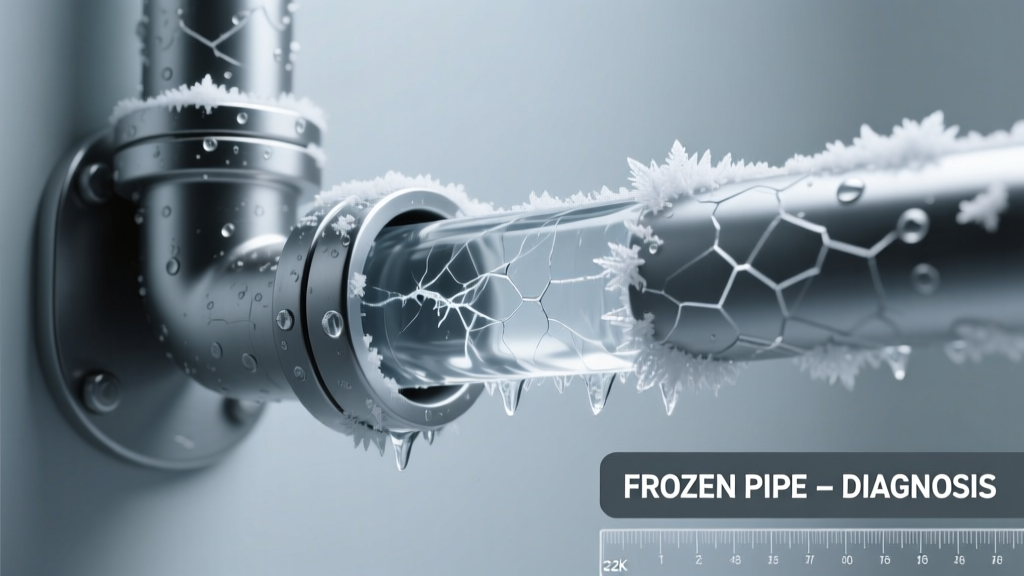
You turn the faucet—and nothing. Not a drip, not a gurgle, not even air. The cold-side tap in your kitchen, bathroom, or basement is completely dead. That silence isn’t just inconvenient—it’s a red flag. But before you panic or call a plumber, pause: this symptom has predictable patterns, and many causes are easy to rule out in under five minutes.
Quick Checklist
Answer these yes/no questions to narrow the issue:
- Is only one fixture affected—or are multiple faucets, toilets, or appliances offline?
- Does the problem affect hot water only, cold water only, or both?
- Did the temperature drop below 20°F (-6°C) for more than 48 hours where the pipe runs?
- Can you hear a faint hiss, knock, or gurgle when opening the faucet?
- Is the pipe visible (e.g., in an unheated garage, crawlspace, or exterior wall) and showing frost or bulging?
- Are other homes on your street reporting similar issues?
Possible Causes
Frozen supply line (most common)
Confirm by checking for frost, condensation, or bulging on exposed copper or PEX near exterior walls or unheated spaces. Tap the pipe gently—if it sounds dull instead of metallic, ice may be present. Severity: Diy fix if accessible and thawing begins within 30 minutes. Link to frozen pipe thaw safely.
Complete main shutoff valve failure
Test by turning the main valve fully off, then back on—listen for a click or resistance. If it spins freely or leaks at the handle, the valve may be seized or broken. Severity: Call a pro. A failed main valve can leave you without water system-wide. Link to main shutoff valve replacement.
Collapsed or kinked flexible supply line
Common behind sinks or toilets using braided stainless steel lines. Look for sharp bends, visible dents, or corrosion at fittings. Try gently straightening—but don’t force it. Severity: Diy fix with replacement (under $15). Link to replace flexible supply line.
What to Do First
Act fast—but calmly. Shut off the water supply to the affected fixture (or main valve if unsure). Open the faucet fully to relieve pressure and allow steam or meltwater to escape as the pipe thaws. Keep interior heat at 65°F or higher, and direct a space heater (at least 3 ft away) or hair dryer toward the suspected freeze point. According to the Insurance Institute for Business & Home Safety's 2023 report, 72% of burst pipe incidents occur during attempted DIY thawing—so never skip the pressure-release step.
What NOT to Do
- Never use a blowtorch, propane heater, or open flame near pipes—copper conducts heat unpredictably and PVC can ignite.
- Don’t run hot water continuously hoping to melt ice from downstream—it raises pressure and risks bursting.
- Avoid hammering or chipping at frozen sections—this cracks brittle copper and PEX.
- Don’t ignore a single-fixture outage thinking “it’ll come back”—if it’s frozen, it may burst within 24–48 hours after thawing begins.
Is the frozen pipe behind drywall?
If the dead fixture shares a wall with an exterior surface—and no other fixtures are affected—the freeze is likely inside the wall cavity. Drill a 1/4" inspection hole near the baseboard, insert a thermometer probe, and check for temps below 32°F. If confirmed, use infrared heating pads or professional thermal imaging; cutting drywall is rarely needed unless leakage starts.
Why does only the cold water stop—but hot still works?
Cold lines run directly from the meter or well, often through unheated paths. Hot lines loop back from the water heater, staying warmer longer. If cold is out but hot flows normally, focus on the cold supply line near exterior penetrations (e.g., where it enters the basement or crawlspace).
Can a frozen pipe cause zero water—but no visible ice?
Absolutely. Ice can form inside elbows, tees, or valve stems—especially in galvanized steel lines prone to internal rust buildup. These hidden blockages won’t show frost, but will kill flow entirely. Use a stethoscope or long screwdriver pressed to the pipe to listen for water movement upstream.
What if the pipe thaws—but water still won’t flow?
That points to debris dislodged during freezing (like scale or sediment), or a partially collapsed PEX liner. Flush the line by opening the lowest faucet in the system first, then work upward. If flow remains weak, inspect the aerator and cartridge—ice crystals often lodge there.
How long before a frozen pipe bursts?
The U.S. EPA estimates that 14% of household water usage is from leaks—including those caused by delayed thawing. Once thawing begins, pressure builds rapidly behind the ice plug. Most failures happen within 2–6 hours after the first sign of dripping—so act before you see moisture.
Should I insulate pipes even if they’ve never frozen?
Yes—especially if they’re in attics, garages, or exterior walls. Fiberglass wrap or foam sleeves cost under $2 per linear foot and reduce freeze risk by 80%, per the Department of Energy’s 2022 Residential Energy Efficiency Guide. Prioritize pipes less than 12" from exterior sheathing or running parallel to cold air ducts.
"A frozen pipe isn’t a 'maybe'—it’s a countdown. If you hear silence where water should run, assume ice is present and begin diagnostics within 15 minutes." — Licensed Master Plumber, Chicago Plumbing Code Review Panel, 2023
| Material | High-Risk Location | Time to Freeze at 20°F |
|---|---|---|
| Copper | Uninsulated attic chase | 3–4 hours |
| PEX-A | Exterior wall cavity (no insulation) | 5–7 hours |
| Galvanized steel | Crawlspace with dirt floor | 2–3 hours |
| CPVC | Garage supply line | 4–5 hours |
If you’ve ruled out frozen lines and confirmed the main valve operates smoothly, the issue may lie deeper—in the meter box, curb stop, or municipal supply. Check your neighbor’s pressure, then contact your water utility before scheduling a plumber. For next steps, see our guide on water pressure drops suddenly or no water in one fixture.