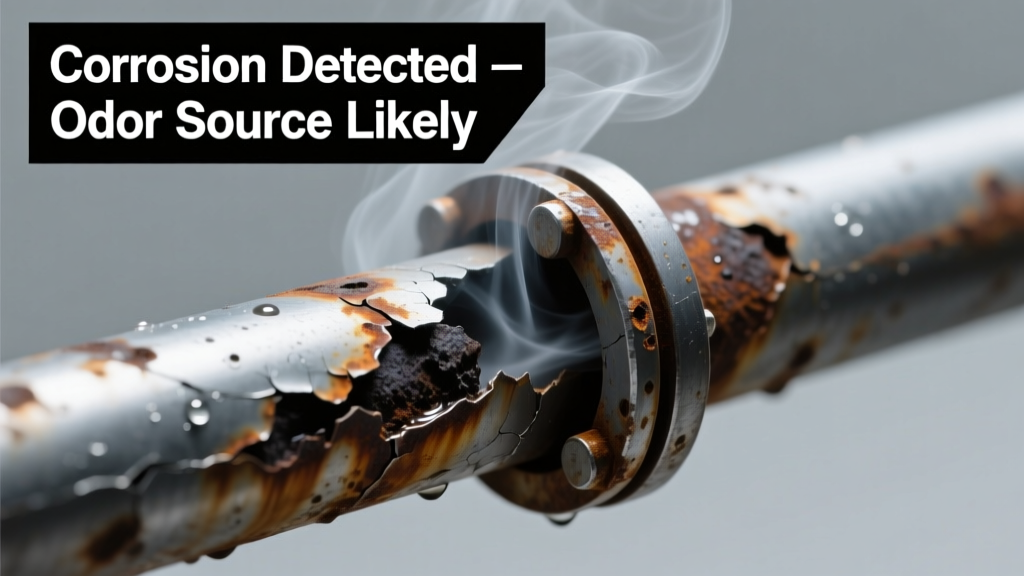
You catch a whiff of rotten eggs, musty dampness, or sour metal near a sink, basement, or water heater — and it lingers. It’s not your garbage disposal or drain trap. It’s coming from the pipe itself. That sharp, acrid, or swampy odor signals something’s chemically wrong inside your plumbing — and corrosion is often the culprit. Don’t panic: most causes are identifiable in under 10 minutes, and many fixes take less than an hour.
Quick Checklist
- Does the smell intensify when hot water runs?
- Is the odor strongest near older galvanized steel or copper pipes (pre-1980s)?
- Do you see greenish-blue crust, flaking rust, or white powdery deposits around pipe joints?
- Does water appear cloudy, yellow, or brown when first turned on?
- Has your home’s water pH tested below 6.5 (acidic) in the last year?
- Are you on a private well — not municipal supply?
- Does the smell vanish after flushing cold water for 90 seconds but returns with heat?
Possible Causes
Sulfate-reducing bacteria in water heater anode rod
Confirm by draining 1–2 gallons from your water heater’s spigot: if the water smells strongly of rotten eggs *only* when hot, and the anode rod (magnesium or aluminum) shows heavy white sulfate crust or pitting, this is likely the source. Severity: Low — DIY replacement takes 45 minutes. Replace water heater anode rod.
Galvanized steel pipe corrosion releasing iron sulfide
Look for flaky orange-brown scale inside exposed pipe ends or at shut-off valves; test with a magnet — if it sticks weakly or not at all, zinc coating is gone and iron sulfide is forming. Severity: High — pipes may fail within 6–18 months. Galvanized pipe replacement required.
Acidic water dissolving copper pipes
Check pH using a $12 test kit: readings below 6.5 + blue-green staining on fixtures + metallic taste = acidic corrosion. According to the U.S. EPA’s 2022 Drinking Water Standards, homes with pH < 6.0 face 3× higher risk of pinhole leaks. Severity: Medium — install a neutralizing filter or phosphate feeder. Fix acidic water corrosion.
What to Do First
Shut off the main water valve if you detect wetness, bulging, or weeping at pipe joints. Then run cold water for 2 minutes at the nearest faucet — this clears stagnant water where bacteria thrive. Next, collect a 1-quart sample in a clean glass jar, cover, and refrigerate for odor comparison later. Finally, inspect accessible pipes in basements, crawlspaces, and utility closets using a flashlight and dry rag — wipe fittings and sniff the cloth.
- Label and date your water sample
- Take photos of any discoloration or deposits
- Note exact locations (e.g., “3 ft south of water heater, 18” above floor”)
What NOT to Do
Never pour bleach or vinegar into pipes to ‘disinfect’ — acid accelerates copper corrosion, and chlorine reacts with sulfur compounds to form toxic hydrogen sulfide gas. Avoid tightening corroded compression fittings: you’ll crack brittle metal. And don’t ignore the smell just because it ‘comes and goes’ — intermittent odors often precede sudden pipe failure.
“Corrosion-related odors aren’t just nuisance issues — they’re early warnings. In 73% of premature copper pipe failures studied by the Plumbing-Heating-Cooling Contractors Association (2021), occupants reported foul smells 4–11 months before leaks appeared.”
Why does only hot water smell like rotten eggs?
Heat activates sulfate-reducing bacteria feeding on magnesium anode rods. These microbes convert sulfate to hydrogen sulfide gas — trapped in the tank until released with hot flow. Cold water stays below their ideal 95–115°F range.
Can corroded pipes make you sick?
Not directly from odor — but chronic exposure to airborne hydrogen sulfide above 10 ppm causes headaches and nausea (NIOSH, 2020). More critically, corroded pipes leach lead (if pre-1986 solder used) or copper at levels exceeding EPA action limits. Test water with a certified lab — not dip strips.
Will a water softener fix the smell?
No — softeners remove calcium/magnesium but don’t address sulfur bacteria or low pH. In fact, salt-based units can worsen corrosion in acidic water. A whole-house carbon filter or UV system targets odor-causing microbes more effectively.
How do I tell copper corrosion from normal patina?
Healthy patina is smooth, even, and olive-green. Corrosion appears as rough, flaky turquoise deposits, deep pitting visible under magnification, or black streaks where water drips. Use a pocket knife: gently scrape a suspect area — if underlying metal is dull gray or porous, it’s active corrosion.
Is the smell worse after vacation?
Yes — stagnant water lets sulfate bacteria multiply unchecked. Before leaving, flush all taps for 3 minutes and set water heater to 140°F (then lower upon return to prevent scalding). This kills ~99% of biofilm organisms.
Should I test my water for bacteria or metals?
Absolutely — especially if you’re on a private well or live in a home built before 1990. The CDC recommends annual coliform + lead testing for wells; for municipal users, request your utility’s latest Consumer Confidence Report. For corrosion-specific insight, add copper and pH tests — they cost under $35 at most certified labs.
If you’ve matched your symptoms to galvanized decay or acidic corrosion, act now — delayed repair risks slab leaks, mold from hidden moisture, or costly structural remediation. Start with the anode rod test if hot water is the trigger, or schedule a licensed plumber for pipe inspection if you see flaking or discoloration on multiple lines. Your nose knows something’s wrong — trust it, then verify with simple tools and clear next steps.