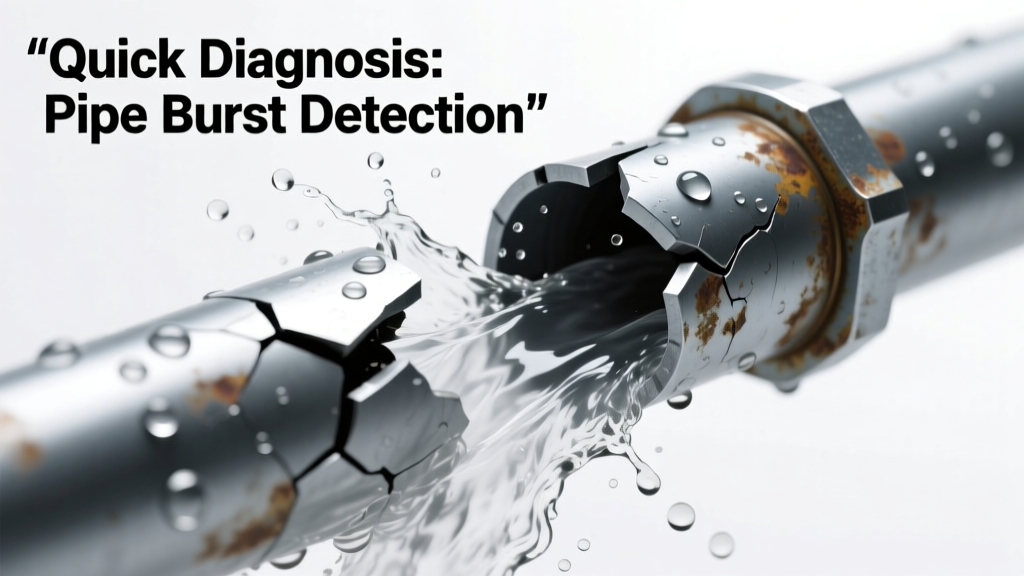
You hear the hiss of pressurized water, see a puddle spreading under the kitchen sink, or notice warped drywall near a basement wall — your pipe has burst. It’s alarming, but most bursts follow predictable patterns and can be diagnosed in under 10 minutes with the right clues. Stay calm: you’re not alone, and quick action makes all the difference.
Quick Checklist
Answer these yes/no questions to narrow the root cause before grabbing tools or calling a plumber:
- Is water actively spraying (not just dripping) from an exposed pipe?
- Did the leak start after freezing temperatures dropped below 20°F for 48+ hours?
- Is the leak coming from a copper pipe with visible green corrosion or pinhole pits?
- Does the leak occur only when a specific fixture (e.g., washing machine or shower) is turned on?
- Is there discoloration or flaking on galvanized steel pipes near the leak site?
- Do you smell musty odors or see bubbling paint on nearby walls or ceilings?
- Has your home’s water pressure been unusually high (over 80 psi) recently?
Possible Causes
Freeze-Induced Pipe Split
How to confirm: Look for frost on the pipe surface, bulging sections, or a clean longitudinal split — especially in unheated areas like garages, attics, or exterior walls. Check if the burst occurred during or immediately after a cold snap.
Severity: Moderate. Small splits may be temporarily patched with epoxy tape, but full replacement is required. DIY only if pipe section is fully accessible and non-load-bearing. Otherwise, call a pro.
Corrosion-Related Pinhole Leak (Copper)
How to confirm: Inspect for bluish-green deposits, pitting, or tiny water beads forming along pipe joints or horizontal runs. Often appears first near solder joints or where pipes contact concrete or insulation.
Severity: High. Indicates systemic corrosion — patching delays inevitable failure. Requires repiping affected zone. Not a DIY fix unless replacing a single short segment with PEX.
High Water Pressure Stress Failure
How to confirm: Use a $12 pressure gauge on an outdoor spigot. Readings consistently above 80 psi (U.S. EPA recommends 40–80 psi) point to regulator failure. Look for multiple small leaks across different fixtures.
Severity: Medium-to-high. A failed pressure regulator must be replaced by a licensed plumber. Temporary relief possible with a pressure-reducing valve — but improper installation risks further bursts.
Install water pressure regulator
What to Do First
Act within 60 seconds to limit damage:
- Locate and shut off the main water valve — usually near the water meter or basement entry point.
- Open the lowest faucet in the house (e.g., basement utility sink) to relieve residual pressure and drain lines.
- Turn off electricity to any flooded area if standing water is near outlets or panels — do not step in it.
- Place buckets/towels under active leaks and photograph damage for insurance claims.
- Call your insurer *before* hiring a contractor — many require pre-approval for water damage remediation.
What NOT to Do
- Don’t use duct tape or glue as a permanent fix — they fail under pressure and mask ongoing corrosion.
- Don’t run hot water to “thaw” a frozen pipe unless you’ve confirmed the line isn’t already cracked — steam pressure worsens splits.
- Don’t ignore slow leaks — the U.S. EPA estimates that 14% of household water usage is from leaks, and even minor drips accelerate pipe degradation.
- Don’t delay drying wet drywall or subfloor — mold can begin growing in as little as 48 hours (according to the CDC’s 2022 Indoor Air Quality Guidelines).
Why did my pipe burst only after I turned the heat back on?
Thawing ice inside a pipe creates sudden pressure spikes — especially if the ice blockage was partial and water refills behind it. This ‘trapped pressure’ effect causes splits at weak points, often downstream of the freeze location.
Can a pipe burst without visible water leakage?
Yes — especially in walls or slabs. Listen for hissing, check for warm floor spots (if near hot water lines), or monitor your water meter while all fixtures are off. If the dial moves, you have a hidden leak. According to the Insurance Institute for Business & Home Safety’s 2023 report, 37% of slab leaks go undetected for over 72 hours.
Is this covered by homeowner’s insurance?
Sudden, accidental pipe bursts are typically covered — but chronic leaks, poor maintenance, or freeze damage due to unheated vacant homes often aren’t. Document everything: photos, timestamps, and repair quotes. File your claim within 72 hours for fastest processing.
How long can I wait before repairing a burst pipe?
Zero hours for active spraying. Even a slow drip can erode framing, rot subflooring, and compromise structural integrity. The American Society of Home Inspectors found that every hour of unchecked leakage increases repair costs by an average of 12% after the first 4 hours.
Will shutting off water affect my boiler or water heater?
Most tank-style water heaters tolerate brief shutoffs. However, never shut off water to a tankless unit without consulting the manual — some require power cycling or purging to avoid sensor damage. For boilers, check if it’s a closed-loop system; many don’t rely on municipal supply once filled.
What’s the average cost to repair a burst pipe?
Small accessible repairs start at $150–$300. Hidden wall or slab repairs range from $1,200–$4,500 depending on access and drywall/finishing labor. According to Angi’s 2024 Home Services Report, 68% of emergency plumbing calls involve burst pipes — and response time directly correlates with final cost.
"A burst pipe isn’t just about water loss — it’s a stress test for your entire plumbing system. What fails first often reveals what’s been degrading silently for months." — Licensed Master Plumber Maria Chen, Plumbing Code Review Board, 2023
| Material | Average Lifespan | Failure Warning Signs |
|---|---|---|
| Copper (Type M) | 20–30 years | Green patina, pinholes, reduced flow |
| Galvanized Steel | 30–50 years | Rust flakes, low pressure, brown water |
| CPVC | 50+ years | Cracking near fittings, chlorine odor |
| PEX | 40–50 years | UV degradation (if exposed), fitting leaks |
Once you’ve confirmed the cause and secured the area, revisit your low water pressure or frozen pipe signs guide — many bursts are preventable with seasonal prep. And if you’re weighing long-term upgrades, our repiping costs comparison breaks down material trade-offs by home age and layout.