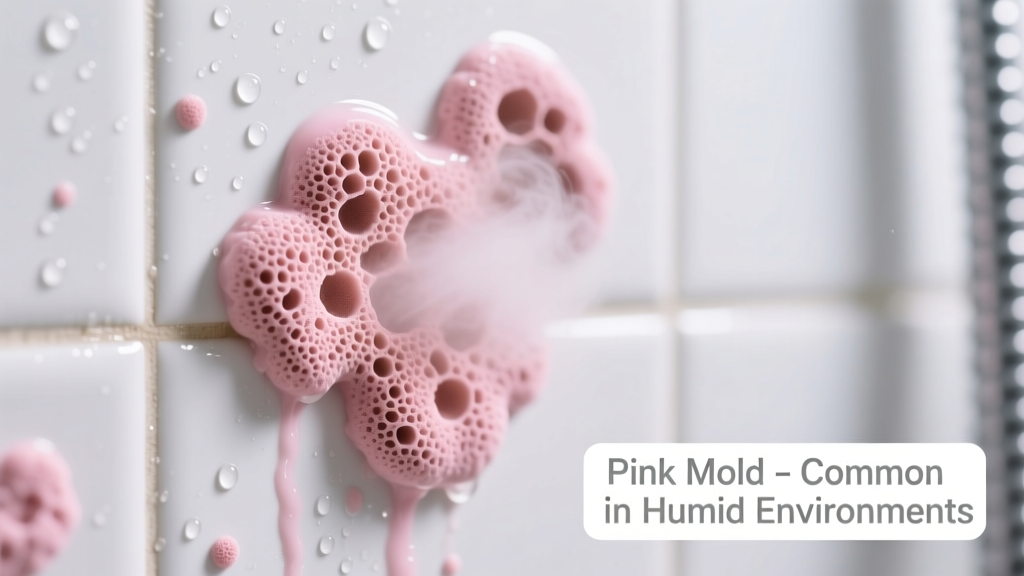
You step into the shower and catch it instantly: a damp, sour-sweet, almost fermented smell clinging to the grout, caulk, or showerhead—and there it is again: that stubborn pink film blooming around the drain, faucet base, or soap dish. Don’t panic—this isn’t always *mold*, and it’s rarely dangerous, but it *is* a sign of persistent moisture and microbial growth you can’t ignore.
Quick Checklist
- Is the pink residue slimy or powdery?
- Does the odor worsen after showers or on humid days?
- Is the pink growth concentrated near water sources (drain, faucet, showerhead)?
- Have you noticed leaks under the sink, behind tiles, or around the shower pan?
- Is the bathroom poorly ventilated (no working exhaust fan or window)?
- Has the caulk around the tub or tile been cracked or missing for more than 6 months?
- Do you use liquid soaps, body washes, or shampoos with high sugar or fatty acid content?
Possible Causes
Serratia marcescens bacterial biofilm (most likely)
This non-mold, pink-orange bacterium thrives on soap scum, fatty residues, and stagnant moisture—not mold spores. Confirm by wiping the area with a dry paper towel: if it smears easily and leaves a faint pink streak, it’s likely S. marcescens. Severity: Low. DIY fixable with vinegar + baking soda scrub and improved drying habits. Fix pink shower residue.
Mold growing *behind* tiles or under caulk
If the pink discoloration appears only where caulk has failed—or if you see black or green fuzz beneath peeling sealant—the real issue may be hidden mold feeding on trapped moisture. Confirm by gently probing loose caulk with a plastic tool; if you detect musty odor or dark staining underneath, suspect concealed growth. Severity: Medium. Requires caulk removal and possible substrate inspection. Replace shower caulk properly.
Iron bacteria in well water
Common in homes with private wells, iron bacteria oxidize dissolved iron, forming pinkish, slimy deposits in pipes and fixtures. Confirm by testing water for iron (>0.3 ppm) and checking if pink residue appears on faucets *and* toilets—not just the shower. Severity: Medium. Needs water treatment consultation. Address iron bacteria in well water.
What to Do First
Stop adding fuel to the problem. Wipe down all wet surfaces—including walls, doors, and glass—with a microfiber towel after every shower. Run the exhaust fan for at least 20 minutes post-shower (or crack a window if no fan). Replace old, cracked caulk within 48 hours—even small gaps let moisture seep behind surfaces.
- Clean the showerhead with white vinegar soak (30 min minimum)
- Scrub visible pink areas with undiluted white vinegar (not bleach—S. marcescens resists chlorine)
- Check your bathroom exhaust fan’s airflow: hold a tissue to the vent while it runs—if it doesn’t pull firmly, clean or replace the fan
What NOT to Do
Bleach won’t solve this—and may make it worse. According to the U.S. EPA’s 2022 Indoor Air Quality Guide, chlorine bleach kills surface bacteria but fails to penetrate biofilms and can corrode grout, worsening moisture retention. It also reacts with organic matter to form chloramines, which intensify foul odors.
"Bleach gives the illusion of cleanliness—but Serratia regrows faster on bleached, porous surfaces because residual chlorine disrupts competing microbes." — Dr. Lena Cho, Microbiologist, University of Florida IFAS Extension, 2021
Why does pink residue keep coming back after cleaning?
Because cleaning only removes the top layer—not the nutrient source. Soap scum, skin oils, and shampoo residues feed the bacteria continuously. If you’re using moisturizing body washes or bar soaps with coconut oil derivatives, you’re essentially fertilizing the pink film. Switch to low-residue, pH-balanced cleansers and rinse walls thoroughly after each use.
Can pink buildup in the shower drain cause bad smells?
Absolutely. Hair, soap scum, and biofilm trap inside P-traps and overflow channels create anaerobic conditions—producing hydrogen sulfide (rotten egg) and volatile organic compounds (sour, yeasty notes). A clog isn’t required: even 1/8-inch of accumulated gunk emits odor. Use a drain snake weekly, then flush with boiling water + ¼ cup baking soda + ½ cup vinegar.
Is pink mold in shower dangerous to breathe?
Serratia marcescens is rarely harmful to healthy people—but it’s an opportunistic pathogen. The CDC reports 12% of hospital-acquired urinary tract infections involve S. marcescens (2023 NHSN Report). For immunocompromised individuals, infants, or those with chronic lung conditions, prolonged exposure increases risk. Odor itself isn’t toxic—but it signals poor air quality and potential co-existing mold species.
Does humidity alone cause pink residue—or is something else wrong?
Humidity enables it—but doesn’t cause it. The U.S. EPA estimates that 14% of household water usage is from leaks, many invisible behind walls or under floors. If your bathroom stays damp >2 hours after showering, and humidity exceeds 60% consistently (check with a $12 hygrometer), investigate hidden leaks—not just ventilation. A moisture meter reading >15% in subfloor or wall studs warrants professional inspection.
| Clue | Points to S. marcescens | Points to Mold |
|---|---|---|
| Texture | Slippery, shiny, smearable | Fuzzy, chalky, or powdery |
| Location | Surfaces exposed to soap + water (soap dish, faucet base) | Behind tiles, under caulk, ceiling corners |
| Odor | Sour, fermented, or sweet-musty | Earthy, damp basement, or dusty |
| Response to vinegar | Fades significantly in 5–10 min | Little to no change |
How long does it take for pink residue to become a structural problem?
Not quickly—but steadily. According to the Insurance Institute for Business & Home Safety’s 2023 report on residential moisture damage, unchecked biofilm growth accelerates caulk failure by up to 40%, increasing the odds of hidden rot within 12–18 months. That’s why early intervention matters more than eradication: control moisture first, clean second.
That sour smell isn’t just annoying—it’s your bathroom’s distress signal. Pinpointing whether it’s surface bacteria or something deeper helps you choose the right fix, avoid costly mistakes, and protect both your health and your home’s integrity. Start with the checklist, then tackle the most likely cause first—no guesswork needed.