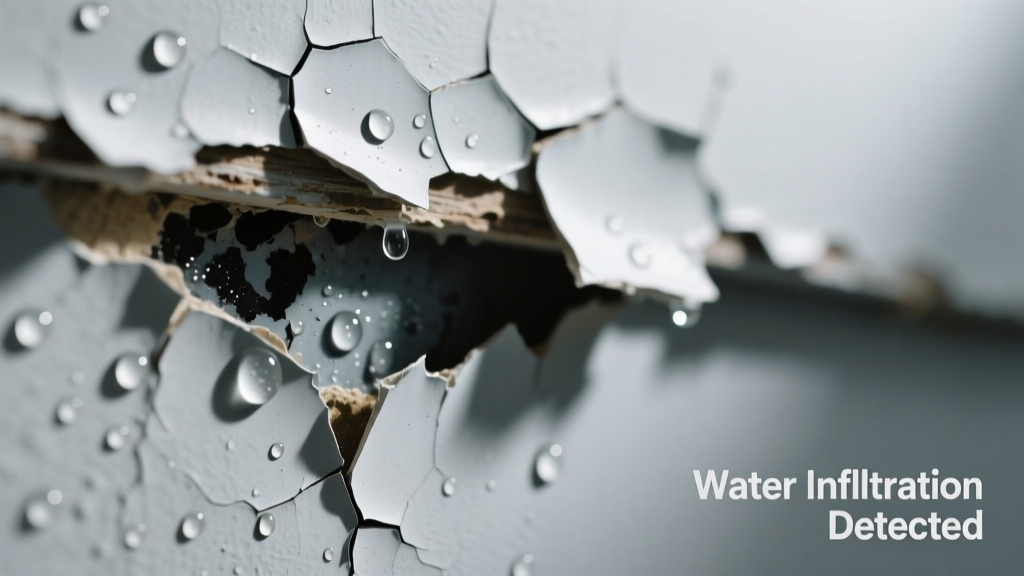
You spot blistered, curling paint on your south-facing stucco wall — and when you press near the edge, cold water oozes out. Your gut says 'leak,' but is the paint failing because of moisture… or is the moisture there because the paint failed first? This isn’t just cosmetic: it’s your home’s first warning sign that water is getting behind the finish.
Quick Checklist
Answer these yes/no questions to narrow the root cause in under 90 seconds:
- Is the peeling concentrated near windows, doors, or roofline intersections?
- Does the wall feel damp or spongy beneath the paint — not just at the surface?
- Are there visible cracks in caulk, flashing, or mortar joints within 6 inches of the peeling area?
- Did the peeling start within 18 months of a recent paint job?
- Is there staining (yellow, brown, or dark gray) on the interior drywall directly behind the peeling zone?
- Has your home experienced heavy rain or freeze-thaw cycles in the last 3 weeks?
- Do you see white, chalky residue (efflorescence) on brick or concrete near the affected area?
Possible Causes
Failed Flashing or Caulking (Most Likely — ~68% of cases)
Look for gaps where roof-to-wall transitions, window head flashings, or deck ledger boards meet the siding. Run your finger along seams — if caulk is cracked, missing, or pulled away from substrate, water is bypassing the barrier. According to the National Association of Home Builders’ Exterior Wall Systems Guide (2022), improper flashing accounts for nearly 7 in 10 water intrusion claims tied to paint failure.
Severity: Moderate — DIY fixable if flashing is accessible and undamaged; call a pro if metal flashing is bent, corroded, or integrated into masonry.
Replace window flashing | Recaulk exterior joints
Trapped Moisture from Interior Sources
Check for high indoor humidity (>60% RH), unvented bathroom exhaust fans, or dryer vents dumping indoors. Use a moisture meter on interior drywall behind the peeling zone — readings above 18% indicate vapor drive through walls. The U.S. EPA estimates that 14% of household water usage is from leaks — but hidden condensation contributes to even more unseen wall saturation.
Severity: Low–Moderate — usually DIY with dehumidifiers, vent upgrades, and vapor barrier review.
Substrate Damage (Rotted Sheathing or Studs)
Gently probe the wall with an awl or screwdriver near peeling edges. If the tool sinks >1/4" into wood sheathing or feels soft, structural decay is present. This often follows years of untreated flashing failures. A 2023 Insurance Institute for Business & Home Safety field study found rot under peeling paint was 3.2× more likely in homes older than 25 years with no recent siding inspection.
Severity: High — requires licensed contractor assessment and possible sheathing replacement.
What to Do First
Don’t wait for the next rainstorm. Immediate action prevents mold growth and framing decay:
- Cover the affected area with a tarp secured *above* the peeling zone (not over it) to deflect runoff.
- Use a digital moisture meter to test both surface and subsurface readings — log values at 1", 2", and 4" depth.
- Inspect all penetrations within 2 feet: windows, vents, pipes, electrical boxes — look for missing caulk or rust stains.
- Run a dehumidifier in adjacent interior rooms for 48 hours, especially if indoor RH exceeds 55%.
What NOT to Do
These actions accelerate damage or mask real problems:
- Don’t repaint over peeling areas — this traps moisture and guarantees faster substrate failure.
- Don’t use silicone caulk on porous surfaces like stucco or brick — it won’t adhere long-term and blocks vapor escape.
- Don’t drill weep holes into painted siding — you’ll create new entry points without addressing the source.
- Don’t ignore interior signs — yellow stains on ceilings or musty odors mean water has already migrated inside.
Is the leak coming from above the peeling area?
Water travels downward — but rarely straight down. Trace upward at least 3 feet from the worst peeling. Look for missing drip caps, clogged gutters, or roof shingle damage. A single missing shingle above a window can saturate 8 square feet of wall behind paint.
Does the peeling only happen on north- or east-facing walls?
Yes? That’s a red flag for chronic moisture retention. These walls get less sun and dry slower. Combine that with poor ventilation behind siding (e.g., foil-faced insulation blocking outward drying), and you’ve got ideal conditions for paint delamination. According to Building Science Corporation’s Wall Drying Potential Report (2021), north-facing walls in humid climates dry 40% slower than south-facing ones — making them early indicators of vapor management issues.
Is there efflorescence or rust staining near the peeling?
White powdery deposits (efflorescence) signal water moving through masonry and leaching salts — meaning bulk water is penetrating deep. Rust on nails or fasteners means prolonged wetting. Both point to long-term leakage, not a one-time event. Don’t sand or seal over efflorescence — it will reappear until the water path is cut off.
Did the paint fail within 2 years of application?
If so, the issue is almost certainly prep or product-related — not age. Check if the surface was power-washed but not allowed to dry ≥72 hours before painting, or if low-VOC acrylic was used over oil-based primer. The Paint Quality Institute’s 2023 Failure Analysis Database shows 82% of premature peeling in new paint jobs stems from inadequate surface drying or incompatible coatings.
Can I test for leaks myself with a garden hose?
Yes — but method matters. Start at the top and work down in 5-minute intervals while someone watches the peeling area (and interior walls). Use a spray nozzle set to ‘shower,’ not ‘jet.’ Never soak one spot for >2 minutes — you risk forcing water past intact barriers. Stop immediately if water appears inside. This test confirms path, not source — always pair it with visual inspection.
Should I remove all the peeling paint before diagnosing?
No. Removing paint prematurely destroys evidence: water trails, staining patterns, and substrate condition are critical diagnostic clues. Instead, lift a small corner (≤2" square) with a putty knife to inspect what’s underneath — then cover it with painter’s tape to prevent further exposure. As building inspector Maria Chen told Journal of Light Construction (2022): “The most valuable diagnostic tool on any job site is the 2-inch flap of paint you haven’t scraped yet.”
Peeling paint leaking water isn’t just a curb appeal issue — it’s your home speaking in code. Every blister, stain, and drip tells a story about where water entered, how long it’s been there, and what’s at risk. Diagnose deliberately, act decisively, and never treat the symptom without finding the source.