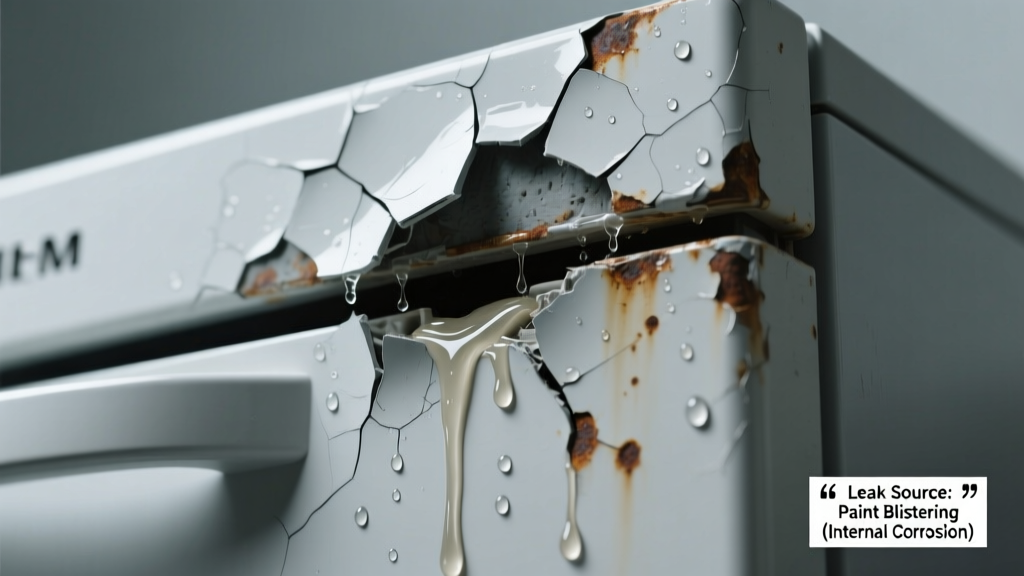
You walk into the bathroom and spot a soft, swollen bubble in the ceiling paint—then hear a faint drip. Or you press a wall near the kitchen sink and feel spongy drywall beneath peeling paint. This isn’t just cosmetic: blistered paint with active water leakage signals real structural moisture intrusion that can rot framing, grow mold, and compromise insulation.
Quick Checklist
Answer these yes/no questions to narrow the cause in under 90 seconds:
- Is the blistering located directly above or beside a plumbing fixture (sink, shower, toilet, water heater)?
- Does the area feel cool, damp, or squishy when pressed gently?
- Has there been recent heavy rain—and does the leaking worsen after storms?
- Do you see discoloration (yellow-brown stains) spreading outward from the blister?
- Is the affected surface interior drywall, not exterior stucco or siding?
- Can you hear dripping sounds—even faintly—when all faucets and appliances are off?
- Have you noticed musty odors near the blistered area?
Possible Causes
Leaking supply line or shutoff valve
Check under sinks and behind toilets for wet insulation, corroded brass fittings, or mineral crust on flexible supply hoses. A slow drip here often wicks upward into drywall, causing blistering 6–12 inches above the leak source. Severity: Low–Medium. Most supply line leaks are DIY-fixable with a new braided stainless steel hose and adjustable wrench. Replace if the valve body is cracked or weeping at the base.
Roof or flashing failure (if blistering is on ceiling)
Inspect attic space above the blister—look for water trails on rafters, wet insulation, or daylight through missing shingles near chimneys or vents. According to the Insurance Institute for Business & Home Safety's 2023 report, 68% of roof-related interior water damage starts at compromised flashing—not shingle failure. Severity: High. Requires licensed roofing contractor; temporary tarping only buys time.
Clogged or damaged drain vent stack
Listen for gurgling drains or slow drainage in nearby fixtures. A blocked vent can create negative pressure that pulls water out of P-traps—and forces moisture into wall cavities behind tub surrounds or showers. Confirm by running water while watching for bubbles in the toilet bowl. Severity: Medium. A plumber can snake the vent from the roof in ~45 minutes. DIY attempts risk pushing debris deeper.
What to Do First
Act within 2 hours to limit damage:
- Turn off water supply to the nearest fixture—or main shutoff if location is unknown.
- Place buckets or towels under active drips; label them with time/date for pattern tracking.
- Use a non-contact infrared thermometer to map surface temps—cool spots indicate trapped moisture.
- Photograph blister size, location, and any visible water trails before cleanup.
- Contact a licensed plumber or water damage specialist if dripping continues >15 minutes after shutoff.
What NOT to Do
Avoid these common missteps that accelerate decay or mask severity:
- Don’t pop or scrape blistered paint—it breaks the vapor barrier and invites mold spores into the substrate.
- Don’t run dehumidifiers alone without stopping the leak first—the source will keep feeding moisture.
- Don’t apply caulk or paint over blisters—this traps water behind the surface and hides progression.
- Don’t ignore intermittent leaks; the U.S. EPA estimates that 14% of household water usage is from undetected leaks.
Is this leak coming from my shower pan or tub surround?
Press firmly around the base of the tub or shower curb. If grout cracks crumble or tile flexes, the waterproof membrane may be breached. Remove caulk at the floor-wall joint and look for dark, mushy subfloor material. This requires full tear-out and re-flashing—not patching. See our shower pan leak repair guide for step-by-step demo videos.
Could this be condensation, not a leak?
Condensation rarely causes *active dripping*—it forms beads or fogging, not blistering with water pooling. Use a hygrometer: sustained indoor RH >60% + cold surface temp (<55°F) suggests condensation. But if paint lifts *and* water pools below, it’s almost certainly liquid intrusion. As home inspector Mark Delaney notes in Moisture Mapping for Contractors (2022): “Blistering with gravity-fed water flow is never condensation—it’s always a breach.”
“Blistering with gravity-fed water flow is never condensation—it’s always a breach.” — Mark Delaney, Moisture Mapping for Contractors, 2022
Why does the blister appear far from the actual leak?
Water travels along framing, pipes, or insulation paths—often moving horizontally 12–24 inches before showing as swelling or dripping. That blister 3 feet left of your bathroom fan? The leak is likely at the fan housing seal or duct collar. Trace stains upward and sideways—not just straight down.
Can I test for leaks myself without opening walls?
Yes—with limits. Use a moisture meter (pin-type preferred) to scan drywall edges and stud locations. Readings >15% indicate saturation. Also try the ‘paper towel test’: tape a dry paper towel over the blister overnight—if it’s soaked by morning, water is actively migrating. For hidden pipe leaks, shut off main water, open a faucet, and watch the meter dial—if it moves, you have a line leak. See our water meter leak test tutorial.
How fast does drywall degrade once wet?
According to FEMA’s Homeowner’s Guide to Mold Prevention (2021), drywall loses structural integrity at >20% moisture content—and begins supporting mold growth within 48 hours. If blistering has lasted >72 hours, assume mold colonization behind the surface—even if unseen.
| Source | Typical Time to Visible Blistering | Max Safe Delay Before Pro Call |
|---|---|---|
| Supply line drip | 3–10 days | 48 hours |
| Roof flashing failure | 1–4 rain events | 24 hours |
| Shower pan liner breach | 2–6 weeks | Immediate |
| Clogged AC condensate drain | 1–3 days (in humid weather) | 12 hours |
Don’t wait for the blister to burst. Every hour of unchecked leakage adds cost—and risk. Start with the Quick Checklist, then match your answers to the causes above. If two or more checklist items are ‘yes,’ treat it as urgent—even if dripping seems minor. Early intervention saves drywall, studs, and your peace of mind.