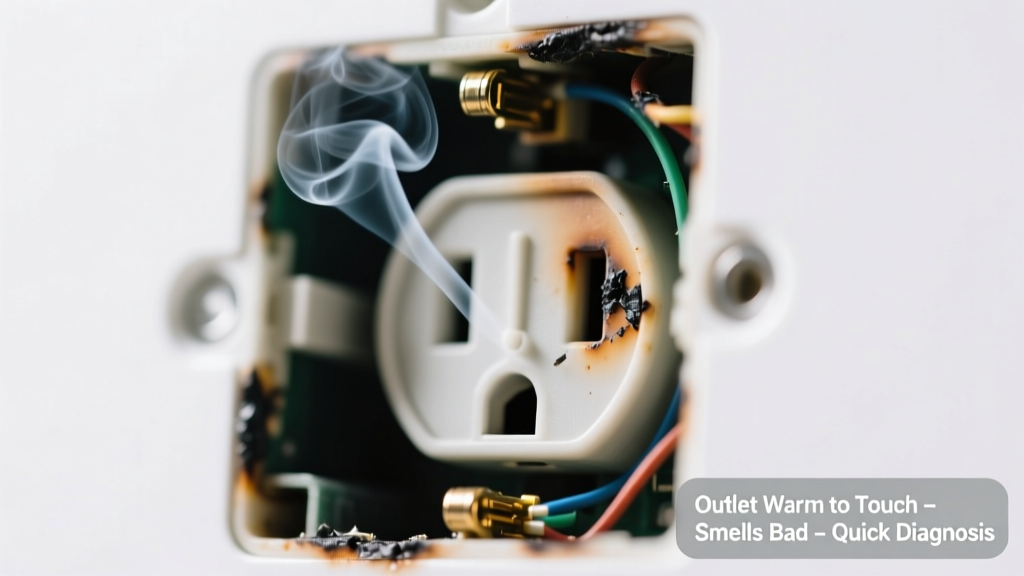
You plug in your coffee maker, and seconds later notice the outlet feels warm—then a sharp, acrid, burning-plastic odor wafts up. Your skin prickles. This isn’t normal. It’s your home’s electrical system screaming for attention—and it’s urgent, but not hopeless. Most causes are fixable *if you act before the next time you flip the switch.*
Quick Checklist
- Has the outlet been used with high-wattage appliances (space heater, hair dryer, microwave) recently?
- Do nearby outlets or switches also feel warm or emit odor?
- Is the outlet older than 15 years or discolored (brown/black around faceplate)?
- Did the smell start after a power surge, storm, or tripped breaker?
- Does the circuit breaker trip repeatedly when that outlet is used?
- Can you hear faint buzzing or sizzling near the outlet?
Possible Causes
Loose or corroded terminal connections
Wires behind the outlet have vibrated loose over time, causing arcing and heat buildup. Confirm by turning off power at the breaker, removing the faceplate, and checking for darkened wire insulation or melted plastic on terminals. Severity: High risk — call an electrician immediately. DIY is unsafe here. Fix loose outlet wiring
Overloaded circuit
Too many devices drawing power through one outlet or shared circuit cause sustained heat. Confirm by unplugging everything, letting the outlet cool for 10 minutes, then plugging in only one low-wattage device (e.g., phone charger). If it stays cool, the load was the issue. Severity: DIY fix — redistribute loads and check breaker rating. Fix overloaded circuit
Faulty receptacle (internal failure)
The outlet’s internal contacts have degraded, increasing resistance and generating heat—even with minimal load. Confirm by swapping in a known-good outlet (after power-off). According to the Electrical Safety Foundation International’s 2022 report, 27% of non-weather-related residential electrical fires originate from failed receptacles. Severity: DIY if experienced; otherwise call pro. Replace electrical outlet
What to Do First
Stop using the outlet *immediately*. Turn off its circuit breaker—not just the wall switch. Label the breaker clearly so no one flips it back on accidentally. Then inspect the faceplate for discoloration or warping. If you see charring or smell lingering smoke, evacuate and call 911 first—do not delay.
- Unplug all devices from the affected outlet and adjacent ones
- Check your main panel for tripped breakers or warm breakers
- Use a non-contact voltage tester to verify power is off before touching anything
- Take photos before removing the faceplate—they help electricians assess damage remotely
What NOT to Do
Don’t cover the outlet with tape, furniture, or rugs—it traps heat. Don’t reset the breaker and keep using it “just once more.” And never use an outlet that smells like burning toast or fish—those odors indicate overheating insulation or failing components, not food residue.
- Don’t spray cleaners or lubricants into the outlet
- Don’t replace the faceplate without investigating the root cause
- Don’t assume GFCI protection makes it safe—the fault may be upstream
Is this outlet on a shared circuit with other rooms?
Yes? That increases the chance of hidden overload or daisy-chained wiring faults. Trace the circuit using your breaker map—or test each breaker while monitoring which outlets go cold. The U.S. Consumer Product Safety Commission reports that 42% of circuit-related outlet failures involve misidentified or undocumented circuits.
Did the smell happen right after plugging something in?
If yes, the appliance itself may be faulty—test it on another outlet. But don’t rule out the receptacle: a damaged plug prong can arc inside the outlet even if the device works elsewhere. Always inspect both ends.
Are you hearing a faint buzzing sound?
Buzzing means active arcing—a red-flag emergency. Arcing generates temperatures over 10,000°F internally.
"Any audible buzzing from an outlet means immediate power shutdown and professional inspection—no exceptions." — National Fire Protection Association, NFPA 70E Handbook, 2023
Does the outlet feel warm only when something is plugged in?
That points strongly to poor contact between plug and receptacle—especially if the plug feels loose. Worn-out contacts increase resistance, creating heat. Replace the outlet; don’t try to tighten it with pliers.
Was this outlet installed during a DIY renovation?
Improper torque on terminal screws is the #1 cause of post-renovation outlet failures. The 2021 edition of the National Electrical Code (NEC 110.14) requires specific torque values—often overlooked by non-professionals. A torque screwdriver ($12–$25) prevents this exact issue.
Could moisture be involved?
If the outlet is in a bathroom, kitchen, basement, or exterior location, moisture ingress could cause tracking and overheating—even without visible water. Check for condensation behind the faceplate and ensure GFCI protection is functional. Test GFCI outlets and consider upgrading to weather-resistant (WR) rated receptacles.
A warm, smelly outlet is never ‘just a little thing.’ But catching it early—before charring, melting, or fire—means most cases resolve with targeted action, not reconstruction. Trust your nose and your fingertips: they’re the earliest, most reliable warning systems your home has.