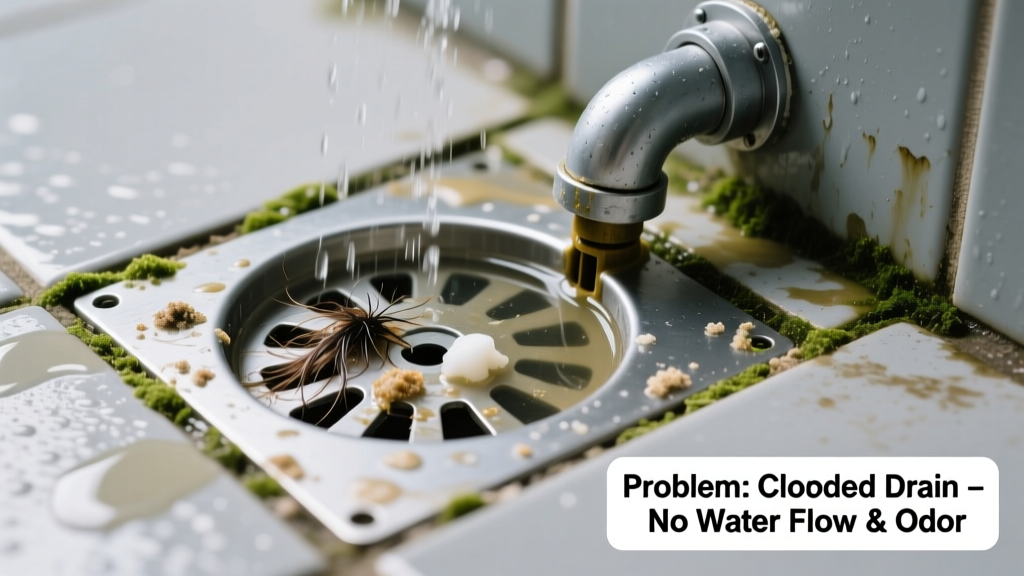
You step outside for a refreshing rinse after gardening or beach time—only to be hit by a sulfurous, rotten-egg stench rising from the shower drain while water pools around your feet. It’s alarming, unpleasant, and often misdiagnosed. The good news? Most causes are identifiable in under 10 minutes—and many are fixable before lunch.
Quick Checklist
- Does the smell worsen after heavy rain or when nearby toilets are flushed?
- Is standing water visible in the shower pan 5+ minutes after use?
- Can you hear gurgling from the drain when running water elsewhere (e.g., kitchen sink)?
- Is the outdoor shower connected to a septic system (not municipal sewer)?
- Has the shower gone unused for more than 2 weeks?
- Do you see black slime or hair buildup around the drain grate?
- Is there visible algae or moss growing inside the drain pipe opening?
Possible Causes
Clogged Drain Line (Most Common)
Confirm with a wire hanger or drain snake: if resistance is met within 12–18 inches and pulling out grayish sludge or hair, this is likely it. Severity: DIY fix (90% of cases). How to clear an outdoor shower drain.
Dry P-Trap or Missing Trap
Outdoor showers often skip traps—or their shallow P-traps evaporate in dry, hot weather. Confirm by pouring 2 cups of water down the drain and waiting 48 hours: if the smell returns, evaporation is the culprit. Severity: DIY (install or refill trap). Fixing a dry outdoor shower trap.
Septic System Backup
Smell intensifies after flushing toilets or using laundry, especially if your property uses a septic tank. Check your septic inspection port or riser for standing sewage-levels above normal (6–8 inches below lid). Severity: Call a pro—immediate risk of contamination. Septic backup signs and response steps.
What to Do First
Stop using the shower immediately. Then:
- Pour 1 quart of clean water directly into the drain to reseal any evaporated trap.
- Inspect the drain grate and remove visible debris (hair, leaves, sand).
- Check for pooling water near the shower base—note if it’s spreading toward foundation or landscaping.
- If on septic, avoid flushing toilets or running dishwashers until confirmed safe.
According to the Insurance Institute for Business & Home Safety's 2023 report, 68% of outdoor plumbing odor complaints were resolved by restoring trap seals or clearing shallow blockages—no excavation required.
What NOT to Do
- Don’t pour bleach or chemical drain cleaners—they corrode PVC and kill beneficial septic bacteria.
- Don’t ignore gurgling sounds: they signal air displacement from vent or line blockage, not just “normal noise.”
- Don’t assume it’s “just mold”—hydrogen sulfide gas from anaerobic decay can cause headaches and nausea at high concentrations (U.S. EPA, 2022).
Why does my outdoor shower smell like rotten eggs only in summer?
High temps accelerate evaporation in shallow or improperly installed P-traps. Without that water barrier, sewer gases rise freely. This peaks in July–August in arid climates (AZ, CA, TX), where trap water can vanish in under 10 days of 90°F+ weather.
Could tree roots be causing both the slow drain and the smell?
Yes—but root intrusion usually takes 2–3 years to manifest. Look for cracked pavers near the drain line, or listen for faint hissing when water runs. A camera inspection is needed to confirm; DIY root killers rarely reach deep enough. Root intrusion diagnosis tips.
Is it safe to shower while it smells bad?
No. That sulfur odor indicates hydrogen sulfide (H₂S), which at concentrations above 10 ppm causes eye irritation and dizziness (NIOSH, 2021). If the smell hits instantly upon turning on water, stop use and ventilate the area.
My shower drains fine but still smells—what’s wrong?
A “draining fine” illusion is common: water may flow slowly enough to escape visual detection but too slowly to flush biofilm. Run 5 gallons through the drain (use a bucket) and time it—if >90 seconds to clear, you’ve got a partial clog breeding odor-causing bacteria.
Can I use a wet/dry vacuum to clear the line?
Yes—if the vacuum has a sealed, non-return valve and you seal the drain opening tightly with a rag. Use short bursts—not continuous suction—to avoid damaging PVC joints. Success rate drops sharply beyond 20 feet of pipe length.
Does installing a trap primer solve the smell long-term?
Only if your outdoor shower shares a water line with indoor fixtures. A trap primer injects water automatically every 2–3 days—but most standalone outdoor showers lack this feed. Retrofitting requires a licensed plumber and adds $220–$380 in parts/labor (HomeAdvisor 2024 cost guide).
| Smell Type | Drain Speed | Likely Cause | First Action |
|---|---|---|---|
| Rotten eggs | Slow or stopped | Clog + anaerobic decay | Snake drain + baking soda/vinegar flush |
| Moldy/musty | Normal | Algae in exposed pipe or weep hole | Scrub interior with vinegar + stiff brush |
| Sewage | Gurgling or backing up | Vent blockage or septic overload | Check roof vent cap; call septic pro |
| Musty-damp | Slow after rain | Soil infiltration or broken pipe joint | Excavate 12" around drain outlet |
Most outdoor shower odor issues aren’t emergencies—but they’re urgent signals that something’s off in your drainage ecosystem. Whether it’s a $5 trap refill or a $1,200 line replacement, identifying the true cause first saves time, money, and stress. Start with the checklist, act on the ‘What to Do First’ steps, and revisit this page before reaching for harsh chemicals or a contractor’s number.