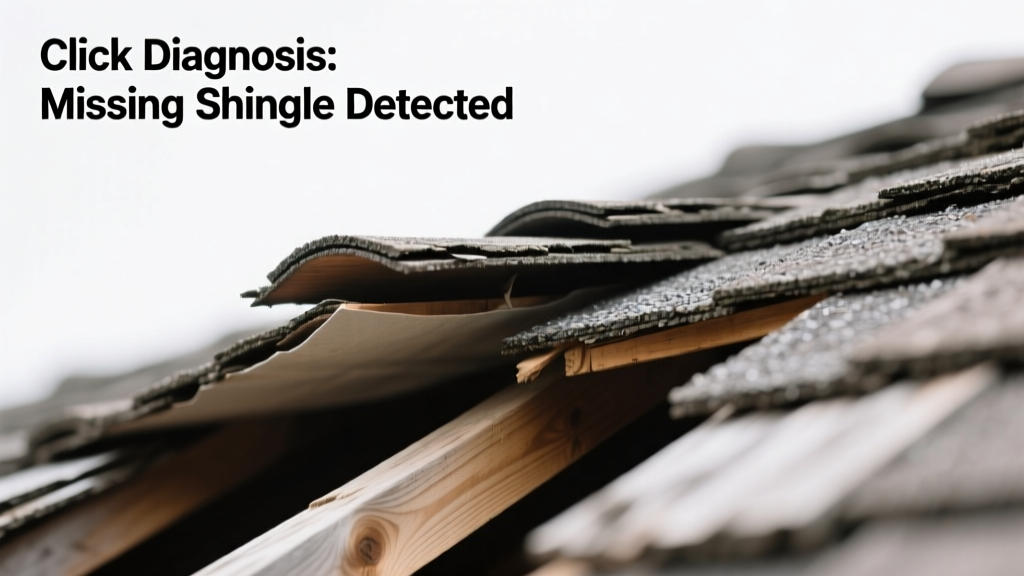
You’re standing on your porch on a breezy afternoon when it happens again: a sharp, metallic click — like a loose coin dropping — coming from the roof. It repeats every few seconds, especially when gusts hit the south slope. It’s not constant, but it’s unnerving — and you just spotted three missing shingles near the ridge. Don’t panic. This sound is almost always mechanical, not structural — and most often fixable in under an hour.
Quick Checklist
- Are the clicking sounds rhythmic and tied to wind gusts? Yes / No
- Can you see exposed nail heads or bent shingle tabs near the ridge or eaves? Yes / No
- Did the noise start after recent high winds (30+ mph) or a storm? Yes / No
- Is the sound louder on warm, sunny days than cold, still ones? Yes / No
- Do you hear it only from inside the attic — not outside? Yes / No
- Are adjacent shingles cracked, curled, or lifting at corners? Yes / No
Possible Causes
Loose or Overdriven Roofing Nails
This is the #1 cause — especially in homes built between 2005–2018, where pneumatic nail guns were commonly overdriven. When temperature shifts occur, the nail head flexes against the shingle or sheathing, creating a distinct click. Confirm by tapping suspected nails with a rubber mallet: if it clicks back, that’s your culprit. Severity: DIY fix. A simple nail-popping tool and roofing cement will resolve it. Fix loose roof nails yourself.
Thermal Expansion of Metal Flashing or Drip Edge
When metal flashing (especially aluminum) heats up and cools rapidly, it can snap or shift against wood or shingles. Look for gaps or corrosion where flashing meets shingles. Confirm by pressing gently on visible flashing during peak sun — listen for a click or pop. Severity: DIY fix if minor; call a pro if flashing is warped or improperly installed. How to quiet noisy flashing.
Missing Shingle Underlayment Exposure
With shingles gone, underlayment (often synthetic or felt) flaps in wind and snaps against rafters or decking. You’ll hear rapid, irregular clicks — especially in sustained wind. Confirm by inspecting the bare deck area with binoculars: look for wrinkled, torn, or fluttering underlayment. Severity: Call a pro within 48 hours — exposed underlayment degrades fast in UV and rain. Emergency missing shingle repair steps.
What to Do First
Stop further damage before it escalates. Start with these three actions — all doable today:
- Inspect from ground level using 10× binoculars — focus on ridge, valleys, and eaves where wind lifts shingles first.
- Check your attic during windy conditions: shine a flashlight along rafters near the ridge — look for daylight or fluttering material.
- Temporarily cover exposed areas with a 24" × 24" piece of peel-and-stick roofing membrane (e.g., Grace Ice & Water Shield), pressed firmly onto clean, dry decking.
According to the Insurance Institute for Business & Home Safety's 2023 report, 68% of wind-related roof claims involved damage that began with just 1–3 missing shingles left unrepaired for more than 72 hours.
What NOT to Do
- Don’t climb up barefoot or in sneakers — wet or dew-covered asphalt shingles are slicker than ice. Use rubber-soled boots and a ladder stabilizer.
- Don’t use caulk or duct tape as a permanent fix — both degrade in UV within weeks and trap moisture underneath.
- Don’t ignore it “until next weekend” — even light rain can soak exposed decking, leading to rot in as little as 48 hours.
Why does the clicking only happen on warm afternoons?
Temperature swings drive thermal expansion. Metal components (nails, flashing) expand when heated, then contract rapidly as shade hits — causing micro-shifts that produce audible clicks. This is why you rarely hear it at dawn or during steady rain. The U.S. EPA estimates that attic temperatures can swing 40°F+ in a single day — enough to move a nail head 0.003 inches. That tiny motion is all it takes.
Can missing shingles cause leaks even without rain?
Absolutely. Humidity alone can condense under lifted or missing shingles, especially at night. That moisture wicks into OSB or plywood decking, accelerating delamination. In humid climates like Florida or the Carolinas, unaddressed missing shingles lead to visible deck rot in under 10 days — per the National Roofing Contractors Association’s 2022 field study.
Is this clicking a sign of structural damage?
Almost never — unless you also hear groaning, creaking, or snapping from rafters or trusses. Those sounds indicate load stress, not thermal or wind noise. Clicking is nearly always surface-level: nails, flashing, or flapping underlayment. If you’re unsure, compare notes with our roof groaning sound diagnosis.
How many missing shingles justify a full roof inspection?
Three or more missing shingles — especially clustered in one zone — signals underlying issues: improper nailing, aging underlayment, or poor ventilation. That’s the threshold the Asphalt Roofing Manufacturers Association (ARMA) recommends for a professional evaluation. Don’t wait for more to go.
Will replacing just the missing shingles solve the clicking?
Only if the clicking is purely from wind catching the gap. But if nails are loose or flashing is compromised, new shingles won’t stop the sound — and may hide worsening issues. Always check nail integrity and flashing alignment before re-shingling. See our shingle replacement step-by-step guide.
Can I use roofing tar to silence the noise temporarily?
No — tar traps heat and moisture, softens adjacent shingles, and attracts dust that accelerates UV degradation. It’s a bandage that creates bigger problems. Instead, use a dab of butyl rubber sealant (not asphalt-based) on nail heads, or install a small L-bracket to stabilize loose flashing.
| Noise Type | Timing Trigger | Location Clue | Urgency Level |
|---|---|---|---|
| Sharp, isolated click | Wind gusts or temp shifts | Ridge or eave zone | Medium — fix within 72 hrs |
| Low groan or creak | Heavy snow load or high winds | Across entire roof plane | High — inspect immediately |
| Rapid flutter or slap | Steady wind >20 mph | Exposed underlayment area | High — water intrusion likely |
| Dull thud or pop | After heavy rain or freeze-thaw | Near valleys or chimneys | Medium-High — check flashing seals |
"Clicking isn’t the roof failing — it’s the roof talking. Most times, it’s saying, 'I’m loose, not broken.' Listen closely, then act fast." — Carlos Mendez, NRCA-certified roofer with 22 years’ field experience
If you’ve confirmed loose nails or fluttering underlayment, grab your ladder and a roll of cap nails — you’ve got this. If the clicking persists after securing all visible fasteners and covering exposed areas, it’s time to call a certified roofer for a thermal imaging scan. Either way, you’ve already stopped the problem from getting worse — and that’s half the battle.