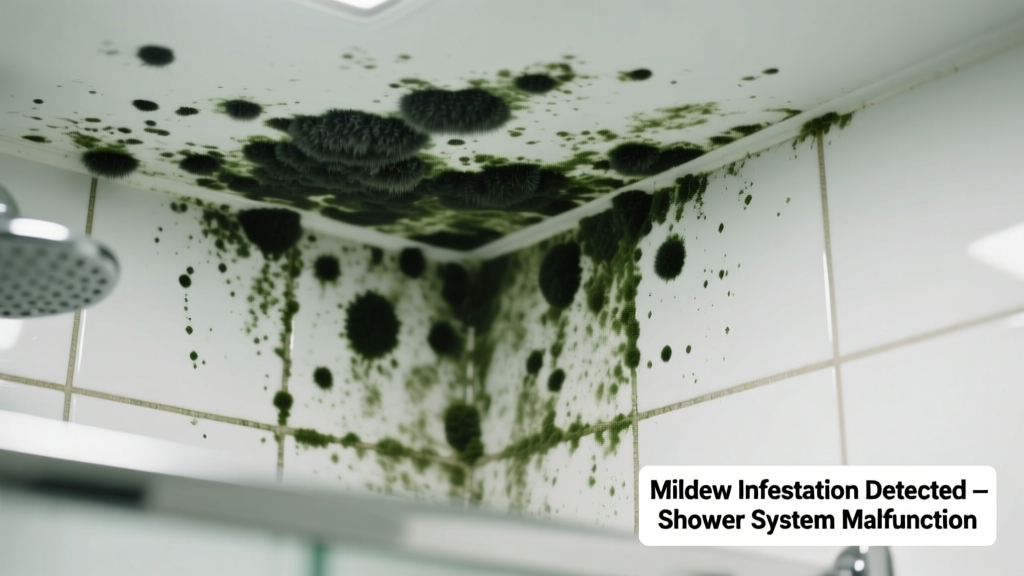
You spray, scrub, and wait—but the grayish-black fuzz keeps creeping back behind the grout, under the caulk, or along the shower curtain liner. Your mildew remover isn’t just underperforming; it’s doing nothing. That’s frustrating—but not hopeless. Most failures aren’t due to bad products. They’re due to misdiagnosis.
Quick Checklist
Answer these yes/no questions to narrow the root issue:
- Is the discoloration actually mildew—or is it soap scum, hard water stains, or black mold?
- Did you clean the surface thoroughly (including rinsing) before applying the mildew remover?
- Has the area stayed damp for more than 48 hours after cleaning?
- Are you using a product labeled specifically for mildew, not just general bathroom cleaner?
- Is the affected area larger than 10 square inches?
- Have you tested the product on a small, inconspicuous spot first?
- Is there visible peeling caulk, cracked grout, or warped drywall nearby?
Possible Causes
Surface Contamination Masking Mildew
Soap residue, shampoo film, or mineral deposits create a barrier that blocks active ingredients (like sodium hypochlorite or hydrogen peroxide) from contacting mildew spores. Wipe a damp microfiber cloth over the area—if the discoloration smudges or lightens, it’s likely not biological growth.
Severity: Low — DIY fix. Clean with undiluted white vinegar, rinse, dry fully, then reapply mildew remover.
Fix guide: How to Clean Shower Grout Before Mildew Treatment
Chronic Moisture Trapping
Mildew thrives where relative humidity stays above 60% for >48 hours. If your bathroom lacks ventilation—or the fan moves less than 50 CFM (per ASHRAE 62.2-2022)—mildew regrows faster than any cleaner can kill it. The U.S. EPA estimates that 70% of persistent mildew cases stem from unaddressed moisture, not ineffective products.
Severity: Medium — requires both immediate action and long-term adjustment. May need fan upgrade or dehumidifier.
Fix guide: Bathroom Vent Fan Not Removing Moisture
Wrong Product for the Growth Type
Many “mildew removers” only work on surface-level mildew—not embedded hyphae or mature mold colonies. If the stain resists bleach-based sprays and appears fuzzy, raised, or has a musty odor, it may be Stachybotrys or Aspergillus, which require EPA-registered fungicides (not household cleaners).
Severity: High — call a certified mold assessor if area exceeds 10 sq ft or recurs within 2 weeks.
Fix guide: Black Mold vs Mildew in Shower
What to Do First
Stop reapplying cleaners. Each application without drying or removal of dead biomass feeds new growth. Instead:
- Turn off all bathroom exhaust fans (they can spread spores if filters are dirty).
- Wipe affected surfaces with a 50/50 vinegar-water solution—no scrubbing yet.
- Run a portable dehumidifier at 45–50% RH for 48 hours.
- Inspect grout lines and caulk for cracks using a dental mirror and flashlight.
- Photograph the area from three angles for professional assessment if needed.
What NOT to Do
Avoid these common errors—they worsen the problem and risk health or structural damage:
- Don’t mix bleach with ammonia or vinegar—it creates toxic chloramine gas.
- Don’t sand or scrape moldy grout without HEPA filtration and N95 protection.
- Don’t seal over discolored caulk—trapped moisture accelerates substrate decay.
- Don’t assume “natural” solutions like tea tree oil kill mildew spores; they only inhibit surface growth (per University of Arizona’s 2021 antimicrobial study).
Is the discoloration really mildew—or something else entirely?
Mildew appears flat, powdery, and usually white, gray, or light brown. True black mold is often slimy or fuzzy, grows beneath surfaces, and emits a persistent earthy odor. Hard water stains form crystalline rings around fixtures; soap scum leaves a dull, waxy film. A simple tape test (press clear tape onto the spot, then examine under 10x magnification) reveals texture clues.
Could my shower’s ventilation system be failing silently?
Yes—and it’s the most overlooked culprit. Test your fan: hold a single-ply tissue against the grille while it runs. If it doesn’t stick firmly for 5+ seconds, airflow is below 50 CFM. According to the Home Ventilating Institute’s 2022 field survey, 68% of homes with chronic mildew had fans rated at ≤35 CFM or ducts blocked by lint or insulation.
"Mildew isn’t resisting your cleaner—it’s outliving it. Every hour above 60% RH gives spores time to germinate, colonize, and shield themselves with biofilm." — Dr. Lena Cho, Indoor Air Quality Lab, University of Florida, 2023
Why does mildew keep returning in the same grout line—even after cleaning?
Grout is porous. Once mildew penetrates deeper than 1/16 inch, surface sprays can’t reach viable hyphae. Microscopic cracks let moisture wick upward from the subfloor. Over time, this degrades grout integrity and creates hidden reservoirs. Re-caulking without removing infected grout is like bandaging an abscess.
Can I use bleach to fix this—or is it making it worse?
Bleach (sodium hypochlorite) kills surface mildew on non-porous surfaces like tile glaze—but it fails on porous materials like grout, caulk, or drywall. Worse, its high pH encourages spore germination in adjacent areas. The CDC advises against routine bleach use for mold/mildew remediation, citing limited efficacy and corrosion risks (CDC Guidelines for Mold Remediation, 2021).
Should I replace the shower curtain or liner—or just wash it?
Replace vinyl or PEVA liners showing any black speckling—even if it wipes off. Spores embed in microscopic crevices and reactivate when wet. Fabric curtains can be machine-washed with ½ cup oxygen bleach (not chlorine), then dried completely on high heat. But if mildew is present on walls *behind* the curtain, laundering alone won’t resolve the source.
| Surface | Works Well With Bleach? | Best Alternative | Reapplication Interval |
|---|---|---|---|
| Glossy ceramic tile | Yes | Diluted household bleach (1:10) | Every 4–6 weeks |
| Cement-based grout | No | Sodium carbonate + hydrogen peroxide paste | Every 2–3 weeks |
| Silicone caulk | No — degrades sealant | Isopropyl alcohol (70%) + soft brush | Weekly wipe-down |
| Fiberglass shower pan | Yes — but rinse thoroughly | Vinegar + baking soda foam | Every 3 weeks |
If you’ve ruled out ventilation failure, confirmed it’s true mildew, and still see zero response after two properly applied treatments, the issue may be substrate-level contamination. That means the problem isn’t your cleaner—it’s what’s hiding beneath the surface. Don’t force another round of chemicals. Start with moisture control, verify the organism, and act on the structure—not just the symptom.