You turn on the faucet and get a sharp, coppery tang on your tongue — then, just as the water flows, a rapid click-click-click echoes from behind the wall or under the sink. It’s unsettling, but not necessarily dangerous — yet. Most cases are fixable before major damage occurs, especially if caught early.
Quick Checklist
- Does the metallic taste appear only when using hot water?
- Does the clicking happen only when water is running — or also when it’s off?
- Is the sound loudest near the water heater or under a specific sink?
- Have you noticed rusty-orange stains on fixtures or laundry?
- Did the issue start within the last 2–3 weeks after a water main break or service disruption?
- Do you have galvanized steel pipes installed before 1980?
Possible Causes
Corroded Galvanized Steel Pipes
Galvanized pipes degrade internally over time, shedding iron oxide (rust) into the water stream — causing both metallic taste and loose scale fragments that rattle inside pipe elbows or valves. Confirm by checking for orange-brown sediment in a glass of cold water after flushing a faucet for 60 seconds. Severity: Moderate — DIY flush may help short-term, but full replacement is often needed. Replacing galvanized pipes requires a licensed plumber in most jurisdictions due to permit and pressure-testing requirements.
Failing Electric Water Heater Element
A cracked or mineral-encrusted heating element can sizzle and pop as current passes through moisture pockets — mimicking a rapid clicking noise. Metallic taste arises when overheated elements oxidize nearby anode rods or tank lining. Confirm by turning off power, draining 2 gallons, and inspecting the lower element for white crust or pitting. Severity: Low-Moderate — element replacement is a common DIY task if you’re comfortable with multimeter testing and basic electrical safety.
Thermal Expansion Valve or PRV Chatter
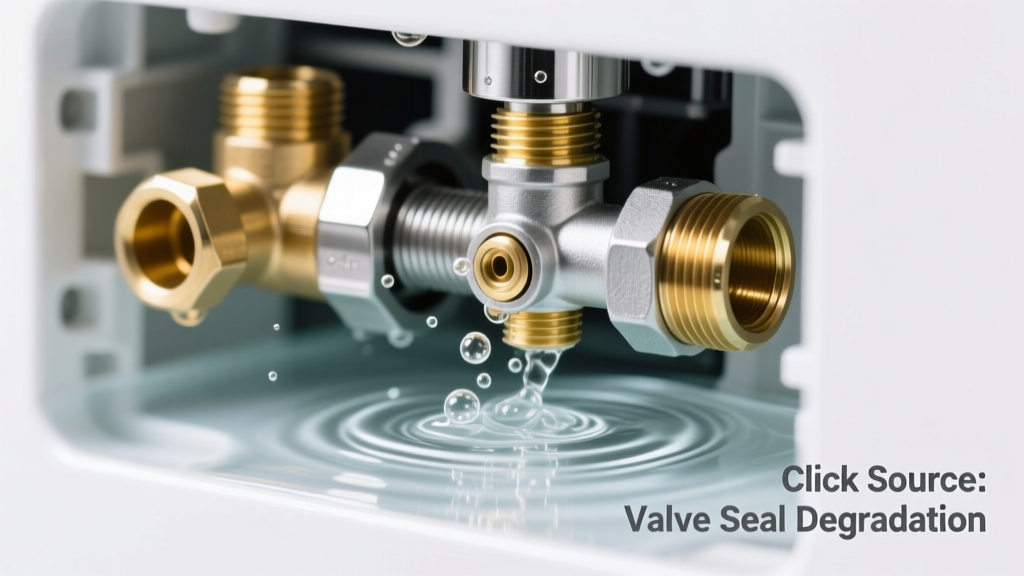
When your home has a closed-loop system (with a backflow preventer or check valve), heated water expands but has nowhere to go — building pressure until it forces open the pressure relief valve or thermal expansion tank valve, causing rhythmic clicking. Metallic taste here is usually coincidental (e.g., stirred-up sediment). Confirm by installing a pressure gauge on a hose bib; readings above 80 psi during heating cycles indicate failure. Severity: Moderate — installing an expansion tank is code-required in many areas and best handled by a pro.
What to Do First
Shut off the cold water supply to your water heater immediately — this stops thermal cycling and reduces stress on aging components. Then run cold water from the lowest faucet in your home for 3 minutes to flush loose debris. Collect a sample in a clear glass: let it sit for 5 minutes. If orange particles settle at the bottom, corrosion is likely active. According to the U.S. EPA estimates that 14% of household water usage is from leaks — but unseen internal pipe corrosion contributes to far more taste and odor complaints than reported.
"Clicking plus metallic taste in homes with pre-1980 plumbing almost always points to galvanized pipe degradation — not just nuisance, but a precursor to pinhole leaks within 6–18 months." — Plumbing Code Institute Field Guide, 2022
What NOT to Do
- Don’t increase water heater temperature to “burn off” the taste — this accelerates corrosion and element failure.
- Don’t ignore the sound just because the taste fades — clicking often precedes pipe rupture in galvanized systems.
- Don’t install a whole-house filter without first identifying the source — it may mask symptoms while damage progresses.
- Don’t use chemical descalers in older systems — they can dislodge large rust chunks that clog aerators or valves.
Is the clicking louder when I turn the faucet on versus off?
If louder at startup, it’s likely thermal shock — rapid expansion of cold water hitting hot pipes or a failing expansion device. If it continues steadily while water runs, suspect sediment rattling in a horizontal pipe section or failing faucet cartridge.
Does the metallic taste go away after running water for 2–3 minutes?
If yes, stagnant water sitting in corroded pipes overnight is the culprit — especially common in guest bathrooms or infrequently used sinks. If no, the issue is likely continuous leaching from the heater tank or main supply line.
Are you on municipal water or a private well?
Municipal systems add chlorine or chloramine, which accelerate corrosion in older galvanized or iron pipes. Private wells with high iron content (>0.3 ppm) cause similar taste but rarely clicking — unless paired with a failing well pump pressure switch. Test kits from the well water testing kit page include iron, pH, and hardness checks.
Did the problem begin right after a plumber worked on your system?
Yes? They may have disturbed sediment or introduced air into lines — but persistent clicking suggests improper valve sizing or missing expansion control. A post-service pressure test should have caught this; request documentation.
Do you hear the click in multiple rooms — or only one?
Single-room occurrence strongly points to a localized fixture issue: worn ceramic disc cartridge, loose aerator screen, or failing angle stop valve. Multiple-room clicking with metallic taste means the problem originates upstream — most likely water heater or main distribution piping.
Don’t wait for a leak to confirm the diagnosis. That metallic tang and rhythmic click are your plumbing’s early warning system — and unlike many home systems, water infrastructure rarely gives second chances once internal corrosion takes hold.