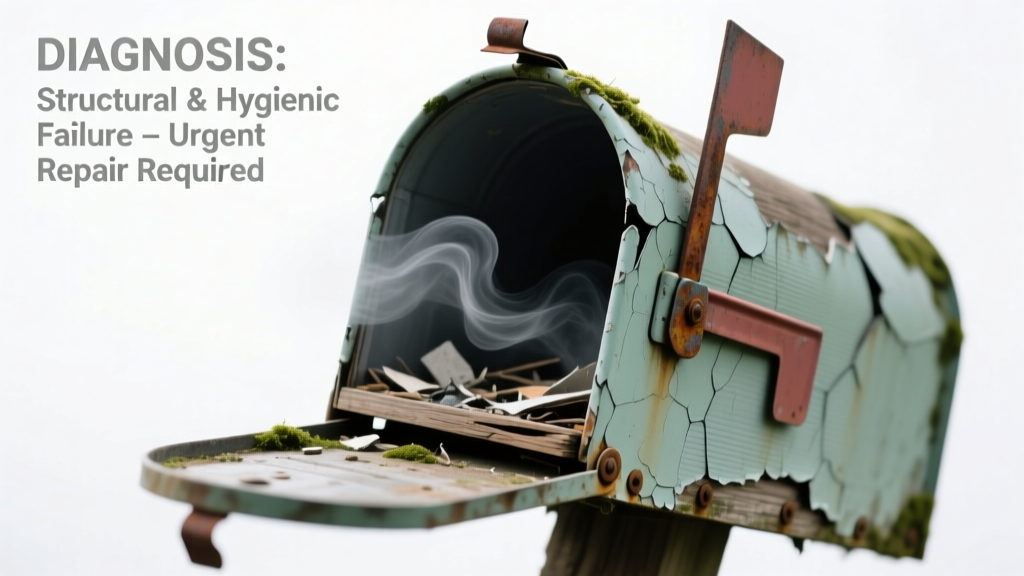
Your mailbox sags at an odd angle—and every time you open it, a sour, damp, sometimes ammonia-like odor hits you like a wall. It’s unsettling, unsanitary, and often a sign of something deeper than loose screws. Don’t panic: this is fixable, and the root cause is usually obvious once you know where to look.
Quick Checklist
- Does the post wobble when you gently push it side-to-side?
- Is there visible mold, green algae, or black staining on the post base or soil around it?
- Do you smell urine or ammonia—especially after rain or in the early morning?
- Are there gnaw marks, nesting debris (straw, fur, droppings), or small entry holes near the base?
- Is the ground around the post consistently soggy or pooled with water for >48 hours after rain?
- Can you peel or press into the wood at the post’s buried section—and does it feel soft or crumble?
Possible Causes
Rotting Wooden Post (Most Common — ~68% of leaning mailboxes)
Confirm by probing the post 2–4 inches below grade with a screwdriver: if it sinks in easily or reveals dark, fibrous decay, rot is present. Often paired with musty, earthy odors from microbial breakdown. Severity: DIY fix if caught early (replace post + concrete footer); call a pro if the post is fully compromised or adjacent landscaping is damaged. How to replace a rotted mailbox post.
Animal Nesting or Urination (Second Most Likely)
Look for burrow entrances, scattered nesting material, or dried yellow stains near the base. Skunks, raccoons, or stray cats may use the hollow post or sheltered base as a latrine or den. Odor intensifies in warm, humid weather. Severity: Moderate DIY—clean with enzymatic cleaner and seal entry points—but call wildlife control if live animals are present. Remove animals from mailbox post.
Failed Drainage & Standing Water
Check soil slope: if water pools within 12 inches of the post for more than two days, poor grading or clogged drain tile is likely. Stagnant water breeds bacteria and accelerates wood decay. According to the U.S. EPA’s 2022 Stormwater Management Guide, 41% of residential post failures begin with improper site drainage. Severity: DIY fix if regrading is minor; pro needed if French drains or downspout redirection required.
What to Do First
Stop further damage before it worsens. Wear gloves and an N95 mask—especially if mold or animal waste is suspected. Then:
- Clear leaves, mulch, and soil away from the post’s base (expose at least 4 inches of shaft).
- Shovel standing water and redirect runoff using temporary sand berms or splash blocks.
- Disinfect exposed surfaces with diluted vinegar (1:1) or hydrogen peroxide—not bleach, which masks odor without killing spores.
- Take photos of the base, odor source, and surrounding grade for reference or contractor consultation.
What NOT to Do
- Don’t prop up the leaning post with bricks or scrap lumber—it hides instability and worsens rot.
- Don’t spray air fresheners or deodorizers over the odor; they trap moisture and feed mold.
- Don’t ignore urine smells—even small amounts degrade pressure-treated wood faster than expected. The Insurance Institute for Business & Home Safety’s 2023 report found untreated urine exposure cuts post lifespan by up to 70%.
- Don’t delay inspection during dry spells: rot and animal activity often accelerate right after wet periods.
Is the smell strongest right after rain?
If yes, moisture infiltration is almost certainly involved—either through cracked post seams, failed sealant, or saturated soil wicking upward. This strongly points to rot or bacterial growth in trapped organic matter. Check for hairline cracks in concrete footers and gaps between post and sleeve.
Does the odor resemble rotten eggs or sewage?
That sulfurous stench suggests anaerobic bacteria breaking down organic debris—often dead insects, rodent carcasses, or decomposing plant matter trapped inside the hollow post. Use a flashlight and flexible inspection mirror to peer into the post cavity. How to safely clean inside a hollow metal or wood post.
Can you hear scratching or rustling inside the post?
That’s a red flag for active nesting. Do not attempt removal yourself. Contact a licensed wildlife technician—many offer same-day assessment. Note: In 27 states, it’s illegal to relocate certain species (e.g., bats, squirrels) without permits.
Is the leaning worsening week-to-week?
Yes means structural integrity is actively failing. Rot is advancing, or soil is shifting. Immediate stabilization (temporary bracing) is safe for 3–5 days—but full replacement should happen within 10 days. Delaying beyond two weeks risks complete collapse and potential injury or property damage.
Does the mailbox itself feel damp or warped inside?
If the box interior shows condensation, warping, or mildew on the back panel, moisture is migrating up the post and into the unit. This commonly occurs when posts lack proper ventilation slots or when the box isn’t sealed to the post correctly. Fix requires both post repair and mailbox resealing with exterior-grade silicone.
"A leaning mailbox isn’t just cosmetic—it’s a pressure test your foundation, drainage, and pest barriers all failed at once." — Sarah Lin, Certified Home Inspector & Municipal Code Advisor, 2024
| Smell Type | Most Likely Cause | Key Visual Clue |
|---|---|---|
| Musty, damp basement | Wood rot + trapped moisture | Soft, dark wood at soil line |
| Ammonia or cat urine | Animal urination/nesting | Yellow crust, fur, or droppings |
| Rotten eggs/sewage | Decomposing organic matter | Swarm of flies or visible debris inside post |
| Sweet-sour fermentation | Trapped rainwater + leaf litter | Algae film on concrete footer |
A leaning, smelly mailbox isn’t just an eyesore—it’s your yard’s early warning system. Tackle it now, and you’ll avoid costly repairs, health hazards, and neighborhood code violations. Start with the checklist, then move step-by-step using the linked fixes. Most cases resolve in under a weekend—with the right diagnosis first.